How to Optimize Advantage+ Shopping Campaigns (Step-by-Step Guide)
Testing in a “black box” environment is a major challenge for anyone who values data over intuition. When I first started analyzing automated shopping tools, I felt like I was losing control. The machine learning took over the targeting, the bidding, and even the creative selection. For a data analyst who spent years manually tweaking every variable, this shift was unsettling. I quickly learned that while I couldn’t control the “how” of the delivery anymore, I could still control the “what” and the “why” through rigorous experimental design.
Designing Robust Hypotheses for Automated Campaigns
Before launching any automated shopping tool, you must define what success looks like. This section covers how to build a strong hypothesis, select clear metrics, and ensure your test can actually provide an answer. We focus on moving away from gut feelings toward a structured, evidence-based testing framework.

In my nine years of running experiments, the biggest mistake I see is a lack of a clear hypothesis. A hypothesis is an educated guess that you can test. For example, you might guess that video content will result in a lower cost-per-acquisition (CPA) than static images within an automated shopping environment.
To make this testable, you need to isolate your variables. In a consolidated campaign structure, this means keeping your budget, offer, and landing page the same while only changing the creative format. If you change two things at once, you won’t know which one caused the change in performance.
I remember a project where a team claimed their new “lifestyle” images were outperforming their old “product-only” shots. When I looked at the data, I realized they had also increased the discount offer at the same time. The test was invalid. We had to start over to isolate the creative variable from the pricing variable.
Key principles for your hypothesis include: – It must be specific and measurable. – It must focus on a single variable. – It should be based on previous data or academic research on consumer behavior.
Isolating Creative Variables in a Consolidated Environment
Isolating variables is difficult when the platform automatically mixes and matches your assets. This section explains how to structure your creative tests so the machine learning doesn’t skew your results. You will learn how to group assets and use “breakdowns” to see what is actually driving your performance.
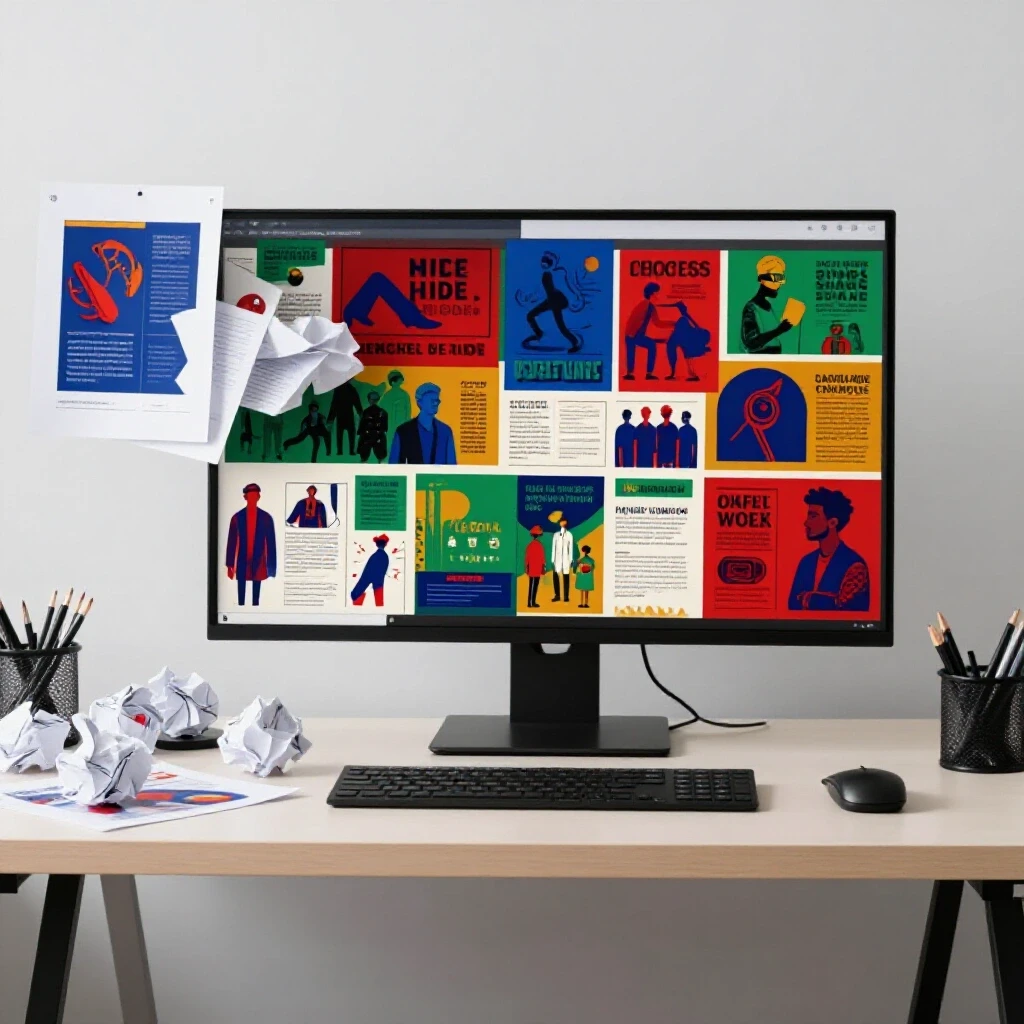
In automated retail tools, the algorithm decides which ad to show to which person. This is great for efficiency but hard for testing. To get around this, I use a “Cell Testing” approach. I create two separate campaigns with identical settings but different creative sets.
The U.S. Small Business Administration often notes that digital adoption is highest among businesses that use data to drive decisions. To follow this, I look at “creative clusters.” Instead of testing one image against another, I test a group of “User Generated Content” (UGC) videos against a group of “High-Production” videos.
| Test Variable | Control Group (A) | Test Variant (B) | Goal |
|---|---|---|---|
| Content Format | Static Product Images | Short-form UGC Video | Identify highest converting format |
| Messaging | Benefit-focused Copy | Problem-solving Copy | Determine emotional resonance |
| Visual Style | Minimalist Studio | Busy Lifestyle | Measure engagement rates |
| Call to Action | “Shop Now” | “Get the Deal” | Test urgency vs. information |
By grouping similar assets, you give the machine learning enough variety to optimize, but you keep the “theme” consistent enough to draw a conclusion. If Group B consistently has a 20% lower CPA over a 14-day period, you have a strong signal.
Measuring Success with Statistical Rigor
Statistical significance is the foundation of any good experiment. This section defines technical terms like confidence intervals and null hypotheses in simple language. You will learn why a 95% confidence level is the industry standard and how to calculate if your test results are actually meaningful.
In my work, I never trust a “winning” ad until the math backs it up. Statistical significance is a way to tell if your results are real or just a result of chance. Think of it like flipping a coin. If you flip it twice and get two heads, you don’t assume the coin is broken. If you flip it 100 times and get 90 heads, you know something is up.
A “null hypothesis” is the starting assumption that there is no difference between your test groups. Your goal is to prove the null hypothesis wrong. To do this, you need a large enough sample size. In automated commerce campaigns, I usually look for at least 50 to 100 conversions per variant before I even look at the results.
- Statistical Significance: The probability that the observed difference is not due to random chance.
- Confidence Interval: A range of values that likely contains the true performance metric.
- Sample Size: The number of people or events needed to make the data reliable.
I once ran a test for a week that showed a 15% improvement in click-through rates. However, the sample size was too small. By the end of the second week, the “winner” had actually fallen behind the control group. This “regression to the mean” is common. Always aim for a 95% confidence level before making big budget shifts.
Navigating Attribution and Data Discrepancies
Data is rarely perfect, especially with modern privacy changes. This section explores the differences between platform-native analytics and third-party tracking tools. You will learn how to handle data gaps and why “triangulating” your data is the best way to find the truth in a cookieless world.
One of the biggest frustrations for growth hackers is seeing different numbers in different tools. Meta’s native analytics might show 100 sales, while your website tracking shows 80. This happens because of different “attribution windows.” A platform might count a sale if someone saw an ad and bought something seven days later. Your website tool might only count it if they clicked the ad and bought it immediately.
Building on this, I’ve found that using a “Conversion API” (CAPI) is essential. It sends data directly from your server to the platform, bypassing browser blocks. Even with CAPI, you will see discrepancies.
I recommend a 7-day click and 1-day view attribution model for most automated shopping tests. This provides enough data for the algorithm to learn while staying relatively close to reality. If the gap between native data and your internal database is more than 20%, it is time to audit your tracking setup.
Scaling and Long-term Performance Decay
Success in a short test doesn’t always mean long-term stability. This section discusses how to monitor your campaigns for performance decay and creative burnout. You will learn how to use frequency metrics to decide when it is time to refresh your assets and rotate your winning content.
Once you find a winning creative format in an automated environment, the temptation is to “set it and forget it.” However, performance often drops over time. This is called “creative fatigue.” When the same audience sees the same ad too many times, they stop clicking.
I track “Frequency,” which is the average number of times a person has seen your ad. In my experience, once frequency hits a 3.0 or 4.0 within a 30-day window, CPAs start to climb.
Interestingly, automated tools are better at fighting fatigue than manual ones because they can swap in different assets from your catalog. But they still need fresh “fuel.” I suggest a creative refresh every 4 to 6 weeks for high-spend campaigns.
To manage this, I use a “Rolling Test” schedule: 1. Run the main “Champion” campaign with winning assets. 2. Run a smaller “Challenger” test with new hypotheses. 3. If a Challenger wins, it becomes the new Champion. 4. Repeat the cycle to ensure constant improvement.
Modern Frameworks for Long-Term Testing
To stay ahead, you need a repeatable system for your experiments. This section provides a checklist of tools and steps to ensure your testing is consistent and professional. We cover everything from documentation logs to the final analysis of your data streams.
I have found that the most successful data analysts are the ones who are the most organized. You need a way to document every test you run. If you don’t write it down, you will forget why you made a certain change three months ago.
Here is a list of tools and steps I use for every automated shopping experiment:
- Testing Documentation Log: A simple spreadsheet or Notion page where I record the start date, hypothesis, variables, and final results.
- Statistical Significance Calculator: I use online tools to input my reach and conversion data to check the “p-value.”
- Platform Event Manager: I check this daily to ensure the “pixel” or API is firing correctly and capturing all purchase events.
- Ad Customizers: I use these to quickly create variations of copy without rebuilding entire ad sets.
- Third-Party Attribution Software: Tools that help me see the “customer journey” across different touchpoints.
Before finishing any test, I run through a validation checklist. Did we reach the minimum sample size? Is the confidence level above 95%? Was there any external factor, like a holiday or a website crash, that could have skewed the data? If the answer is “no” to any of these, I extend the test or mark it as “inconclusive.”
Actionable Benchmarks for Automated Environments
Knowing what “good” looks like is half the battle. This section provides realistic benchmarks for engagement, variance, and duration. You can use these numbers to evaluate your own tests and decide when to scale up or pivot your strategy.
Every industry is different, but based on my analysis of various retail accounts, here are some standard benchmarks for automated commerce tools:
- Minimum Test Duration: 7 days (to account for weekly spending patterns).
- Recommended Test Duration: 14 days (to allow the algorithm to exit the “learning phase”).
- Acceptable CPA Variance: +/- 10% (anything less might just be noise).
- Confidence Level Target: 95%.
- Minimum Conversions per Variant: 50.
If your test shows a 5% improvement but only has 20 conversions, don’t celebrate yet. That is not a statistically significant win. It is just a trend. Wait until you hit the volume requirements before moving your budget.
Conclusion and Next Steps
The move toward automation in digital marketing can feel like losing your grip on the data. But as I have learned over the last nine years, it actually makes your role as a data analyst more important. The machine handles the “labor,” but you provide the “logic.”
By focusing on variable isolation, statistical rigor, and clear documentation, you can turn a “black box” into a powerful engine for growth. Start by looking at your current campaigns. Are you testing one thing at a time? Do you have enough conversions to trust your winners? If not, your first step is to set up a clean, isolated creative test using the cell testing method.
Frequently Asked Questions
How long should I run a test before declaring a winner? You should run a test for at least 7 to 14 days. This allows the platform’s machine learning to move past the initial learning phase and accounts for different shopping behaviors on weekends versus weekdays.
What is the most important metric to track in automated shopping campaigns? While ROAS is popular, CPA (Cost Per Acquisition) is often more reliable for testing because it isn’t as affected by changes in average order value. Always look at CPA alongside your statistical significance.
Can I test different audiences in these automated tools? These tools are designed to find the audience for you using broad targeting. Instead of testing specific interests, try testing “Creative-led Targeting,” where the content itself attracts the right customer cohort.
What should I do if my test results are inconclusive? Inconclusive results are common. It usually means your sample size was too small or the difference between your variants wasn’t large enough. You can either run the test longer or try a more “radical” change in your next test.
How many ads should I include in an automated shopping campaign? I recommend using between 10 and 20 high-quality assets. If you provide too many, the algorithm may not give each one enough “impressions” to gather meaningful data.
Why does my third-party data show fewer sales than Meta? This is usually due to different attribution windows and privacy settings like Apple’s AppTrackingTransparency. Use a Conversion API to minimize this gap, but expect some level of discrepancy.
Is broad targeting better than interest targeting for retail? In most automated environments, broad targeting allows the machine learning more freedom to find buyers. Academic research on digital consumer behavior suggests that algorithms are now often more accurate at predicting intent than manual interest buckets.
What is a “Learning Phase” and why does it matter? The learning phase is the period when the algorithm is still figuring out who to show your ads to. During this time, performance can be very unstable. Avoid making any changes to your campaign until it has exited this phase.
How often should I refresh my ad creative? Monitor your “Frequency” metric. If it rises significantly and your performance drops, it is time for a refresh. For high-volume accounts, this usually happens every 4 to 6 weeks.
Does the budget affect the speed of my test? Yes. Higher budgets lead to more impressions and conversions, which helps you reach statistical significance faster. However, spending too much too quickly can also lead to inefficient delivery. Find a balance that hits your conversion goals within 14 days.
(This article was written by one of our staff writers, David Thompson. Visit our Meet the Team page to learn more about the author and their expertise.)