How Agencies Grow on Instagram: Branding to Leads (Guide)
A healthy marketing ecosystem functions much like a physical body. If you feed it poor data or ignore the warning signs of declining engagement, the entire system suffers. For a marketing manager, “health” means having a clear view of where every dollar goes and knowing exactly what it brings back. When we achieve this clarity, the stress of justifying budgets to a board of directors simply melts away.
In my twelve years of managing cross-platform portfolios, I have seen many agencies burn through cash on “trendy” channels without a plan. I remember a specific project in 2021 where a client insisted on moving 80% of their budget to a new short-form video platform because “everyone was there.” Within three months, their lead quality plummeted. We had to perform an emergency audit, comparing their results side-by-side with their historical performance on established visual networks. By shifting the focus back to a balanced approach on Instagram, we restored their “brand health” and stabilized their lead flow.
Defining Platform Evaluation Parameters for Scalable Agency Presence
This process involves setting the ground rules for how we judge a social network’s effectiveness. Before spending a dime, we must decide which metrics actually move the needle for a service-based business. We look at everything from how much it costs to reach a thousand people to how long they stay engaged with a single post.
When I conduct a platform comparison analysis, I start with “intent.” Why is the user there? On some platforms, people want to be entertained; on others, they want to network. Instagram sits in a unique middle ground. Users go there to discover new things, but they are also increasingly comfortable making purchases or booking services directly. This makes it a powerful tool for building a professional reputation while simultaneously capturing contact information.
One metric I track closely is the organic-to-paid engagement ratio. This tells us how much “free” help the algorithm gives us before we have to pay for ads. Over the last five years, we have seen a significant organic reach decay across all major networks. This means your posts reach fewer followers naturally than they used to. To counter this, I recommend a cross-platform marketing strategy that uses organic content to test ideas and paid ads to scale the winners.
| Platform | Primary Intent | Organic Reach Potential | Lead Quality |
|---|---|---|---|
| Discovery & Visual Proof | Medium (via Reels) | High | |
| Professional Networking | High (for individuals) | Very High | |
| Community & Family | Low | Medium | |
| TikTok | Entertainment | Very High | Low/Variable |
Mapping Audience Demographic Trends to High-Value Client Personas
Demographic target-matching is the act of aligning your ideal client’s age, location, and interests with the actual user base of a social network. It is not enough to know that a platform has “millions of users.” You need to know if your specific decision-makers are active and attentive there.
Recent data from the Reuters Institute shows that while younger audiences are migrating toward newer video apps, the 28–48 age bracket remains deeply rooted in the Meta ecosystem. These are the mid-to-senior level managers who hold the purse strings. In my experience, these users use Instagram as a “portfolio check.” They might find you through a search, but they visit your profile to see if you look like a legitimate, modern agency.
I once worked with a B2B agency that felt they were “too corporate” for a visual platform. We ran a test comparing their reach on professional networks versus visual storytelling. Interestingly, the visual approach had a 20% higher click-through rate (CTR). This happened because their professional peers were using the visual app during their “off-hours” but were still in a mindset to be inspired by good work.
- Ages 25–34: Largest user group, highly responsive to Reels and visual storytelling.
- Ages 35–44: Growing segment, often use the platform for direct communication and brand research.
- Active User Split: Roughly 50/50 male and female, making it a balanced environment for diverse agency niches.
Why Conflicting Platform Algorithms Complicate Budgets—And How to Formulate a Real Placement Blueprint
A platform recommendation engine is the set of rules that decides which content gets shown to which user. These rules change constantly, which is why your “best” post one week might flop the next. Understanding these signals is the only way to build a reliable budget.
The current trend in social channel optimization is a shift toward “retention signals.” Platforms like Instagram now prioritize how long someone watches a video or if they save a post to look at later. This is a move away from simple “likes,” which are easy to fake and don’t indicate true interest. If you want to grow your agency’s footprint, your content must provide enough value to stop the scroll.
I suggest a budget split that favors “warm” audiences while still hunting for new leads. A common framework I use is the 60/40 rule. We put 60% of the budget into lead-generation ads targeting people who have already interacted with the brand. The remaining 40% goes into high-quality video content (Reels) to reach new people. This ensures you aren’t just talking to the same small room of people forever.
- Identify High-Retention Formats: Use Reels for reach and Stories for daily trust-building.
- Set Placement-Level CTR Benchmarks: Aim for at least a 1% CTR on feed ads and 0.5% on Story ads.
- Monitor Watch Time: If your videos drop off in the first 3 seconds, your “hook” needs work.
- Analyze Save Rates: A “save” is a high-intent signal that your agency is seen as an authority.
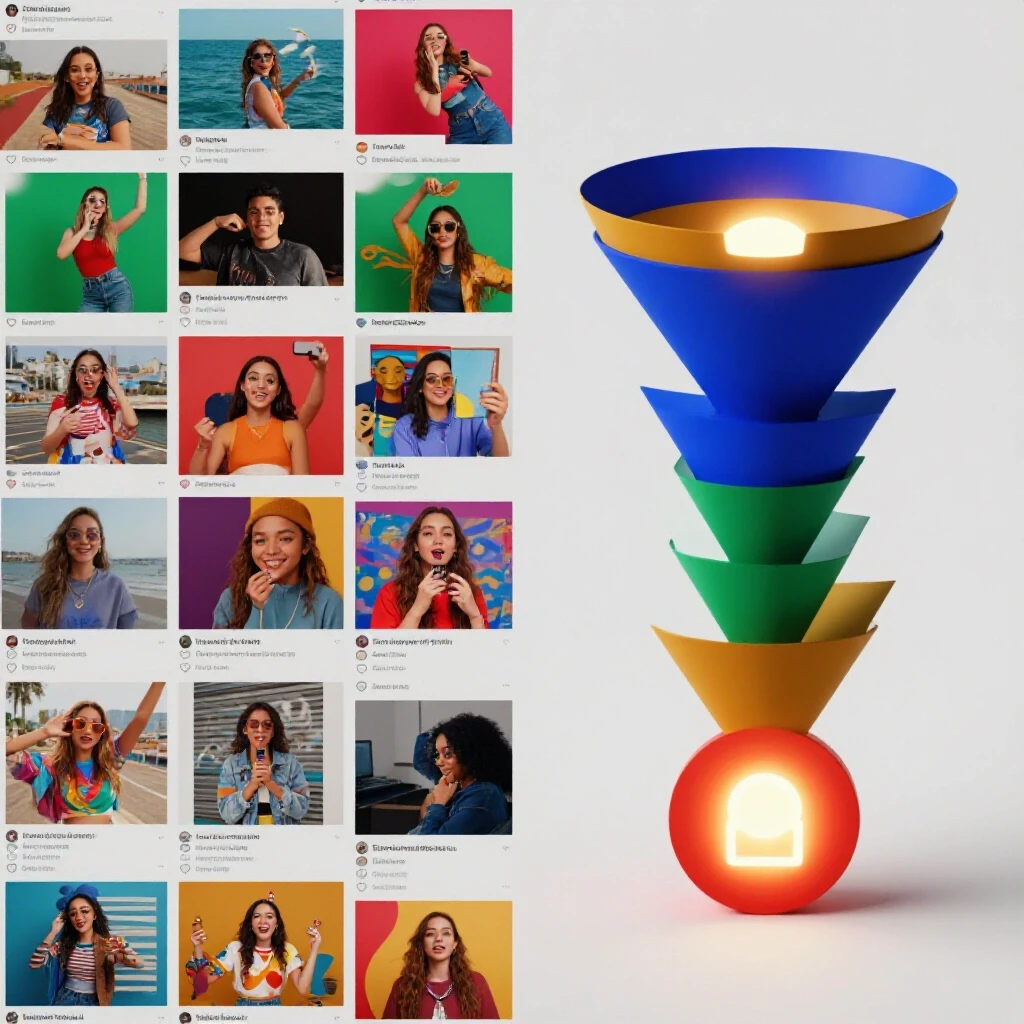
Transitioning from Brand Awareness to Direct Lead Capture through Platform-Native Ad Placements
Platform-native ad placements are advertisements that look and feel like regular content. They don’t disrupt the user’s experience; they enhance it. For an agency, this means moving away from “Buy Now” buttons and toward “Learn How” or “Get the Guide” invitations.
In my own testing, I’ve found that “Lead Forms” within the app often outperform sending users to an external website. Why? Because it reduces friction. The app already knows the user’s name and email. When they click your ad, the form is pre-filled. This can lower your cost-per-lead (CPL) by as much as 30%. However, you must balance this with quality. Sometimes, making it “too easy” to sign up leads to low-quality inquiries.
To solve this, I use “qualifying questions” in my native forms. I might ask, “What is your monthly marketing budget?” or “What is your primary business goal?” This adds a small amount of friction that filters out people who aren’t a good fit for an agency. It keeps your sales team happy and your ROI high.
- Placement: Stories: Best for quick, 15-second “behind the scenes” looks or quick tips.
- Placement: Feed: Ideal for long-form educational carousels that prove your expertise.
- Placement: Reels: The primary engine for reaching people who don’t follow you yet.
Troubleshooting Metric Discrepancies and Calculating Holistic ROI
Metric discrepancies happen when different tools show different numbers for the same ad. For example, your ad manager might say you got 100 clicks, but your website’s tracking only shows 70. This gap is often caused by privacy settings or “cookie-less” browsing, where tracking scripts are blocked.
To get a true sense of your return, you need to look at “Holistic ROI.” This means looking at the total impact of your presence, not just direct clicks. I use a “Unified Report Card” to show my clients how their visual presence supports their other channels. If we stop running ads on Instagram, do we see a dip in “Direct” traffic to the website? Often, the answer is yes. People see your ad, don’t click, but search for you later on Google.
I once managed a campaign where the direct ROI looked terrible—barely 1:1. But when we looked at the “Assisted Conversions,” we saw that 40% of the people who eventually signed a contract had first interacted with us on social media. By tracking the entire journey, we were able to justify a 50% increase in the social budget.
Actionable Framework for Agency Visibility and Lead Flow
To keep your agency’s growth on track, you need a repeatable system. I recommend using a mix of project management tools and specific tracking templates. This prevents you from getting lost in the “noise” of daily notifications.
- Weekly Content Audit: Review which posts had the highest “Save” and “Share” rates. These are your true brand-building wins.
- Monthly Budget Reallocation: If your Story ads are outperforming your Feed ads in lead quality, move 10% of the budget over.
- Quarterly Demographic Check: Use the app’s native insights to see if your audience’s age or location is shifting.
- Creative Refresh: Replace any ad that has a “Frequency” score higher than 4. This means people are seeing the same ad too many times and getting “ad fatigue.”
| Metric | Goal for Agencies | Why it Matters |
|---|---|---|
| Video Retention | 25% watch to end | Shows content is actually useful. |
| Cost Per Lead (CPL) | Under $50 (Niche dependent) | Keeps the sales pipeline affordable. |
| Engagement Rate | 2% – 5% | Proves the audience is active and real. |
| Follower Growth | 1% – 3% monthly | Ensures a steady stream of new prospects. |
Practical Next Steps for Marketing Managers
The best way to start is to simplify. Don’t try to be everywhere at once. Pick one visual format—like educational carousels—and master it. Use your existing case studies and turn them into “How We Did It” stories. This builds immediate trust with potential clients who are facing similar problems.
Next, set up a basic lead-capture sequence. Whether it’s a DM automation tool or a simple “Link in Bio” to a whitepaper, make sure there is a clear path from “follower” to “lead.” Don’t let your hard-earned attention go to waste by having no place for it to land.
Finally, be patient. Brand building is a marathon, not a sprint. In my experience, it takes about three to six months of consistent posting and targeted ads to see a significant shift in how the market perceives your agency. Stay data-driven, keep your reporting transparent, and the results will follow.
FAQ
How do I explain “Organic Reach Decay” to a client who expects every follower to see their posts? You should frame it as a shift in how platforms prioritize user experience. Explain that platforms now act as “discovery engines” rather than just “subscription feeds.” To reach their own followers, they must create content that the algorithm deems “high value” (high retention), or use modest “boost” budgets to guarantee visibility.
What is the “healthiest” ratio for organic vs. paid content? For most agencies, I recommend an 80/20 content split. 80% of your posts should be organic, value-driven content that builds trust. 20% should be “hard” promotional or paid ads. This prevents your feed from looking like a giant billboard, which drives people away.
Why should I care about “Saves” more than “Likes”? A “Like” is a low-effort reaction that takes a fraction of a second. A “Save” means the user found your information so valuable they want to refer back to it later. For an agency, a save is a signal that you are being viewed as a subject matter expert.
How does “Contextual Targeting” differ from “Interest Targeting”? Interest targeting looks at what a user has liked in the past. Contextual targeting looks at what they are looking at right now. On Instagram, this means your ads appear next to content that is relevant to your agency’s services, making the ad feel more timely and less intrusive.
What is a “Frequency Score” and why does it matter for my budget? Frequency is the average number of times each person has seen your ad. If this number gets too high (usually above 4 or 5), people stop “seeing” it, or worse, they get annoyed. Monitoring this helps you know when it’s time to change your ad creative to keep your ROI high.
Are DM automations safe for a professional agency? Yes, as long as they are used to facilitate a conversation rather than spam users. Using a tool to automatically send a “Lead Magnet” (like a PDF guide) when someone comments a specific word is a highly effective, platform-approved way to move people into your sales funnel.
How do I calculate “Assisted Conversions” for my board reports? You can use Google Analytics or similar tools to see the “Multi-Channel Funnel” reports. This shows you how many people visited your site from Instagram but didn’t convert until they came back later via a different channel, like a direct search or an email link.
What is the biggest mistake agencies make with Reels? The biggest mistake is trying to be “too trendy” and losing their professional voice. You don’t need to dance or use trending audio that doesn’t fit your brand. High-value, “talking head” videos that solve a specific problem for your target audience will always deliver better leads than a viral dance video.
How much should I spend on testing a new ad creative? A good rule of thumb is to spend at least 3x to 5x your target Cost Per Lead (CPL) on a test. If your goal is a $50 lead, spend $150–$250 on that specific ad before deciding if it’s a winner or a loser. This gives the algorithm enough data to find your audience.
What are “Platform-Native Retention Signals”? These are actions that tell the app a user is enjoying your content. They include things like “Watch Time” (how long they stay on a video), “Carousel Swipes” (how many slides they look at), and “Comments.” The more of these signals you generate, the more the platform will show your content to new people for free.
(This article was written by one of our staff writers, Jonathan Mercer. Visit our Meet the Team page to learn more about the author and their expertise.)