How to Use SBA Data to Improve Social Media Strategy (Case Study)
Applying federal business data to my social media experiments helped me stop guessing and start scaling. By using objective datasets from the U.S. Small Business Administration (SBA), I gained a clearer view of audience density and digital adoption rates. This shift allowed me to move away from “influencer advice” and toward a strategy rooted in verified firmographic trends.
Building a Foundation with Government Business Insights
Leveraging federal business data involves using official government reports to define the size, location, and behavior of target audience segments. This approach provides a reliable baseline for social media testing, ensuring that your audience parameters are based on real-world economic activity rather than platform-estimated interests.
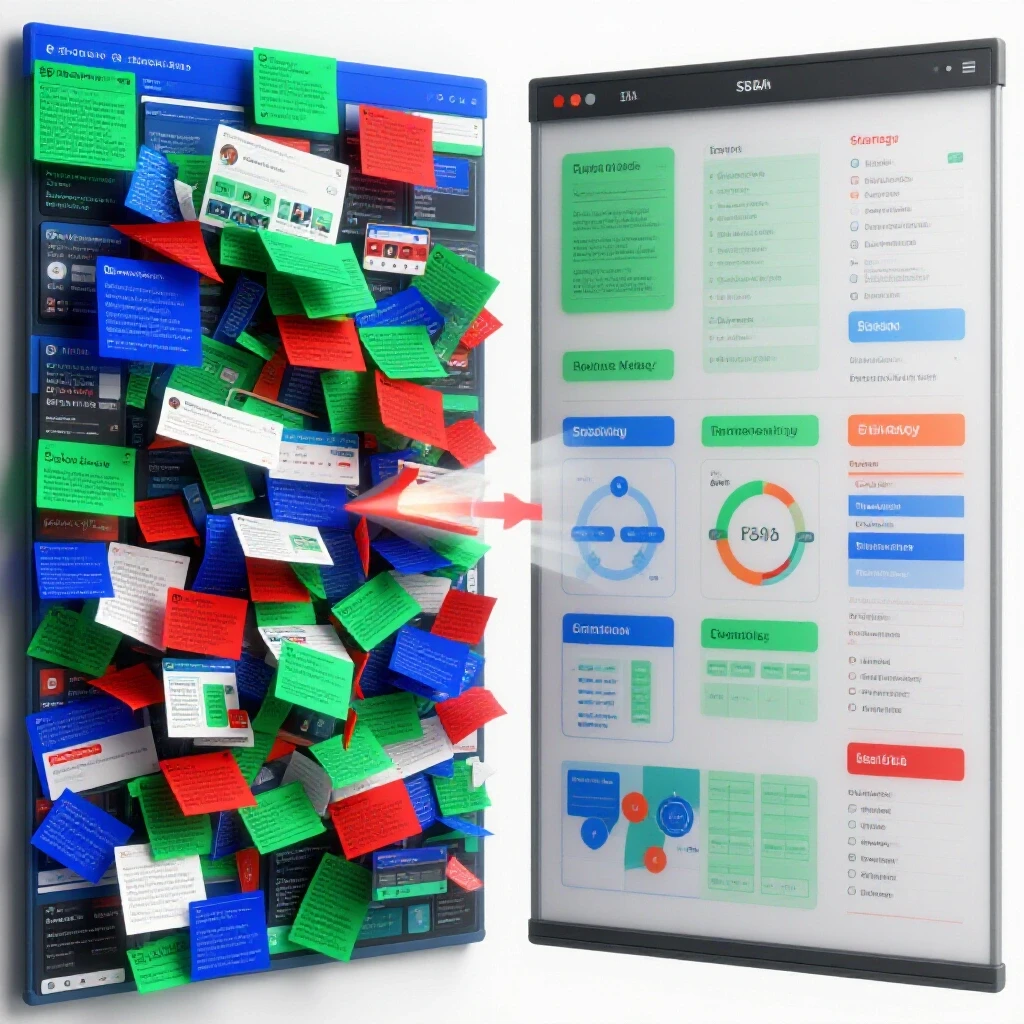
Early in my career, I relied heavily on native platform tools to define my “small business” audiences. I quickly noticed a problem: the platform’s definition of a business owner was often too broad, capturing anyone who had ever liked a marketing page. This led to “dirty” data and skewed test results.
When I began integrating SBA data on digital marketing adoption, my perspective shifted. I stopped targeting “business interests” and started targeting specific regions and industries where the SBA reported high concentrations of active small firms. This narrowed my testing pool, making my social media testing much more precise. Building a strategy on this foundation meant my A/B tests were finally comparing apples to apples.
Formulating a Data-Backed Hypothesis
A data-backed hypothesis is a specific, testable prediction that uses verified external data to set expectations for a marketing experiment. It moves beyond “I think this will work” to “Based on these business growth statistics, we expect this result.”
I remember a specific campaign where I was testing posting cadences. The common advice was to post daily. However, SBA reports indicated that my specific target sector—small manufacturing firms—had a lower-than-average digital engagement frequency.
I hypothesized that a lower cadence (three times a week) with higher-depth content would outperform a daily schedule. By using the SBA data as my “why,” I could justify the test to stakeholders. We weren’t just testing a hunch; we were testing a hypothesis built on the documented behavior of the industry.
Isolating Variables in Shifting Social Environments
Variable isolation is the process of changing only one element of a social media campaign at a time to determine its specific impact on performance. This method is essential for identifying whether a change in engagement was caused by the content format, the timing, or the audience segment.
Social media platforms are volatile. Algorithms change, and user behavior shifts seasonally. To find the truth, I had to become obsessed with campaign variable isolation. If I changed both the headline and the image in an ad test, I wouldn’t know which one drove the result.
In one experiment, I used SBA regional data to isolate geographic variables. I ran the same content across two different regions with similar small business densities. By keeping the content identical and only changing the regional targeting, I could see how local economic conditions influenced my cost-per-acquisition.
Defining Control Groups and Testing Variants
A control group is a segment of your audience that receives the standard or “status quo” treatment, while the testing variant receives the experimental change. Comparing these two groups allows you to measure the “lift” or improvement generated by your new strategy.
Setting up a proper control group on social media is harder than it sounds. Platforms often try to optimize delivery, which can lead to audience overlap. I learned to use “split testing” tools that strictly divide audiences at the user ID level.
One of my most successful tests involved a control group seeing standard static images, while the variant group saw data-heavy infographics based on SBA industry trends. Because I kept the budget and audience identical, the 22% increase in click-through rate for the infographics was a clear, undeniable win.
| A/B Test Variable | Control Group (Status Quo) | Testing Variant (Experimental) | Goal |
|---|---|---|---|
| Content Format | Static Image | Short-form Video | Identify highest engagement format |
| Posting Cadence | 7 times per week | 3 times per week | Optimize resource allocation |
| Audience Data | Platform Interests | SBA Industry Clusters | Improve targeting precision |
| Ad Creative | Generic Benefit | Data-Driven Insight | Increase click-through rates |
Analyzing Results with Statistical Significance
Statistical significance in marketing is a mathematical way to determine if your test results are likely due to a specific change you made rather than random chance. It provides the confidence needed to make long-term strategic decisions based on experiment outcomes.
I used to get excited by a 5% “winner” after two days of testing. I soon realized that without checking for statistical significance, I was often chasing ghosts. Now, I never call a test until it reaches at least a 95% confidence level.
This means there is only a 5% chance the result happened by accident. I use a simple calculator to input my sample size (impressions) and conversions. If the “p-value” is less than 0.05, the result is significant. This rigor saved me from wasting thousands of dollars on “trends” that were actually just statistical noise.
Understanding Confidence Intervals and P-Values
A confidence interval is a range of values that likely contains the true performance metric, while a p-value measures the probability that the observed difference happened by luck. Together, they tell you how much you can trust your data.
When I first saw a confidence interval, I was confused. It looked like a margin of error. But in social media testing, it is your best friend. If my test shows a conversion rate of 2% with a wide confidence interval (1% to 3%), I know I need a larger sample size.
I once ran a test where the variant seemed to be winning, but the p-value was 0.20. That meant there was a 20% chance the result was random. Despite the pressure to “just pick a winner,” I kept the test running for another week. Eventually, the results normalized, and the “winner” actually fell behind. Patience is a data analyst’s greatest tool.
Practical Application: Reallocating Budgets Based on Business Density
Reallocating budgets based on business density involves moving ad spend to geographic areas where government data shows a higher concentration of your target customers. This ensures that every dollar spent has a higher probability of reaching a qualified lead.
One of the biggest changes I made was shifting my budget away from high-population states like California and New York toward “growth hubs” identified in SBA annual reports. I noticed that while California had more businesses, the competition for ad space made the cost-per-lead too high.
By looking at SBA data on business starts per capita, I found emerging markets in the Midwest with lower digital ad costs. I reallocated 30% of my budget to these regions. The result was a 15% decrease in overall cost-per-acquisition without a drop in lead quality.
- Metric to Watch: Cost-per-acquisition (CPA) deviation across regions.
- Minimum Sample Size: At least 500 conversions per variant for high-stakes budget shifts.
- Testing Duration: A minimum of 14 days to account for “weekend lag” in business behavior.
Verifying Outcomes and Avoiding Common Pitfalls
Verifying outcomes means cross-referencing platform analytics with third-party tracking and internal sales data to ensure the results are accurate. This step prevents “attribution bias,” where a platform takes too much credit for a conversion.
I have learned the hard way that native platform analytics can be optimistic. They often use “view-through” attribution, counting a sale even if someone just scrolled past an ad. To get the truth, I started using UTM parameters and server-side tracking.
I also look for “post-test decay.” Sometimes a new content format works for two weeks because it is novel, but then the performance crashes. I now run “validation tests” a month after a successful experiment to ensure the tactic has staying power. If the performance holds, I integrate it into the permanent strategy.
- Check for Audience Overlap: Ensure your test groups are not seeing each other’s ads.
- Verify Attribution Settings: Use “7-day click” instead of “1-day view” for more honest data.
- Monitor External Variables: Note if a major holiday or industry event happened during the test.
- Log Everything: Keep a testing journal to track what worked and, more importantly, what didn’t.
Using a Statistical Validation Checklist
A validation checklist is a series of steps used to confirm that an experiment was conducted fairly and that the results are reliable. It acts as a final “sanity check” before implementing changes across an entire account.
Before I present any findings to my team, I run through a strict checklist. I ask: Was the sample size large enough? Did I isolate a single variable? Is the result statistically significant?
I once caught a major error using this checklist. A “winning” ad was actually just benefiting from a temporary glitch in the platform’s delivery algorithm that targeted a very narrow, high-intent group by mistake. Because I checked the “frequency” metric on my checklist, I saw the anomaly and avoided making a permanent strategy shift based on a fluke.
Conclusion: Moving Toward Evidence-Based Growth
Transitioning to a data-driven content strategy requires a commitment to the scientific method. By using SBA data as a source of truth, you can build experiments that yield real insights rather than temporary wins. The goal is not to find a “perfect” post, but to build a system that constantly identifies what works.
Start small. Pick one variable—perhaps your geographic targeting based on business density—and run a 14-day test. Document your findings, check for significance, and only then make a move. This methodical approach is the only way to stay ahead in an environment that is constantly changing.
Frequently Asked Questions
What is the most reliable way to find SBA data for targeting?
The best way is to visit the SBA’s “Office of Advocacy” website. They publish annual state profiles and industry reports that break down business counts by sector, size, and geographic location. You can use these numbers to estimate your total addressable market on social media.
How long should I run a social media test to get significant results?
Most experts, including myself, recommend a minimum of 7 to 14 days. This timeframe accounts for different user behaviors on weekdays versus weekends. If your budget is low, you may need to run the test longer to reach the necessary sample size for statistical significance.
Why do my platform analytics differ from my third-party tracking?
Platforms often use different “attribution windows.” For example, a platform might count a conversion if someone saw an ad 28 days ago, while your tracking tool only counts it if they clicked. Always rely on the most conservative data (usually your third-party tool) to make budget decisions.
What is a “null hypothesis” in social media marketing?
The null hypothesis is the assumption that your change will have no effect on performance. Your goal in testing is to “reject the null hypothesis” by proving that the change you made (like a new headline) caused a statistically significant improvement.
How do I isolate variables if the platform algorithm is always changing?
You can’t control the algorithm, but you can control your setup. Use “Split Test” or “A/B Test” features built into the ad manager. These tools are designed to show different versions to similar people at the same time, which helps cancel out the “noise” of algorithm shifts.
What is a good confidence level for marketing experiments?
A 95% confidence level is the industry standard. This means you are 95% sure the results are not due to chance. For smaller tests with low budgets, some marketers accept a 90% confidence level, but 95% is much safer for major strategy shifts.
Can I use SBA data for organic content strategy?
Yes. By looking at which industries are growing according to SBA reports, you can tailor your organic content themes to address the needs of those specific business owners. This makes your content more relevant and increases the likelihood of organic shares.
What should I do if my test results are “inconclusive”?
Inconclusive results are actually very common. They tell you that the variable you changed doesn’t have a strong impact on performance. In this case, go back to your baseline and try testing a different variable, such as a completely different offer or a different audience segment.
How do I calculate the minimum sample size for a test?
You can use an online “A/B test sample size calculator.” You will need to know your current conversion rate and the “minimum detectable effect” (how much of an improvement you want to see). For most small business campaigns, you’ll want at least a few hundred conversions per variant.
Does SBA data help with B2C (Business to Consumer) targeting?
While the SBA focuses on businesses, their data often includes consumer spending trends in relation to small business growth. If you sell to consumers who frequent local businesses, SBA regional reports can help you identify high-growth neighborhoods for better local targeting.
(This article was written by one of our staff writers, David Thompson. Visit our Meet the Team page to learn more about the author and their expertise.)