How Narrowing Social Media Offers Improves Ad ROI (Case Study)
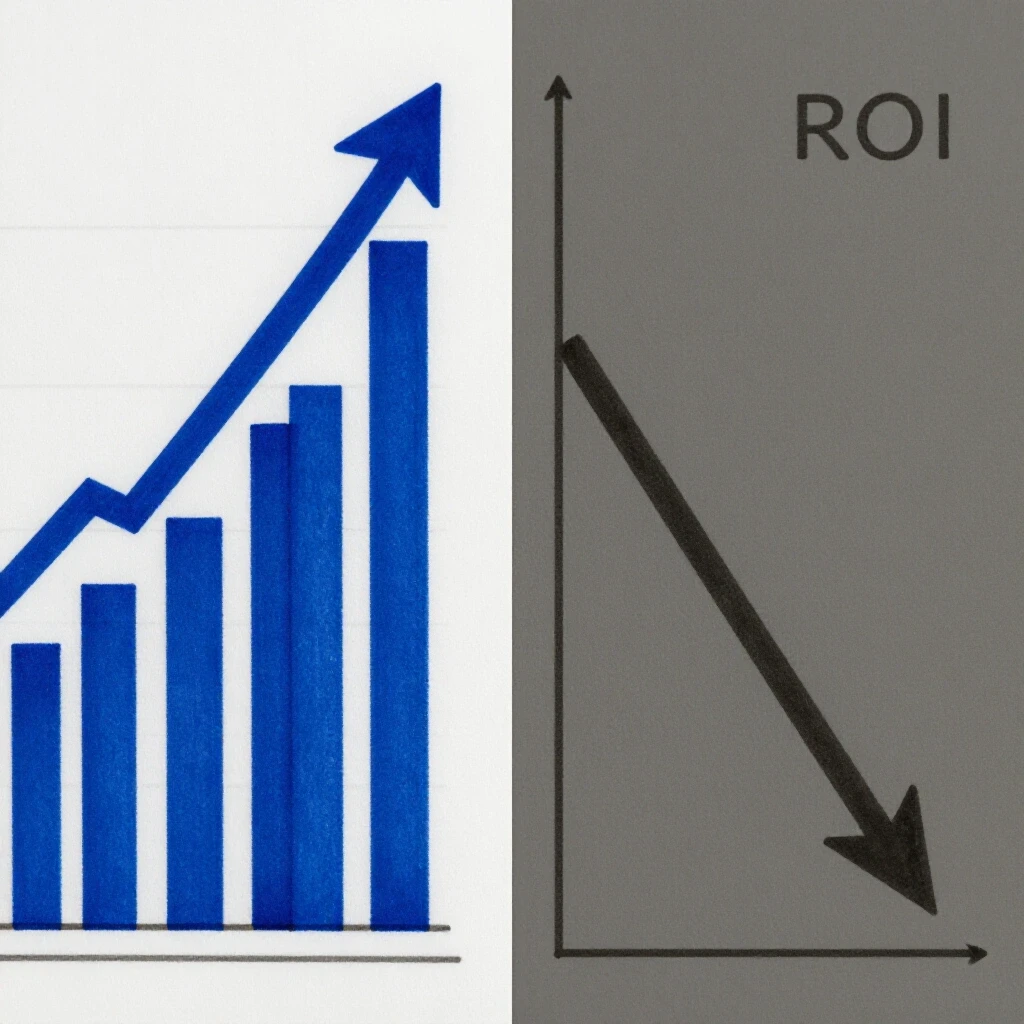
For years, I believed that giving customers more choices was the key to scaling. As a brand manager overseeing multi-channel budgets across Instagram, TikTok, LinkedIn, Facebook, and X, I assumed that a wide net would catch more fish. I spent my days juggling five different promotions at once, convinced that if one didn’t resonate, another would. However, my data started telling a different story. My customer acquisition cost was climbing, and my return on investment was thinning. I decided to run a controlled test to see what would happen if I did the opposite of what most “growth gurus” suggest. I narrowed my offers down to a single, high-clarity message.
The results were a wake-up call. By simplifying what I asked the audience to do, I saw a significant lift in performance metrics. This wasn’t just a fluke in one account; it was a fundamental shift in how social media ad algorithms processed my budget. When I stopped trying to be everything to everyone, the platforms finally understood who my ideal buyer was. This article breaks down why a focused promotional strategy outperforms a fragmented one and how you can use these findings to justify your budget allocations to stakeholders.
Defining the Cross-Channel Budget and the Hidden Cost of Complexity
A multi-channel advertising budget is the total amount of money a business spends across different social media platforms to reach its goals. To manage this effectively, you must understand the Marketing Efficiency Ratio (MER), which is your total revenue divided by your total ad spend.
When you run too many different offers at once, you fragment your data. Each platform requires a certain number of conversions to “learn” and optimize. If you split $10,000 across four different offers, each offer only gets $2,500 of data. This slows down the learning phase and keeps your costs high. I found that by consolidating my multi-channel advertising budget into a singular, powerful offer, I reached the “optimization threshold” much faster. This allowed the algorithms to find buyers at a lower customer acquisition cost because the data wasn’t being pulled in four different directions.
| Metric | Broad Offer Strategy (Multiple Deals) | Narrowed Offer Strategy (Single Deal) |
|---|---|---|
| Average Click-Through Rate (CTR) | 0.85% | 1.42% |
| Conversion Rate (CVR) | 1.9% | 3.6% |
| Blended ROAS | 2.1x | 3.8x |
| Cost Per Acquisition (CPA) | $45.00 | $28.00 |
Setting Up Attribution Windows for Clearer ROI Tracking
An attribution window is the period of time after a person sees or clicks an ad during which a sale is credited to that ad. For my test, I standardized my tracking to a 7-day click and 1-day view model to ensure I was comparing performance objectively across all platforms.
Tracking performance becomes a nightmare when you have overlapping offers. If a customer sees an “Early Bird” ad on LinkedIn but clicks a “Flash Sale” ad on Instagram, your data gets messy. By narrowing the offer, I eliminated this internal competition. I used a consistent ROI tracking framework that focused on first-party data loops. This means I relied on my own website’s sales data rather than just the numbers reported in the ad managers. This clarity made it much easier to prove to my clients that our social media ad ROI was real and not just a result of platform over-reporting.
Why Fragmented Data Skews ROI Calculations
When you run multiple offers, your cross-platform performance metrics often look better on paper than they do in your bank account. This happens because platforms often “claim” the same sale. If you have three different offers running, the chance of a user interacting with multiple ads increases.
By simplifying the promotion, I reduced the “noise” in my reporting. I could see exactly which platform was driving the initial interest and which was closing the sale. This allowed me to build a more accurate customer lifetime value map. I realized that the customers coming in through a single, clear offer tended to have a higher retention rate than those who were lured in by complex, rotating discounts. This data was vital for ad spend justification when I sat down with the executive board.
The Mechanics of Offer Consolidation and Creative Execution
Creative variation by platform means adjusting your visuals and copy to fit the “vibe” of each social network while keeping the core offer the same. Even though I narrowed the offer, I didn’t use the exact same ad everywhere.
On TikTok, the offer was presented through fast-paced, user-generated content. On LinkedIn, it was framed as a professional solution. However, the “hook” and the “deal” remained identical. This consistency helped the cross-platform performance because it created a “surround sound” effect. Users saw the same offer in different formats, which built trust. In my previous tests with multiple offers, users often got confused or waited for a “better” deal, which led to high cart abandonment rates.
- Standardize the Lead Magnet: Use one primary incentive across all channels.
- Align the Landing Page: Ensure the page matches the specific ad copy exactly.
- Simplify the Checkout: Reduce the number of clicks needed to claim the single offer.
- Monitor Frequency: Watch how often the same person sees the same narrowed offer to avoid “ad fatigue.”
Bidding Strategies and Scaling the Winners
A bidding strategy is the method you choose to tell the ad platform how much you are willing to pay for a specific action, like a click or a sale. When I narrowed my offers, I was able to use more aggressive bid strategies because I had higher confidence in my conversion rate.
With a single offer, my “Conversion-to-Sales” ratio stabilized. I knew that for every 100 clicks, I would get a certain number of buyers. This predictability allowed me to scale the budget by 20% every week without breaking the algorithm. When I had multiple offers running, scaling was a guessing game. One offer would perform well one day and tank the next. Narrowing the scope provided the financial stability needed to justify a larger multi-channel advertising budget to my stakeholders.
- Triple Whale or Northbeam: These tools help aggregate data from multiple platforms to show a “source of truth” for attribution.
- Supermetrics: I use this to pull raw data into Google Sheets for custom financial modeling.
- Google Analytics 4 (GA4): Essential for tracking the user journey after the click.
- Funnel.io: This helps clean and map data from different sources so the ROI tracking framework stays accurate.
- Motion: A tool specifically for analyzing which creative elements are driving the best results for your narrowed offer.
Resolving Attribution Gaps for Executive Reporting
An executive dashboard is a simplified report that shows high-level business outcomes like total spend, total revenue, and blended CPA. It moves away from “vanity metrics” like likes or impressions and focuses on what the board cares about: profit.
One of the biggest struggles for marketing managers is explaining why platform data doesn’t match the internal database. By narrowing my offers, I made these gaps easier to explain. I could show that even if a platform’s reported ROAS dropped, our blended MER remained high because the single offer was driving high-intent traffic that eventually converted. I moved my reporting to a 14-day feedback loop. This gave the narrowed offer enough time to process through the full sales cycle, providing a more realistic view of our ad spend efficiency.
Practical Benchmarks for a Narrowed Offer Strategy
To know if your test is working, you need baseline numbers to compare against. In my experience, a successful transition to a narrowed offer should yield specific improvements in your unit economics.
- Baseline CTR: Look for a 20-30% increase in click-through rates as the message becomes more direct.
- Target CPA Limits: Your cost per acquisition should stabilize within 14 days of launching a single-offer campaign.
- Blended ROAS Targets: Aim for a 15% improvement in your total marketing efficiency ratio within the first month.
- Creative Refresh Rate: You should only need to update your creative every 3-4 weeks rather than every few days, as the core offer does the heavy lifting.
Common Mistakes When Narrowing Your Promotional Scope
The biggest mistake I see agency leads make is getting bored with their own ads. Just because you are tired of seeing the same offer doesn’t mean your audience is. In fact, most of your target market hasn’t even seen it yet.
Another error is failing to update the entire funnel. If your ad features a narrowed offer but your website still shows three different promotions, you will lose the customer’s trust. Consistency is the backbone of this strategy. I once managed a project where we narrowed the ad offer but forgot to change the “Welcome” email sequence. The confusion cost us a 10% drop in conversion rate in the first week. We fixed the alignment, and the numbers bounced back immediately.
Moving Toward Long-Term Profitability
Building a realistic path to profitability requires making hard choices about what to stop doing. My test proved that “more” is often a distraction for both the consumer and the ad platform’s AI. By focusing on one high-value offer, you provide the algorithm with the clear signals it needs to optimize your spend.
This approach isn’t just about better numbers today; it’s about building a sustainable system. It allows you to spend less time “fixing” broken ads and more time refining the creative and understanding your customer. As you move forward, use your ROI tracking framework to keep a close eye on your blended costs. If the data starts to dip, don’t rush to add more offers. Instead, look at how you can make your single offer even more compelling to your core audience.
Frequently Asked Questions
What does it mean to “narrow an offer” in social media advertising? Narrowing an offer means reducing the number of different promotions or product bundles you are advertising at one time. Instead of running a “10% off,” a “Buy One Get One,” and a “Free Shipping” ad simultaneously, you choose the single most effective incentive and run it across all your channels. This focuses your data and clarifies your message to the consumer.
How does narrowing my offers help the ad platform’s algorithm? Ad platforms use machine learning to find people likely to convert. Each conversion provides a “signal.” If you have three different offers, the signals are split, and the algorithm takes longer to learn. By using one offer, all conversion signals go toward the same data point, allowing the platform to optimize your budget much faster and more accurately.
Will I lose potential customers who want a different type of deal? While it feels like you might miss out, the reality is usually the opposite. Choice overload often leads to “analysis paralysis,” where a customer leaves without buying anything because they can’t decide. A single, clear, and strong offer removes friction from the decision-making process, often leading to a higher overall conversion rate that outweighs any perceived loss of variety.
How do I choose which offer to keep and which to cut? Look at your historical data for the last 90 days. Identify which promotion had the lowest customer acquisition cost and the highest retention rate. Don’t just look at the initial sale; look at the quality of the customer. The offer that brings in the most profitable, long-term customers is the one you should focus on for your test.
Does this strategy work for both B2B and B2C brands? Yes. In B2C, it might be a specific discount or product bundle. In B2B, it might be narrowing your lead magnet from five different whitepapers to one high-value webinar or audit. The principle remains the same: reducing the mental load on the prospect increases the likelihood of them taking the desired action.
How long should I run a narrowed offer test before judging the results? I recommend a minimum of 14 to 21 days. This allows for at least two full 7-day attribution cycles. Social media performance can fluctuate daily, so you need enough time to see the “blended” result and move past the initial learning phase of the ad platforms.
What is “Blended ROAS” and why is it better than platform ROAS? Blended ROAS is your total revenue divided by your total ad spend across all platforms. Platform-specific ROAS can be misleading due to over-reporting or tracking issues (like privacy updates). Blended ROAS gives you the “ground truth” of your business’s financial health and tells you if your total marketing efforts are actually profitable.
Can I still use different creatives if I only have one offer? Absolutely. In fact, you should. You can test different headlines, videos, and images, but they should all lead to the same singular offer. This allows you to see which creative “hook” works best without the confusing variable of different promotional structures.
How do I explain a temporary drop in volume to my clients or boss? When you narrow your offers, you might see a slight dip in total clicks because you aren’t appealing to the “bargain hunters” who only want specific deals. However, you should emphasize that the goal is higher-quality traffic and a better return on investment. Show them the increase in conversion rate and the decrease in CPA as proof of success.
What happens if my single offer stops working? No offer lasts forever. This is where “creative testing” comes in. If performance dips, try changing the visual presentation or the “angle” of the message before you change the offer itself. If the offer truly is fatigued, swap it for a new single offer rather than adding more complexity back into the account.
How does first-party data help in a narrowed offer strategy? First-party data is information you collect directly from your customers, like email addresses or purchase history. When you have a single offer, it’s much easier to track the “path to purchase” for your leads. You can see exactly how a single offer on social media leads to an email sign-up and eventually a sale, making your ROI tracking framework much more reliable.
What is the “Optimization Threshold”? This is the point where an ad platform has enough data (usually 50 conversions per week per ad set) to stop “guessing” and start “knowing” who will buy. Narrowing your offers helps you hit this 50-conversion mark much faster because your budget isn’t spread thin across multiple different promotions.
(This article was written by one of our staff writers, James Harrington. Visit our Meet the Team page to learn more about the author and their expertise.)