How to Recover Audience Loss After a Social Media Rebrand (Guide)
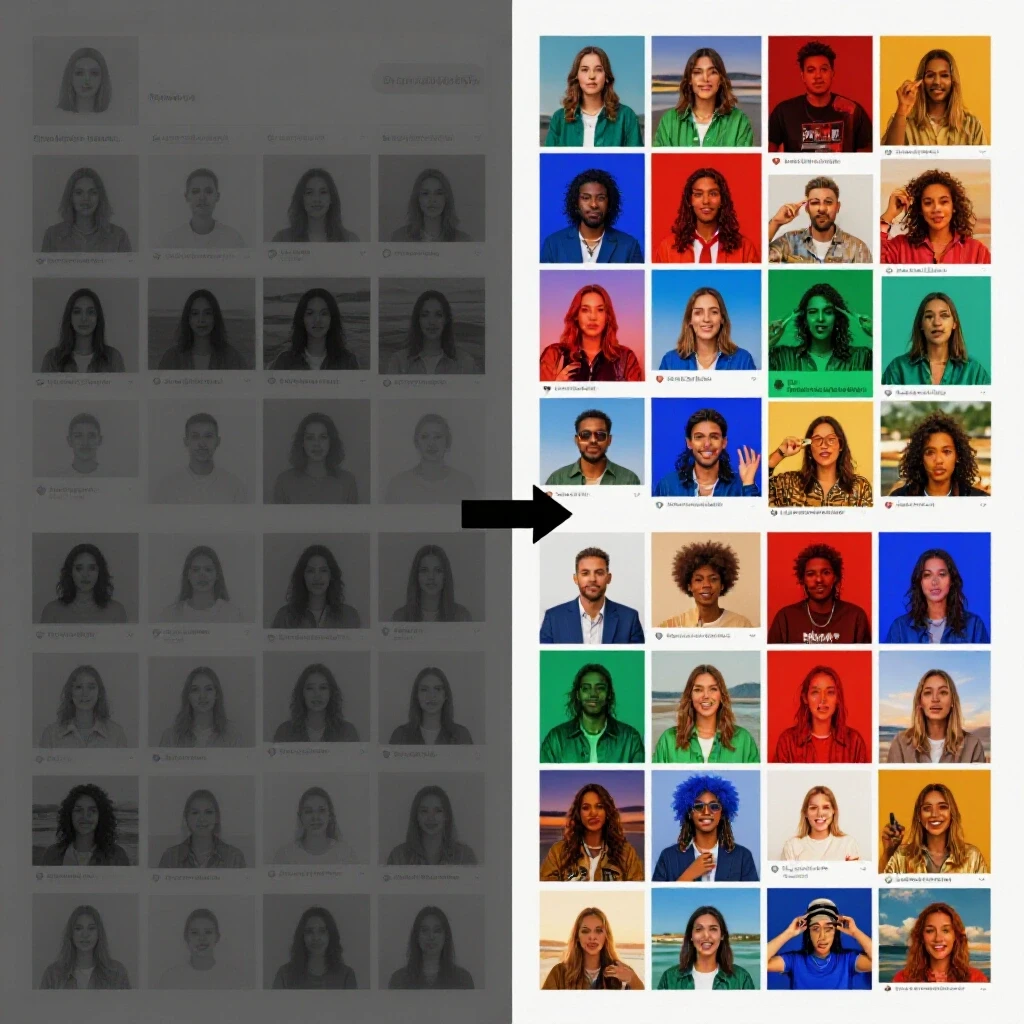
Many marketers believe that a strong brand is durable enough to survive any aesthetic or strategic change. This is a common myth. In my 14 years of managing social media operations, I have seen that durability is not a shield; it is a metric that can be depleted. When a brand undergoes a significant shift in its identity, it often faces a “durability test” from both the audience and the platform’s automated systems. If the transition is not handled with surgical precision, the result is a sudden, quiet loss of visibility that can take months to reverse.
I have spent over a decade diagnosing these exact scenarios. I remember working with a high-visibility retail account that decided to change its visual language and posting frequency overnight. Within 72 hours, their reach velocity dropped by 65%. The team was in a panic, assuming they had been shadowbanned. In reality, they had triggered a content filtration system by deviating too far from their established engagement patterns. My job was to conduct a root cause analysis and build a recovery plan that would satisfy both the algorithm and the frustrated followers.

How Do You Diagnose a Sudden Drop in Audience Reach?
This process involves identifying the exact moment engagement fell and correlating it with specific changes in visual identity, tone, or metadata. It requires looking past vanity metrics to find the technical reason why your content is no longer appearing in follower feeds or discovery pages.
When I begin a recovery campaign, the first thing I look at is the reach velocity. Reach velocity is the speed at which a post gains impressions in its first hour. If this number drops significantly after a brand refresh, it usually indicates that the platform’s “relevance score” for your account has been reset. Platforms like Instagram and LinkedIn use historical data to predict how users will react to your content. When you change your style, the platform no longer knows who to show your content to, leading to a temporary growth plateau.
To help you identify the source of your issues, I use a Root Cause Diagnostic Checklist. This helps separate human error from algorithmic penalties.
Root Cause Diagnostic Checklist
| Potential Cause | Indicator | Verification Method |
|---|---|---|
| Algorithmic Reset | Reach drops, but engagement rate per impression stays steady. | Compare reach-to-follower ratio of new posts vs. old posts. |
| Audience Alienation | Reach is high, but engagement rate (likes/comments) plummets. | Analyze sentiment in the comment section. |
| Content Filtration | Posts do not appear in hashtag searches or “Explore” pages. | Use a “shadowban” check tool or a secondary unlinked account. |
| Metadata Mismatch | High impressions but very low click-through rate (CTR). | Check if new bio keywords or alt-text align with historical trends. |
Detecting Algorithmic Penalties After Identity Changes
This phase focuses on understanding how automated systems flag sudden changes in account behavior or metadata as suspicious or low-quality. It is common for a brand refresh to involve changing handles, bios, or linking to new domains, which can trigger security protocols or search suppression.
A social media shadowban, or search suppression, is not a myth. It is a functional part of content moderation. Platforms use content filtration systems to protect users from spam. If you suddenly change your posting frequency or start using drastically different keywords, the system may flag your account for “coordinated inauthentic behavior” or simply as a low-quality bot. I once managed a brand that updated its bio and website link three times in one hour. The platform immediately restricted their reach for 14 days because the behavior mimicked an account takeover.
To verify if you are facing a penalty rather than just a lack of interest, you must monitor your engagement variance thresholds. If your average engagement drops by more than 40% across five consecutive posts, you are likely dealing with a technical restriction.
- Shadowban Verification Matrix:
- Check your account status in the platform settings (e.g., “Account Status” on Instagram).
- Search for your exact handle from an account that does not follow you.
- Post a unique hashtag and see if it appears in the “Recent” tab.
- Review your “Report-to-View” ratio; if users are reporting your new content as “spam” or “not interested,” the algorithm will bury your future posts.
Managing Internal Expectations During Reach Stagnation
This involves translating technical data into clear updates for management to manage expectations and secure resources for recovery. Brand protection specialists often face high stress when leadership demands an “instant fix” for a problem that requires a methodical, data-backed approach.
Communication is the hardest part of brand reputation recovery. When I present to stakeholders, I avoid using buzzwords. Instead, I focus on the “baseline rehabilitation period.” This is the time it takes for an account to prove to the algorithm that its new direction is legitimate and high-quality. I tell my clients that recovery is not a switch you flip; it is a ladder you climb.
When reporting to upper management, I suggest using a three-tiered communication framework: 1. The Diagnosis: Explain exactly why the reach dropped (e.g., “The change in visual style triggered a 30% drop in initial engagement, causing the algorithm to limit further distribution”). 2. The Timeline: Set a realistic range for recovery, typically 5–15 business days for minor resets and 30–60 days for major trust rebuilding. 3. The Metric of Success: Move the focus from total reach to “Sentiment Index Ratings.” This shows that while fewer people are seeing the content, those who do are reacting positively.
Steps for Rebuilding Audience Trust and Engagement
This is a step-by-step approach to rebuilding trust with an alienated audience through transparent and high-value content. It focuses on the psychological aspect of brand shifts, ensuring that the people who followed you for a specific reason feel seen and valued during the transition.
After a major identity shift, your audience may feel a sense of “identity betrayal.” They followed you for a specific reason, and you changed the rules. To fix this, I implement a community recovery sequence. This starts with “listening posts”—content designed specifically to solicit feedback. I once worked with a tech brand that rebranded to a much younger, “edgy” aesthetic. Their older, core audience hated it. We recovered by posting a series of “Behind the Design” videos where the CEO explained the “why” behind the change. This transparency lowered the audience’s guard and stabilized their sentiment index.
Trust Recovery Phase Timeline
| Phase | Duration | Primary Objective | Key Content Type |
|---|---|---|---|
| Stabilization | Days 1–7 | Stop the follower bleed. | Direct address/FAQ posts. |
| Validation | Days 8–21 | Prove value to the algorithm. | High-engagement polls and questions. |
| Normalization | Days 22–45 | Establish a new baseline. | Consistent, high-quality “hero” content. |
| Re-Expansion | Day 46+ | Regain lost reach. | Targeted ads and collaborations. |
Submitting Platform Appeals and Resolving Policy Violations
This section covers the administrative difficulties of the appeal process and how to properly communicate with platform support. When a brand refresh accidentally violates a policy—such as using copyrighted music or “clickbaity” headlines—you must know how to navigate the backend infrastructure.
If your reach has completely bottomed out, you may have a “strike” against your account. Most platforms do not tell you exactly what triggered the strike. In my experience, the appeal process is a test of patience. You must provide data-backed evidence that your content follows community guidelines.
- How to Handle an Appeal:
- Navigate to the “Help” or “Support” section of the platform.
- Be concise. Use phrases like, “We believe our content was incorrectly flagged by automated systems.”
- Provide the specific Post ID and the date of the drop.
- Wait the full 5–15 business days before following up. Repeatedly submitting tickets can actually slow down the process.
Monitoring Success with Long-Term Account Audits
This involves establishing a baseline for healthy growth and setting triggers for early warning signs of future reach stagnation. Ongoing audits ensure that the brand remains compliant with platform safety validation protocols and avoids another engagement crisis.
Recovery is not finished just because your reach returns to normal. You need to ensure that the new audience you are attracting is as valuable as the one you lost. I recommend running a monthly audit of your “Engagement Variance.” If you see a post perform 50% worse than your new average, you need to analyze if it was a creative failure or a technical one.
Essential Diagnostic Tools for Specialists: 1. Sentiment Monitoring Software: Tools that categorize comments into positive, neutral, or negative categories to track brand reputation recovery. 2. Native Platform Insights: The “Reach by Follower vs. Non-Follower” metric is the most important data point for diagnosing algorithmic penalties. 3. Brand Protection Databases: Internal logs of every policy warning or flagged post to identify patterns of risk. 4. Reporting Templates: Standardized decks that show reach velocity, sentiment shifts, and appeal status to keep stakeholders informed.
Conclusion and Next Steps
Restoring an account after a major identity shift requires a blend of technical auditing and community management. It is a slow process that rewards data over emotion. If you are currently facing a drop in reach, your first step should be to stop all experimental posting. Revert to a “safe” content style that you know your audience likes. This stabilizes your engagement variance and gives the platform’s algorithm a “control” to measure your account against.
Once you have stabilized, start your recovery sequence. Focus on high-value, transparent communication. Remember, the goal is not just to get the numbers back; it is to rebuild the trust that makes those numbers meaningful. By systematically diagnosing errors and following a structured recovery timeline, you can move from a state of crisis to a state of growth.
FAQ: Resolving Reach and Engagement Drops After a Rebrand
Why did my reach drop immediately after I changed my profile picture and bio?
When you make significant changes to your account metadata, such as your bio, handle, or profile picture, platform algorithms may temporarily categorize your account as “new” or “unverified.” This is a security measure to prevent spam and account hijacking. The system needs time to re-index your account and confirm that your new identity is legitimate. During this period, your content may not be prioritized in discovery feeds.
Is it possible to be shadowbanned for changing my brand’s visual style?
While a visual change isn’t a direct policy violation, a drastic shift can lead to “algorithmic suppression.” If your new style causes followers to scroll past your posts or click “Not Interested,” the algorithm interprets this as a drop in content quality. This reduces your relevance score, leading to a significant engagement drop resolution challenge. It is less about a “ban” and more about the system reacting to negative user signals.
How long does it take for a social media shadowban to be lifted?
Most algorithmic penalties or search suppressions last between 14 and 30 days, provided no further policy violations occur. If the drop is due to an account reset after a rebrand, it may take 5–15 business days of consistent, high-engagement posting to restore your reach velocity to previous levels.
What metrics should I show my boss to prove we are recovering?
Focus on “Engagement Rate per Impression” and “Sentiment Index.” Total reach might stay low for a while, but if the people seeing your posts are engaging more and leaving positive comments, it proves your brand reputation recovery is working. Showing a “Reach Velocity” chart that trends upward over 30 days is also a powerful way to demonstrate progress.
Should I delete my old posts that don’t match the new brand?
I generally advise against bulk-deleting content. Sudden mass deletions can trigger spam filters and further damage your account’s authority. Instead, archive posts slowly over time or leave them as part of your brand’s “history.” The algorithm relies on historical data to understand your audience; removing that data can lead to further reach stagnation.
How do I know if my audience is actually unhappy or if it’s just the algorithm?
Check your “Follower Growth Velocity.” If you are losing followers at a higher rate than usual (attrition), your audience is likely unhappy with the change. If your follower count is stable but your views are down, the issue is likely algorithmic penalty diagnosis. Use polls in Stories to ask for direct feedback; this bypasses the main feed algorithm and gives you qualitative data.
Can I “reset” my algorithm by taking a break from posting?
No, taking a break usually worsens the problem. Platforms reward consistency. A “reset” happens when you provide the algorithm with a new stream of high-quality data. The best way to recover is to post less frequently but at a much higher quality, ensuring every post generates a high engagement-to-impression ratio.
What is a “Sentiment Index” and how do I calculate it?
A Sentiment Index is a way to quantify how your audience feels. You can calculate a basic version by taking a sample of 100 comments and categorizing them: Positive (+1), Neutral (0), and Negative (-1). Add them up to get a score. If your score moves from -20 to +10 over a month, you have data-backed proof of brand reputation recovery.
(This article was written by one of our staff writers, Andrew Collins. Visit our Meet the Team page to learn more about the author and their expertise.)