How to Fix ROAS Drops When Scaling Social Media Ad Spend (Guide)
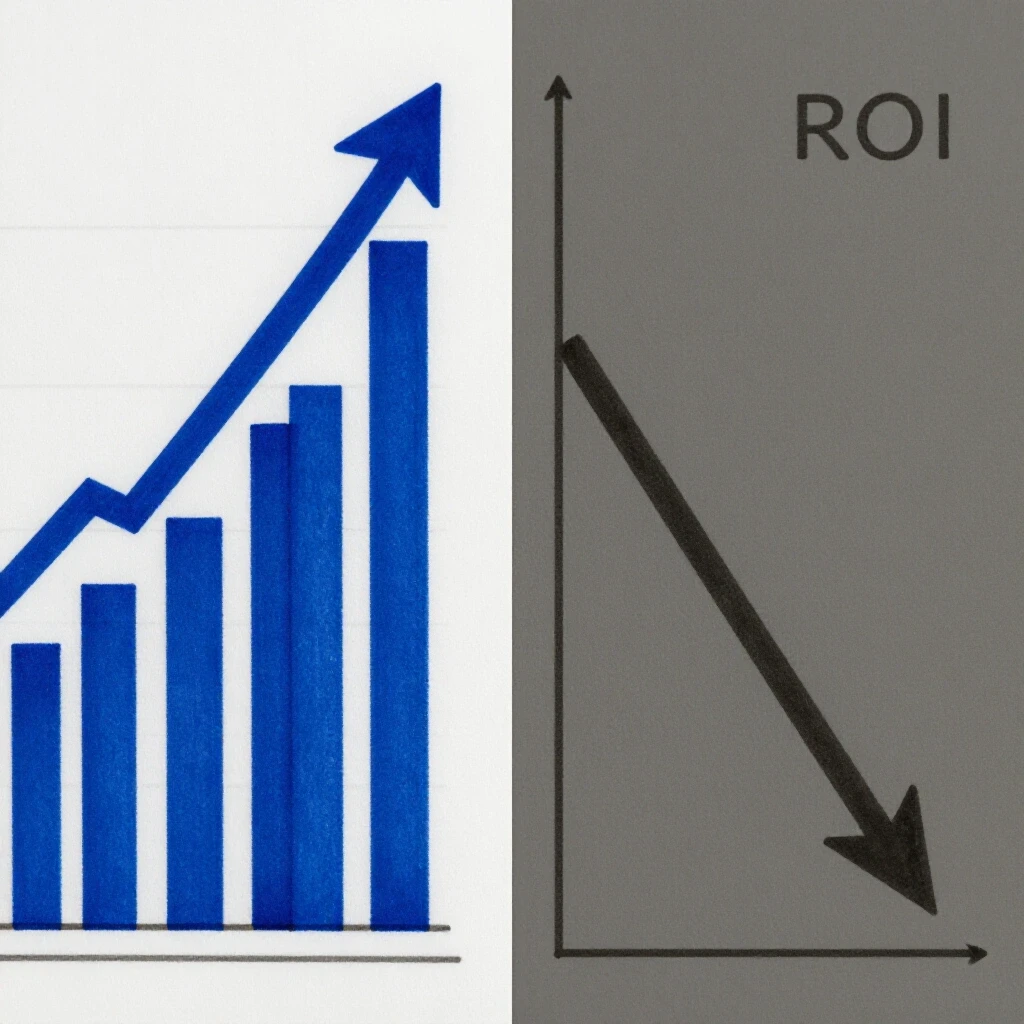
I remember sitting in a quiet boardroom overlooking the city, preparing to present a performance report for a luxury watch brand. We had just doubled our daily spend on Instagram and Facebook, moving from a comfortable five figures to a much more aggressive six-figure monthly allocation. On paper, the math seemed simple. If we spent twice as much, we should see twice the sales. Instead, I watched the return on ad spend (ROAS) fall by 40 percent in less than two weeks. It was a cold splash of reality that many media buyers face when they try to push a brand into its next phase of growth.

In my twelve years of managing cross-platform campaigns, I have learned that scaling is rarely a linear process. Whether I am working on LinkedIn for B2B leads or TikTok for luxury accessories, the numbers behave differently as the volume grows. This guide explores the mechanics of why performance often dips during budget expansion and how you can build a more resilient multi-channel advertising budget.
Understanding the Math of Diminishing Returns
Diminishing returns in advertising occur when each new dollar spent yields a smaller amount of profit than the dollar before it. In a multi-channel setup, this happens because you have already reached the most likely buyers within your target audience. As you spend more, you must reach people who are less familiar with your brand or harder to convince.
When I managed a high-end leather goods brand, we reached a point where our social media ad ROI hit a ceiling. We were spending $5,000 a day with a 4.0 ROAS. When we moved to $10,000, our ROAS dropped to 2.2. This was not a failure of the creative or the product. It was the simple reality of the auction. We had exhausted the low-hanging fruit. To justify this spend to the board, I had to shift their focus from platform-specific metrics to a blended model.
The Difference Between Platform Metrics and Blended ROI
Blended ROI, often called the Marketing Efficiency Ratio (MER), is the total revenue divided by the total ad spend across all platforms. This metric provides a clearer picture of business health than the fragmented data found in individual ad managers. It accounts for the way different platforms assist each other throughout the customer journey.
I often see growth marketers get trapped in the “last-click” mindset. If LinkedIn shows a low ROAS but your overall sales are rising, LinkedIn might be doing the heavy lifting of introducing your brand to high-value prospects. I use a 7-to-14-day attribution check to see how spend on one platform influences search volume or direct traffic on another.
Why Creative Fatigue Accelerates at Higher Spends
Creative fatigue happens when your target audience has seen your ads so many times that they stop paying attention. As you increase your daily budget, your ads reach the same people more frequently. This leads to higher costs per click and a lower conversion rate as the “novelty” of your message wears off.
In my experience, frequency is the silent killer of profitable scaling. For a luxury jewelry client, we noticed that once our frequency hit 4.0 within a seven-day window, our customer acquisition cost (CAC) spiked by 30 percent. The lesson here is that scaling spend requires a proportional increase in creative testing. You cannot run the same three videos at $50,000 a month that you ran at $5,000.
Identifying the Creative Wall
The “creative wall” is the point where adding more budget to an existing ad set no longer produces more sales. You can spot this by watching the relationship between frequency and click-through rate (CTR). If frequency goes up and CTR goes down, your audience is tired of the visuals.
- Monitor frequency at the ad set level daily.
- Rotate new hooks every 7 to 10 days for high-spend campaigns.
- Test different formats, such as static images versus short-form video.
- Use dynamic creative optimization to let the platform find the best pairings.
Managing Audience Overlap and Auction Competition
Audience overlap occurs when you target the same group of people across different ad sets or even different platforms. This causes your own ads to compete against each other in the auction, which drives up your costs. When you scale, this problem becomes much more visible and expensive.
I once worked with a multi-channel brand that was running identical targeting on Facebook and Instagram while also hitting the same list on LinkedIn. We were effectively bidding against ourselves. To fix this, we had to create a clear ROI tracking framework that mapped out which platform owned which part of the funnel. We used Facebook for broad discovery and LinkedIn for specific professional retargeting.
Cross-Platform Performance Benchmarks
Understanding how different platforms behave at scale helps in setting realistic expectations. Below is a comparison of how performance typically shifts as budgets grow.
| Platform | Initial CTR | Scaled CTR | Typical CAC Shift | Primary Role |
|---|---|---|---|---|
| Meta (FB/IG) | 1.2% | 0.8% | +20-30% | Volume & Conversion |
| TikTok | 0.9% | 0.6% | +15-25% | Awareness & Viral Reach |
| 0.5% | 0.4% | +40-50% | High-Value B2B Leads | |
| X (Twitter) | 0.7% | 0.5% | +10-20% | Real-time Engagement |
The Retargeting Trap: Why Efficiency Fades with Volume
The retargeting trap happens when a brand relies too heavily on reaching people who have already visited their site. While these ads often show a very high ROAS, they are limited by the size of your website traffic. When you scale top-of-funnel spend, your retargeting pools don’t always grow at the same rate.
I have seen many media buyers try to scale by simply pumping more money into their “warm” audiences. The result is always a drop in efficiency. You eventually reach a point where you are showing an ad to a past visitor for the tenth time that day. This does not lead to more sales; it leads to brand annoyance and wasted budget.
Balancing the Funnel for Long-Term Profitability
A healthy multi-channel advertising budget follows a specific distribution to ensure the funnel stays full without over-saturating the bottom. I recommend a 50/30/20 split for most scaling brands. This keeps the engine moving while protecting your margins.
- 50% Core Platforms: Focus on broad, top-of-funnel audiences to find new customers.
- 30% Secondary/Middle Funnel: Target people who have engaged with your social content but haven’t visited the site.
- 20% Emerging/Retargeting: High-intent audiences and experimental platforms like TikTok or X.
Building a Sustainable ROI Tracking Framework
An ROI tracking framework is a structured system for measuring the financial success of your campaigns across multiple touchpoints. It moves beyond simple platform dashboards to include first-party data and business-level outcomes. This framework is essential for justifying ad spend to stakeholders when platform data looks messy.
To build this, I rely on a combination of tools and manual checks. We use conversion APIs to send data directly from the server to the ad platform, which helps bypass some of the tracking issues caused by privacy updates. We also maintain a master spreadsheet that tracks daily spend against total Shopify or Stripe revenue.
Essential Tools for Multi-Channel Reporting
- Triple Whale or Northbeam: These tools help aggregate data and provide a “source of truth” for blended ROAS.
- Google Analytics 4 (GA4): Essential for tracking cross-device paths and identifying which platforms start the journey.
- Supermetrics: Useful for pulling data from LinkedIn, TikTok, and Meta into a single Google Sheet for custom analysis.
- Post-Purchase Surveys: Asking “How did you hear about us?” provides data that no pixel can capture.
- Platform Conversion APIs (CAPI): These ensure that your conversion data remains as accurate as possible in a cookie-less world.
Resolving Platform Attribution Gaps
Attribution gaps occur when different platforms claim credit for the same sale. If a customer sees a TikTok ad, clicks a Google search ad, and then buys through a Facebook retargeting ad, all three platforms might claim that conversion. This leads to “inflated” ROAS numbers that don’t match the bank account.
When I manage large budgets, I use a 1-day click and 1-day view attribution window for a more conservative view of performance. This helps me see what is actually driving immediate action. If I only looked at the default 7-day click window, I might think a campaign is performing better than it truly is, leading me to scale a losing strategy.
Ad Spend Efficiency by Funnel Stage
| Funnel Stage | Target Metric | Scaling Risk | Mitigation Strategy |
|---|---|---|---|
| Top (Awareness) | CPM / Reach | High CPM Spikes | Broaden targeting; use “Lookalike” audiences. |
| Middle (Interest) | CTR / CPC | Creative Fatigue | Increase creative volume; test new hooks. |
| Bottom (Purchase) | ROAS / CPA | Audience Saturation | Cap frequency; exclude recent buyers. |
Practical Steps for Healthier Scaling
If you find your performance dipping as you increase spend, do not panic and shut everything off. Instead, take a disciplined approach to find the point of failure. Scaling is a test of your systems as much as your creative.
First, check your frequency. If it is high, refresh your creative. Second, look at your blended ROAS. If your total business profit is still healthy, the dip in platform ROAS might just be the cost of reaching new customers. Third, review your audience exclusions. Ensure you aren’t spending money showing ads to people who just bought from you yesterday.
- Audit your exclusions: Make sure your “Purchasers – Last 30 Days” list is active and applied to all top-of-funnel campaigns.
- Slow the pace: Instead of doubling your budget overnight, increase it by 10-20% every three days to let the algorithm adjust.
- Diversify your hooks: If your best ad is a “Product Demo,” try a “Founder Story” or “Customer Testimonial” to reach different psychological segments.
- Use First-Party Data: Upload your email lists to create higher-quality seed audiences for your scaling efforts.
Conclusion: The Path to Profitable Growth
Scaling a brand is one of the most stressful yet rewarding parts of being a media buyer. The lesson I have learned over a decade is that the numbers will always shift when you move from “testing” to “growth.” A drop in efficiency is often just a sign that your current strategy has reached its limit and needs to evolve.
By focusing on blended metrics, maintaining a high volume of creative testing, and respecting the limits of your audience size, you can build a path to long-term profitability. Don’t let the daily fluctuations in Meta or LinkedIn discourage you. Ground your decisions in hard financial data, keep your stakeholders informed with transparent reporting, and always prioritize the actual economics of the business over the vanity of platform ROAS.
FAQ: Navigating Performance Shifts at Scale
Why does my ROAS decrease when I increase my daily spend?
As you spend more, you move beyond the “low-hanging fruit”—the people most likely to buy. You begin reaching a broader audience that may require more touchpoints or a more convincing offer. Additionally, higher spend increases your frequency, leading to creative fatigue and higher costs in the ad auction.
How can I identify creative fatigue before it ruins my campaign?
Watch the relationship between frequency and click-through rate (CTR). If your frequency is rising but your CTR is falling, your audience is tired of the ad. Another sign is an increase in your cost-per-click (CPC) while your conversion rate stays the same or drops.
What is a healthy blended ROAS for a scaling e-commerce brand?
A “healthy” ROAS depends entirely on your profit margins. However, most scaling brands aim for a Marketing Efficiency Ratio (MER) between 3.0 and 5.0. If your MER is above 4.0, you usually have room to spend more. If it drops below 2.5, you may need to optimize your costs or improve your customer lifetime value.
How does audience overlap affect my social media ad ROI?
Audience overlap means you are bidding against yourself for the same eyeballs. This drives up your CPM (cost per thousand impressions) and wastes budget. It is essential to use exclusions and distinct targeting criteria to ensure your campaigns are reaching unique segments of your market.
Why does my cost-per-acquisition rise as I target broader audiences?
Broad audiences are less “pre-qualified” than your warm leads or niche interests. While broad targeting is necessary for scaling, it usually results in a lower initial conversion rate. This requires your creative and landing page to work harder to convert a stranger into a customer.
What is the 50/30/20 budget allocation rule?
This is a framework for balancing your ad spend: 50% goes to prospecting (new customers), 30% goes to re-engagement (people who know you but haven’t bought), and 20% goes to retargeting (people who visited your site) or experimental platforms.
How often should I check my ROI tracking framework?
I recommend a deep dive every 7 to 14 days. Daily checking can lead to “knee-jerk” reactions based on normal statistical noise. A weekly or bi-weekly look allows you to see trends and make more informed decisions about budget reallocations.
Can I trust the attribution data inside Meta Ads Manager?
Platform data is a useful signal, but it is rarely 100% accurate. Privacy changes have made it harder for pixels to track the full journey. Always cross-reference platform data with your total revenue and a third-party tracking tool to get a more realistic view of performance.
What role does retargeting play in maintaining performance at scale?
Retargeting helps “mop up” the traffic you generate from your top-of-funnel ads. However, it cannot be scaled indefinitely. If you spend too much on retargeting without enough new traffic, your frequency will skyrocket and your efficiency will collapse.
How do I justify ad spend to my board when platform metrics look low?
Focus on the Blended ROAS and the total growth of the business. Explain that top-of-funnel spend is an investment in future customers. Show them the “Halo Effect”—how increased ad spend leads to more direct traffic, higher search volume, and better performance in organic channels.
(This article was written by one of our staff writers, James Harrington. Visit our Meet the Team page to learn more about the author and their expertise.)