Which Platform Drives the Most B2B Leads? Comparison Guide (Pros & Cons)
Sustainable growth in the professional space is rarely about finding a single “magic” button. It is about building a system that lasts through algorithm shifts and changing user habits. Over the last decade, I have watched many managers chase the latest social media trends only to see their budgets vanish when a platform changes its rules.
I remember a specific project in 2021 for a mid-sized software firm. The executive board was enamored with a new video-sharing app and insisted we move 50% of our budget there. Within three months, our cost-per-lead tripled. The audience was active, but they were not in a “buying” mindset for enterprise software. We had to pivot back to a more balanced, data-driven approach to save the fiscal year.

This taught me that success comes from understanding the underlying behavior of your audience on each network. You cannot treat every platform the same. My goal is to show you how to evaluate these channels based on actual business outcomes rather than surface-level metrics like likes or shares.
Establishing a Framework for Channel Selection
This involves setting clear benchmarks to decide where your professional marketing dollars go. We look at audience intent, the cost of acquiring a lead, and how well the platform integrates with your existing sales tools. It is about finding a sustainable path rather than chasing temporary viral trends.
When I begin a platform comparison analysis, I start with the “Why.” Why is a user on this specific app right now? On some networks, people want to be entertained. On others, they are looking to solve a professional problem. This distinction is the foundation of your strategy.
I categorize platforms by their primary “signal.” For example, LinkedIn provides a strong professional signal because users list their job titles and industries. Meta provides a strong interest signal based on what people click and follow. Both have value, but they require different creative approaches.
To justify these choices to a board, you need to map these signals to your sales funnel. A professional signal is usually better for direct-response lead generation. An interest signal is often better for top-of-funnel brand awareness.
- Professional Context: Does the user expect to see business content?
- Data Accuracy: How reliable is the job title or industry targeting?
- Friction Levels: Can the user submit their info without leaving the app?
- Scale: Is there enough of your target audience to spend the budget effectively?
Navigating Audience Demographic Trends and Intent
Understanding who is on the platform and why they are there is crucial for high-quality connections. Users have different mindsets on different apps. Mapping these intent signals helps ensure your message reaches a decision-maker who is actually in a buying frame of mind.
In my experience, audience demographic trends have shifted significantly over the last five years. We used to think of certain platforms as “young” and others as “old.” Today, the lines are blurred. However, the intent remains distinct.
LinkedIn remains the leader for professional data. According to research from the Reuters Institute, users visit the platform specifically for career-related news. This means they are mentally prepared for a business pitch. On the other hand, Meta’s platforms (Facebook and Instagram) have a massive reach but a more casual intent.
| Platform | Primary Demographic | B2B Intent Level | Targeting Strength |
|---|---|---|---|
| 30–55 (Professionals) | High | Job Title, Company Size | |
| 25–65+ (Broad) | Medium | Interests, Lookalikes | |
| X (Twitter) | 25–45 (Tech/News) | Medium-Low | Keywords, Followers |
| 18–44 (Visual) | Low | Interests, Visual Style |
Interestingly, I have seen cross-platform marketing work best when you use one channel for discovery and another for conversion. You might find a lead on a visual platform but close them through a professional network where your brand looks more “serious.”
Decoding Professional Reach and Algorithm Updates
A side-by-side look at how different networks handle professional outreach is essential. While one might offer lower costs, another might provide higher-quality data for your sales team. This analysis weighs the trade-offs between reach, targeting precision, and the final cost per qualified opportunity.
The “organic reach decay” is a real problem for every manager. In 2015, a good post might reach 15% of your followers. Today, that number is often below 2%. This is because platforms want you to pay for access to your own audience.
LinkedIn’s algorithm has recently shifted to favor “knowledge-based” content. This means posts that offer deep insights or original data perform better than generic company updates. I have found that if I share a personal story about a project failure, the reach is three times higher than a standard product announcement.
On X (formerly Twitter), the algorithm now prioritizes accounts with paid subscriptions and those that generate high “dwell time” (the time someone spends looking at a post). For B2B, this makes it harder to get noticed without a significant time investment or a paid boost.
- Relevance Score: How well your ad matches the audience’s interests.
- Engagement Rate: How many people click, like, or comment.
- Retention Signals: How long people watch your videos or read your text.
- Platform History: How your previous ads have performed over the last 90 days.
Social Channel Optimization Through Native Ad Placements
One of the biggest mistakes I see is sending users to a slow-loading landing page on a website. Platform-native ad placements, such as LinkedIn Lead Gen Forms or Facebook Instant Forms, usually perform better. They auto-fill the user’s information from their profile. This removes the “friction” of typing on a mobile screen.
In a recent test I ran for a SaaS client, native lead forms reduced our cost-per-lead by 42% compared to an external landing page. The data quality was also higher because the information came directly from verified profiles rather than manual entry.
Building on this, you must tailor your creative assets to the placement. A video that works as a “Story” on Instagram will likely fail as a “Sponsored Content” post on LinkedIn. You need to speak the “language” of the placement to earn the user’s trust.
- LinkedIn Sponsored Messaging: Great for high-value, personalized invites.
- Facebook News Feed: Best for broad awareness and retargeting.
- X Promoted Posts: Effective for jumping on trending industry news.
- Instagram Reels: Useful for showing the “human side” of a B2B brand.
Cross-Platform Marketing and Budget Allocation Strategies
Deciding how to split your funds across multiple channels requires a balanced approach. Typically, a “60/40” rule applies, where the majority goes to the proven performer while the rest tests secondary support channels. This ensures you are not over-reliant on a single algorithm.
When you are managing a diversified portfolio, you must justify every dollar. I use a “Core and Satellite” model. The “Core” is the platform that consistently delivers leads at an acceptable price. The “Satellite” channels are for testing and expanding your reach.
For most B2B brands, LinkedIn is the core. However, it is also the most expensive. To lower the overall cost, I often use Facebook for retargeting. If someone visits our LinkedIn page, we show them an ad on Facebook later that day. This social channel optimization strategy allows us to reach them where the ad space is cheaper.
| Metric | LinkedIn Benchmark | Meta (FB/IG) Benchmark | X Benchmark |
|---|---|---|---|
| Avg. CTR | 0.40% – 0.60% | 0.90% – 1.30% | 1.00% – 2.00% |
| Avg. CPL | $50 – $150 | $20 – $80 | $30 – $100 |
| Lead Quality | Very High | Medium | Medium-Low |
| Conversion Rate | 10% – 15% | 3% – 7% | 2% – 5% |
Troubleshooting Metric Discrepancies and ROI
Calculating the true return on investment requires looking past the dashboard numbers. Often, different platforms report different results for the same lead. Understanding how to reconcile these differences is key to making smart budget decisions and keeping your board happy.
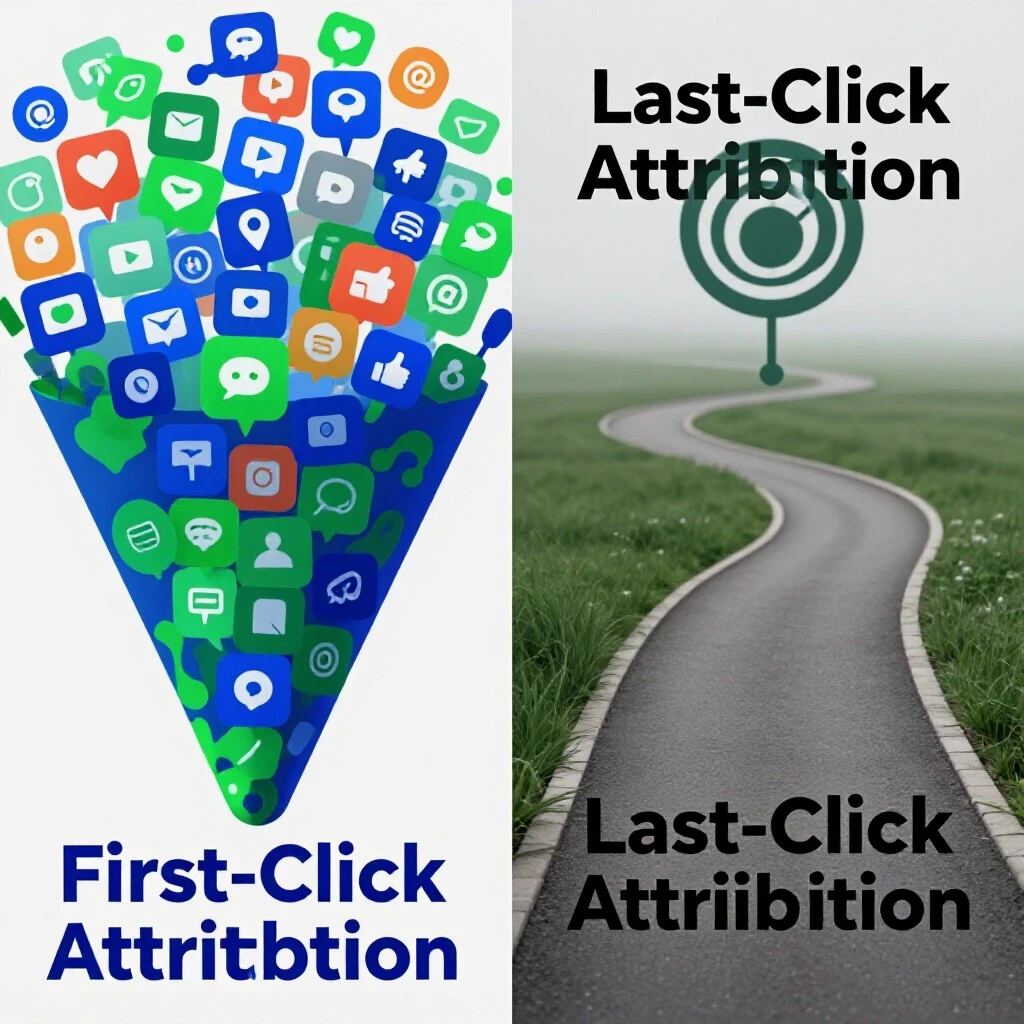
I once had a client who was furious because LinkedIn reported 50 leads, but their CRM only showed 30. This happened because of “attribution windows.” LinkedIn might claim a lead if someone saw an ad 30 days ago, even if they didn’t click it then.
To fix this, I recommend using UTM parameters. These are small bits of code added to the end of a URL that tell your tracking software exactly where a visitor came from. This provides an objective way to compare performance across different networks.
- Step 1: Use a unified tracking tool like Google Analytics 4.
- Step 2: Set a consistent attribution model (e.g., “Last Click”).
- Step 3: Compare the cost-per-qualified-lead (CPQL) rather than just the cost-per-lead (CPL).
- Step 4: Review the data every 14 days to spot trends.
Practical Tools for Performance Tracking
Managing multiple channels requires a stack of tools that can talk to each other. You need a way to see the “big picture” without getting lost in the weeds of each individual platform’s dashboard.
- HubSpot or Salesforce: For tracking leads from the first click to the final sale.
- Supermetrics or Funnel.io: To pull data from all social platforms into one spreadsheet.
- Google Looker Studio: For creating visual reports that are easy for executives to understand.
- Canva or Adobe Express: For quickly resizing creative assets for different platform formats.
- Zapier: To automatically move leads from social forms into your email marketing tool.
A Checklist for High-Level Platform Evaluation
Before you launch your next campaign, run through this checklist. It will help you avoid common mistakes and ensure your budget is being used in the most effective way possible.
- [ ] Have we defined what a “qualified lead” looks like for this specific campaign?
- [ ] Is our tracking pixel installed and firing correctly on all landing pages?
- [ ] Are we using native lead forms to reduce user friction?
- [ ] Have we adjusted our creative assets to match the style of each platform?
- [ ] Do we have a plan to follow up with leads within 24 hours?
- [ ] Is our budget split 60/40 between proven channels and new tests?
- [ ] Have we set a maximum acceptable cost-per-click to prevent overspending?
Final Thoughts on Professional Lead Acquisition
Building a successful lead generation engine is a marathon, not a sprint. It requires constant testing, a willingness to admit when a channel isn’t working, and a deep understanding of your audience’s habits. By focusing on sustainable strategies and objective data, you can justify your marketing spend and deliver real results for your organization.
Start by picking your “Core” platform—the one where your audience is most likely to be in a professional mindset. Master that channel first, then expand into “Satellite” networks to lower your costs and increase your reach. Always keep your eye on the final business outcome, not just the social metrics.
Frequently Asked Questions
Which platform generally offers the highest quality B2B leads? LinkedIn usually provides the highest quality because of its precise professional targeting. Users are on the platform for business purposes, which aligns their intent with your offer. However, this quality comes at a higher price point than other social networks.
How do I justify the high cost of LinkedIn ads to my board? Focus on the “Cost Per Qualified Lead” and the “Lifetime Value” of the customer. Show them that while a lead on Facebook might cost $20, it may only have a 2% chance of closing. A $100 LinkedIn lead might have a 15% chance of closing, making it more profitable in the long run.
Can I use TikTok for B2B lead generation? Yes, but it requires a very different approach. You cannot use a “corporate” tone. It works best for top-of-funnel awareness or for reaching younger professionals in the tech and creative industries. Use it as a satellite channel, not your core lead source.
What is the best way to handle “organic reach decay”? The most effective way is to create “share-worthy” content that provides actual value. Avoid self-promotion. Instead, share original research, solve a common industry problem, or tell a relatable professional story. This signals to the algorithm that your content is worth showing to more people.
Should I send traffic to my website or use native lead forms? Native lead forms almost always have a higher conversion rate because they are faster and easier for the user. However, sending traffic to your website allows you to “pixel” the visitor for retargeting later. A mix of both is often the best strategy.
How often should I change my ad creative? In the professional space, “ad fatigue” happens slower than in consumer markets. I recommend refreshing your creative every 4 to 6 weeks. If you see your click-through rates (CTR) starting to drop, it is time for a new set of images or copy.
What is a “good” conversion rate for professional social ads? A healthy conversion rate for a native lead form is usually between 10% and 15%. For an external landing page, 3% to 7% is considered standard. If your rates are lower, you likely have a “mismatch” between your ad and your audience.
How do I track leads across multiple platforms without double-counting? Use a “Last-Click” attribution model in a tool like Google Analytics. This gives credit to the very last ad the user clicked before converting. While not perfect, it provides a consistent way to compare how different channels are performing.
What is the “60/40” budget rule? This is a strategy where you spend 60% of your budget on your most reliable, proven lead generation channel. The remaining 40% is spent on supporting channels, retargeting, and testing new platforms. This balances stability with growth.
Is X (Twitter) still relevant for professional leads? It is highly relevant for specific niches like FinTech, SaaS, and journalism. If your target audience is active in “real-time” industry conversations, X can be a very cost-effective way to reach them. However, it requires more active monitoring than other platforms.
How do I know when to stop spending on a platform? If a platform fails to meet your “Maximum Acceptable CPL” for three consecutive months despite creative refreshes, it is time to pivot. Don’t fall into the trap of “sunk cost.” Use that budget to scale a channel that is actually performing.
What is the most common mistake marketing managers make? The most common mistake is treating all platforms the same. They use the same image, the same caption, and the same targeting strategy everywhere. Each network has its own culture and “language.” You must adapt your content to fit the environment to be successful.
(This article was written by one of our staff writers, Jonathan Mercer. Visit our Meet the Team page to learn more about the author and their expertise.)