Which Platform Drives Customer Education Engagement? (Comparison Guide)
Focusing on children helps us understand the most basic rules of teaching. When you explain a new concept to a child, you don’t just hand them a manual. You use bright visuals, repeat the core message, and choose an environment where they aren’t distracted. If the setting is too loud, the lesson is lost. If the material is too dense, they walk away.
As a brand manager, I have found that educating a modern audience on social media follows these same rules. We are operating in an era of fragmented attention where users move between apps in seconds. I have spent over a decade tracking how different platforms handle information. What works for a quick tip on TikTok often fails as a deep-depth tutorial on LinkedIn.
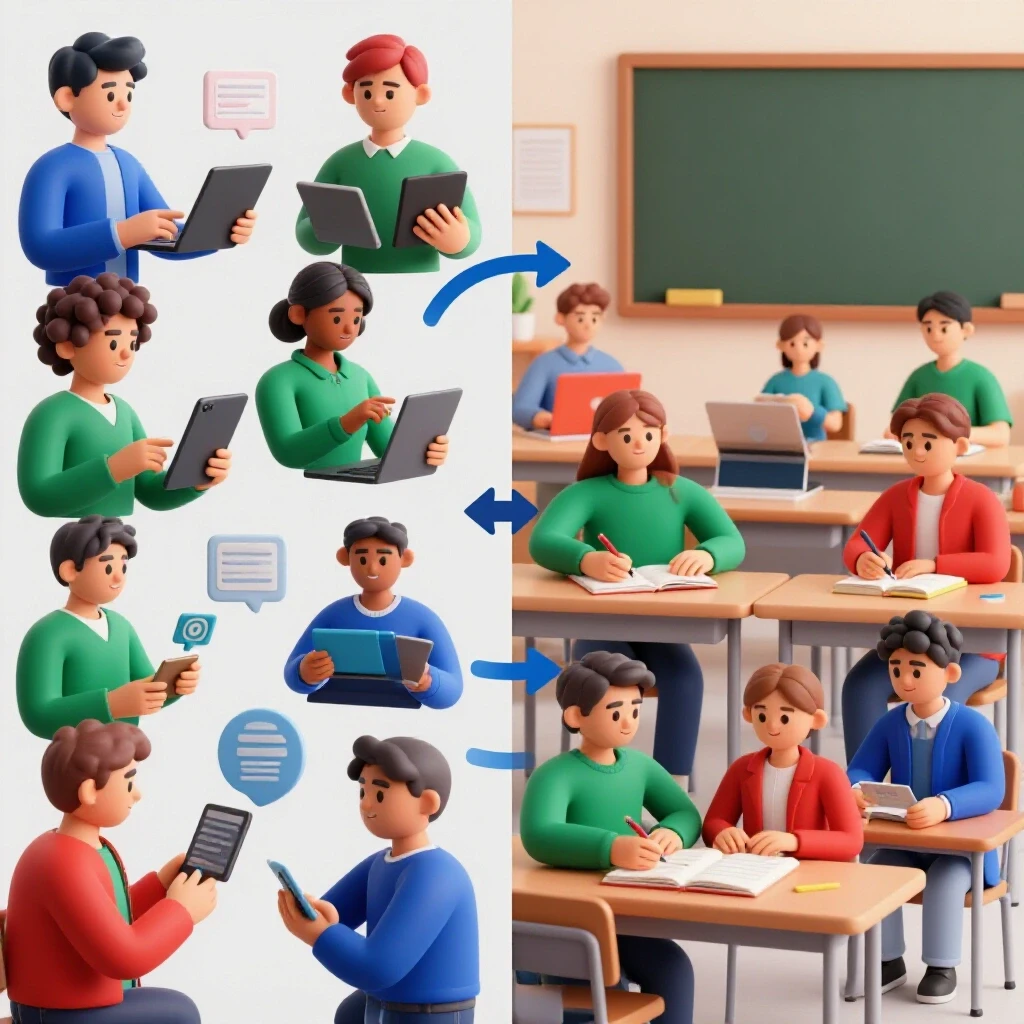
I remember a specific campaign in 2022 where a client insisted on using X (formerly Twitter) for a complex product walkthrough. We saw high impressions, but the engagement was hollow. People saw the posts, but they didn’t learn. When we shifted that same budget into Instagram Carousels and YouTube Shorts, the save rates tripled. This taught me that choosing where to teach is just as important as the lesson itself.
Decoding Audience Intent for Social Learning Environments
Identifying where users are most receptive to learning involves mapping their mindset to the platform’s primary purpose. This process ensures your educational content aligns with how people naturally behave when they open an app.
In my experience, audience demographic trends show that users don’t go to every platform with the same goal. On LinkedIn, the mindset is professional growth. Users are there to learn “how” to do their jobs better. On TikTok, the mindset is discovery and “edutainment.” They want to learn, but it must be fast and visually stimulating.
I often see marketing managers make the mistake of treating all platforms as a single megaphone. They post the same video everywhere and wonder why the results vary. To avoid this, you must understand platform-native retention signals. These are the specific actions—like re-watching a video or scrolling through every slide of a carousel—that tell the algorithm your content is valuable.
| Platform | Primary Learning Mindset | Core Demographic (Age) | Typical Engagement Signal |
|---|---|---|---|
| Professional/Career Growth | 25–45 | Comments & Shares | |
| Lifestyle/Visual Learning | 18–34 | Saves & Story Shares | |
| TikTok | Rapid Discovery/How-to | 13–24 | Watch Time & Re-watches |
| YouTube | Deep-Dive/Research | 18–44 | Average View Duration |
| Community/Local Info | 35–65 | Long-form Comments |
Analyzing Native Formats and Their Impact on Information Retention
Evaluating how different post types affect how well a user remembers a message is the foundation of a strong strategy. Different formats provide different levels of depth and interaction.
For example, Instagram Carousels are excellent for step-by-step guides. They allow the user to control the pace of the information. I have tracked longitudinal data showing that carousels often have higher save rates than single-image posts. A “save” is a high-intent signal; it means the user wants to refer back to that knowledge later.
TikTok and YouTube Shorts rely on “looping” and quick cuts. These are great for “did you know” style education. However, they can suffer from low information retention if the pace is too fast. I suggest using on-screen text to anchor the key points. This helps the viewer process the audio and visual data at the same time.
- Carousels: Best for sequential steps or “before and after” comparisons.
- Short-form Video: Best for high-level tips that spark curiosity.
- Long-form Video (YouTube): Best for comprehensive masterclasses or technical tutorials.
- Polls and Quizzes: Best for testing the audience’s knowledge and increasing comment volume.
Why Engagement Signals Outperform Reach in Educational Campaigns
Shifting focus from how many people saw a post to how many people actively interacted with it is vital for measuring educational success. Reach tells you the size of the crowd, but engagement tells you who was actually listening.
I once managed a portfolio for a software company that was obsessed with “viral” reach. They wanted millions of views. We achieved that on a few posts, but the comment sections were filled with confusion. When we pivoted to a strategy focused on “save velocity”—how quickly people save a post after seeing it—our reach actually dropped, but our customer support tickets regarding “how-to” questions also decreased.
This is where platform-native ad placements come into play. If you are paying to boost an educational post, you should optimize for “ThruPlays” or “Post Engagements” rather than just “Impressions.” According to research from the Reuters Institute, users are becoming more selective about the news and information they consume. They want depth, not just noise.
Navigating Algorithm Updates and Organic Reach Decay
Understanding the constant changes in how social networks distribute content is necessary for long-term planning. Organic reach decay refers to the steady decline in the percentage of your followers who see your posts without paid promotion.
In 2023, many platforms shifted their recommendation engines to favor “unconnected” content. This means your posts are being shown to people who don’t follow you yet. For customer education, this is both a risk and an opportunity. The risk is that your current customers might miss important updates. The opportunity is that you can educate a whole new segment of the market.
I recommend a 60/40 budget split for most educational campaigns. Spend 60% of your budget on your “lead” channel where your most active community lives. Spend the remaining 40% on “secondary support” channels to catch fragmented audiences. This creates a safety net against sudden algorithm shifts on any single platform.
A Framework for Customizing Assets Across Networks
Creating a unified message that feels native to each platform requires a structured approach to asset customization. You cannot simply crop a landscape video into a vertical one and expect it to perform.
When I work on a cross-platform marketing plan, I start with a “Master Narrative.” This is the core lesson we want to teach. Then, we break it down. For LinkedIn, we might turn that narrative into a 500-word thought-leadership post with a PDF attachment. For Instagram, we turn it into an 8-slide carousel. For TikTok, it becomes a 45-second fast-paced video.
- Identify the Core Lesson: What is the one thing the user must know?
- Select the Primary Format: Choose the format that best suits the complexity of the lesson.
- Adapt the Tone: Use professional language for LinkedIn and a more conversational, “behind-the-scenes” tone for TikTok or Instagram.
- Optimize for Sound-Off Viewing: Most users watch mobile video with the sound off. Captions are not optional for education.
- Test and Iterate: Use small ad spends to see which format gets the most “saves” before committing the full budget.
Measuring Holistic ROI Through Engagement Benchmarks
Calculating the return on investment for educational content requires looking at metrics that reflect actual learning and brand affinity. Since we aren’t looking at direct sales here, we focus on engagement depth.
I use a “Quality of Engagement” score to justify budgets to clients. A comment that asks a follow-up question is worth ten times more than a simple emoji comment. A “save” is worth more than a “like.” By tracking these, you can show that your budget is building a more informed, and therefore more loyal, customer base.
| Metric | Why it Matters for Education | Target Benchmark |
|---|---|---|
| Save Rate | Shows intent to revisit the information. | 1-3% of Reach |
| Share Velocity | Shows the information is valuable enough to pass on. | High in first 24 hours |
| Average Watch Time | Measures how much of the lesson was consumed. | >50% of video length |
| Comment Depth | Indicates the audience is thinking about the topic. | Meaningful questions vs. emojis |
Overcoming the Challenges of Fragmented Audiences
Managing a diversified portfolio means dealing with the fact that your audience is spread thin. They might see your tip on Instagram but look for the full tutorial on YouTube.
To solve this, I use a “Cross-Channel Content Loop.” Each piece of content should point to the next logical step in the learning journey. A TikTok video might end with “Check our Instagram highlights for the full checklist.” This doesn’t just increase engagement; it builds a multi-touchpoint relationship with the user.
Interestingly, I have found that “retiring” underperforming accounts can actually help your overall ROI. I once worked with a brand that spent 10 hours a week on X (Twitter) with almost zero engagement. By moving that time and budget into LinkedIn community management, their engagement rates on educational posts jumped by 40%. Don’t be afraid to stop doing what isn’t working.
Practical Tools for Managing Multi-Channel Education
To stay organized, marketing managers need a system that tracks performance across all silos. This helps in justifying budget reallocations to executive boards.
- Unified Content Calendar: A single view of every educational touchpoint across all platforms.
- Platform-Specific Templates: Pre-set aspect ratios and caption lengths for each channel to speed up production.
- Cross-Platform Performance Report Card: A monthly document that compares engagement ratios (e.g., Saves per 1,000 Impressions) across all channels.
- Audience Overlay Analysis: Periodic checks to see how much of your Instagram audience also follows you on LinkedIn.
- Automated Listening Tools: To track what questions customers are asking on social, which informs future educational topics.
Final Steps for Strategic Budget Allocation
As you plan your next quarter, focus on the platforms that prove they can hold your audience’s attention. Start by auditing your last three months of data. Look specifically at “saves” and “watch time.”
If your goal is to teach a new audience about a complex topic, lean into platforms that support longer-form interaction. If you need to reinforce a simple habit or tip, use short-form, high-velocity channels. Always remember that a well-educated customer is more likely to remain a customer.
Your role as a manager is to be the filter. You protect the budget from “shiny object syndrome” and keep it focused on where the engagement is real. By using a data-driven approach to platform comparison analysis, you can confidently tell your board exactly why you chose one channel over another.
Frequently Asked Questions
Which platform is best for teaching complex, technical steps? YouTube remains the leader for deep-dive technical education due to its search-driven nature and high average watch times. However, Instagram Carousels are a strong secondary option for breaking those complex steps into digestible, static slides that users can save and reference.
How do I justify spending budget on engagement rather than direct sales? Explain to stakeholders that engagement metrics like “saves” and “meaningful comments” are leading indicators of brand trust. An educated customer has a higher lifetime value and lower support costs. Use a “Quality of Engagement” report to show how these signals correlate with a more informed community.
What is a “good” save rate for educational content on Instagram? For educational content, a save rate between 1% and 3% of your total reach is considered very strong. If you are below 0.5%, the information might be too basic or the format might not be visually clear enough for the user to want to keep it.
Does organic reach decay mean I have to pay for all my educational posts? Not necessarily, but you should be strategic. Use organic posts to test which topics resonate. Once you see a post with a high “save-to-reach” ratio, put a small “boost” budget behind it to reach a wider audience. This ensures you are only paying to promote content that is already proven to be educational.
Why are comments more important than likes for customer education? Likes are a “low-friction” action that requires almost no thought. Comments, especially those asking questions or sharing experiences, show that the user is processing the information. High comment volume also signals to platform algorithms that the content is sparking conversation, which can increase organic distribution.
How often should I update my cross-platform strategy? I recommend a deep-dive audit every quarter. Social media algorithms and user behaviors shift rapidly. A platform that worked for you six months ago might have changed its feed priority, requiring a shift in your asset formatting or budget allocation.
Should I use the same video for TikTok and Instagram Reels? While the formats are similar, the “vibe” is different. TikTok users prefer raw, unpolished content. Instagram users tend to respond better to slightly higher production values. You can use the same core footage, but consider changing the music, captions, and on-screen text to match each platform’s culture.
What is “share velocity” and why does it matter? Share velocity is the speed at which people send your content to others. For education, high share velocity means your information is timely and solves a common problem. Platforms often reward high share velocity by pushing the content to more people quickly.
How do I handle “fragmented audiences” who see my content on multiple apps? Embrace it. Use a “omnichannel” approach where each platform reinforces the other. For example, use a short tip on TikTok to drive people to a more detailed “Live” session on LinkedIn or Facebook. This creates multiple touchpoints that improve information retention.
Is X (formerly Twitter) still useful for customer education? X is best for real-time updates and quick “threads.” It is less effective for visual, step-by-step education compared to Instagram or YouTube. If your audience is highly technical or in the news/media space, it can work, but watch your engagement-to-impression ratios closely.
What is the most common mistake managers make in platform selection? The most common mistake is choosing a platform based on personal preference or “hype” rather than where the target demographic actually spends their time. Always look at the data—specifically the active user demographic splits—before committing a marketing budget.
(This article was written by one of our staff writers, Jonathan Mercer. Visit our Meet the Team page to learn more about the author and their expertise.)