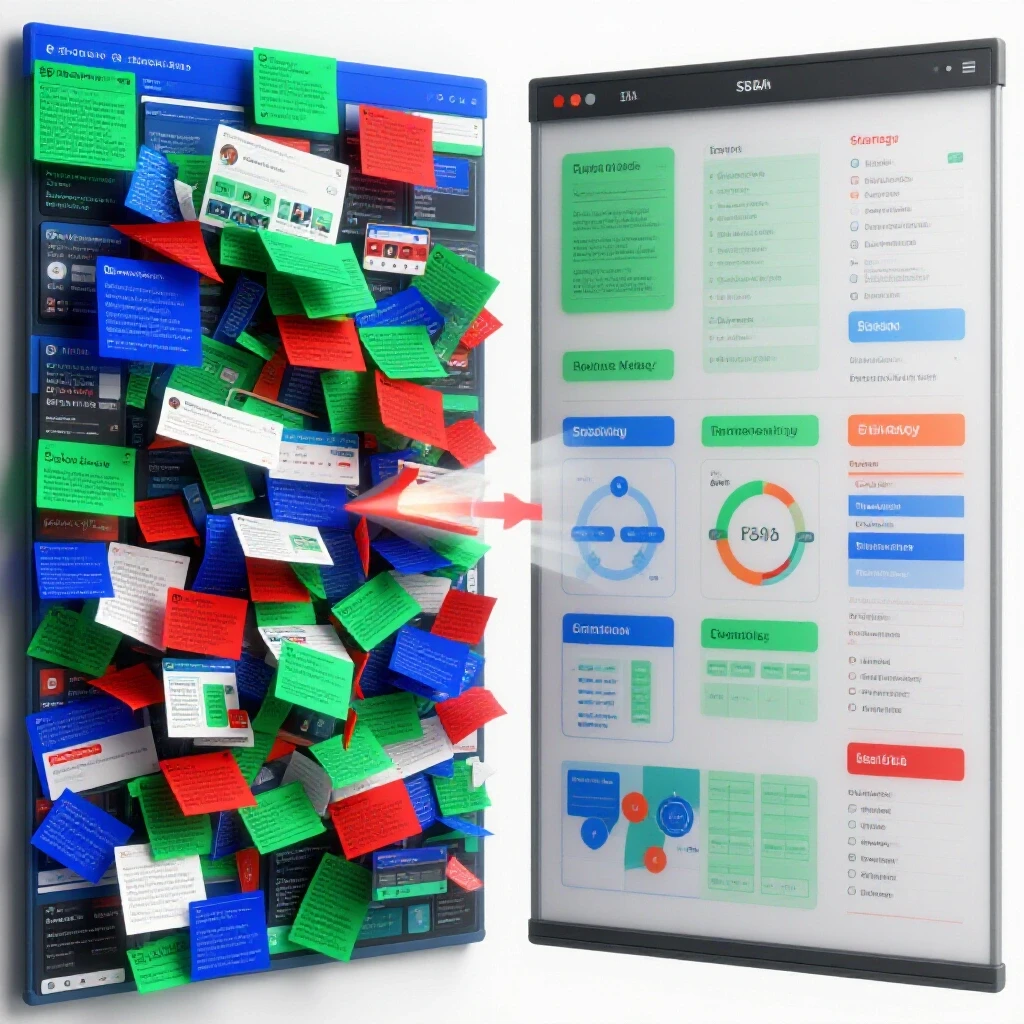
CBO vs ABO Campaigns: Which Scales Better for Social Ads? (Case Study)
In the 2011 film Moneyball, Billy Beane famously challenged the traditional intuition of baseball scouts by relying on rigorous statistical analysis. He stopped looking at how a player looked in a uniform and started looking at the data that actually won games. For those of us managing digital spend, we are in a similar transition. We are moving away from “creative hunches” and toward a structured, evidence-based approach to how we distribute our marketing budgets across social platforms.
Establishing the Framework for Budget Distribution
Deciding how to allocate your funds is the most critical lever in any social media testing methodology. This choice dictates whether the platform’s algorithm decides which audience gets the most money or if you maintain manual control over every dollar. Both paths offer distinct advantages for data-driven content strategy, depending on your goals for growth.
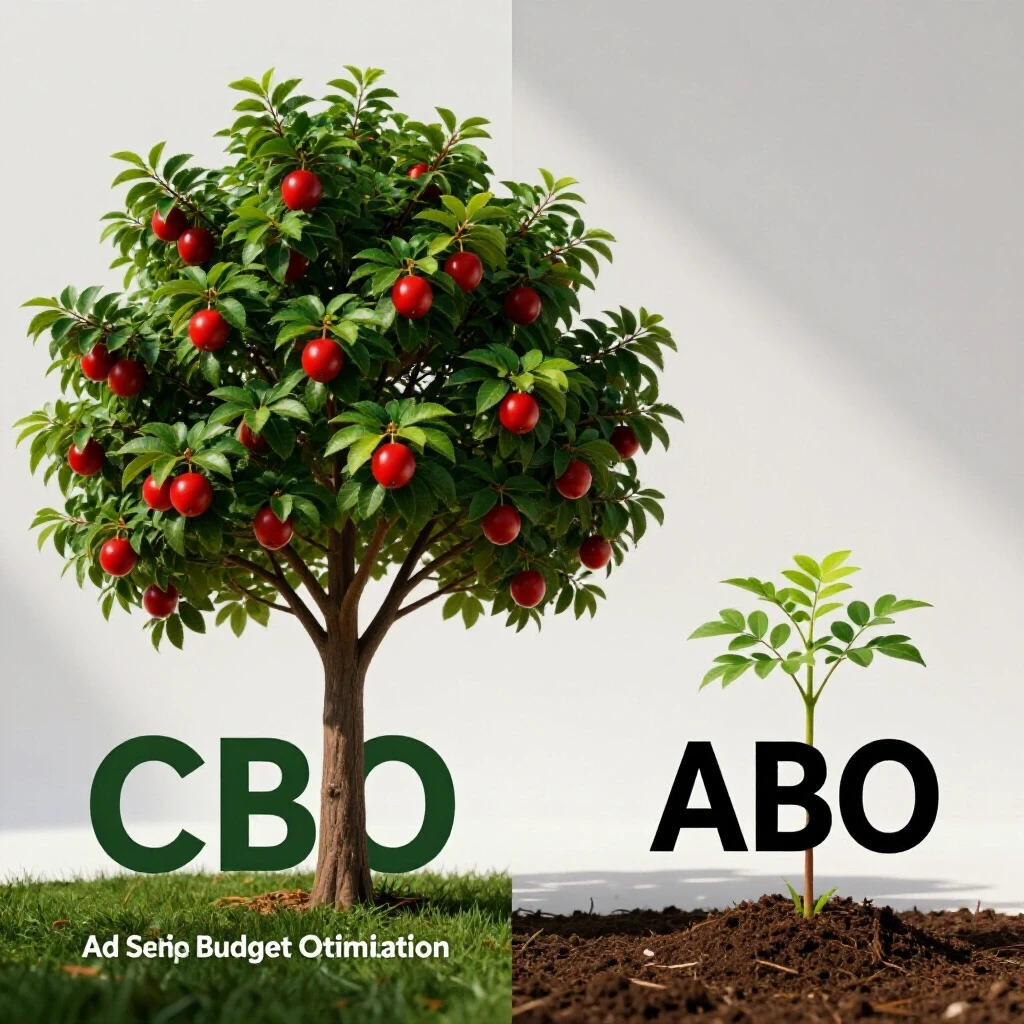
When you centralize your budget at the top level, you are essentially giving the platform’s machine learning permission to find the path of least resistance. It looks for the cheapest opportunities across all your target segments. Conversely, assigning spend to individual groups allows for strict variable isolation. This ensures that every test variant receives the exact same financial weight, which is vital for fair comparison.
Formulating a Rigorous Testing Hypothesis
A hypothesis is a specific, testable prediction about the relationship between two or more variables in your experiments. Instead of a vague goal like “increasing sales,” a strong hypothesis defines exactly what you expect to happen when you change a specific element. This clarity prevents you from chasing noise in your data.
In my nine years of running these experiments, I have found that most failed tests stem from poorly defined questions. You might ask, “Will a centralized budget improve my cost per acquisition compared to manual allocation?” By setting this up as a null hypothesis—assuming there is no difference—you can use statistical tools to see if your results are truly significant or just a lucky streak in the algorithm.
Variable Isolation in Social Media Testing
Isolating variables means ensuring that only one element changes between your test groups so you can accurately measure its impact. If you change both the audience and the budget distribution method at once, you cannot know which one caused the change in performance. This is the cornerstone of any scientific approach.
- Keep your creative assets identical when testing audience segments.
- Use the same bidding strategy across all test arms.
- Ensure your conversion windows are aligned to avoid attribution bias.
- Run tests simultaneously to account for external factors like holidays or platform outages.
Comparing Centralized and Manual Budget Management
The choice between centralized and manual spend control is a choice between algorithmic efficiency and experimental purity. Centralized management lets the platform shift money in real-time to the best-performing areas. Manual control keeps your spend fixed, which is often better for initial content format testing.
| Feature | Centralized Budgeting | Manual Ad Set Budgeting |
|---|---|---|
| Primary Goal | Efficiency and Spend Growth | Variable Isolation and Testing |
| Control Level | High-level (Campaign) | Granular (Ad Set) |
| Algorithm Role | High – Decides Distribution | Low – Follows Fixed Constraints |
| Data Requirements | Higher volume for optimization | Lower volume per individual test |
| Best Use Case | Scaling proven winners | Testing new content formats |
When to Use Centralized Budgeting for Efficiency
Centralized budgeting is most effective when you have already identified winning creative and want to maximize your reach at the lowest cost. In this setup, the platform’s AI analyzes thousands of signals to predict which user is most likely to convert. It then directs your funds toward those high-probability opportunities.
During a project for a growing e-commerce brand, I shifted from manual control to a centralized model once we hit 50 conversions per week. We found that the algorithm was able to navigate daily fluctuations in auction prices much better than a human could. This led to more stable delivery and allowed us to increase our total spend without a spike in costs.
When to Use Granular Control for Testing Purity
Granular spend control is the gold standard for identifying which specific content formats or audiences are actually superior. By forcing the platform to spend an equal amount on two different ad sets, you remove the “delivery bias” where the algorithm favors one ad simply because it got a few early clicks.
I once ran a test where a centralized budget gave 90% of the funds to a high-energy video ad. However, when I ran a manual test with equal spend, a simple static image actually had a higher long-term conversion rate. The video was “clicky” but didn’t convert as well. Without manual control, I would have never known that the static image was the better long-term asset.
Measuring Success with Statistical Significance
Statistical significance in marketing is a measure of how confident you can be that your test results weren’t just a result of random chance. Most analysts aim for a 95% confidence level. This means if you ran the test 100 times, you would get the same result 95 times.
To reach this level, you need an adequate sample size. If you only have 10 conversions, one or two random sales can completely skew your data. I recommend waiting for at least 50 conversion events per variant before making a final decision. Using a standard chi-square calculator can help you determine if the difference in performance between your manual and centralized setups is actually meaningful.
Navigating Platform Attribution and Data Shifts
Attribution is the process of assigning credit for a sale or lead to a specific marketing touchpoint. Since the introduction of stricter privacy controls on mobile devices, this has become significantly harder. Platforms now often use “modeled reporting” to fill in the gaps where data is missing.
I remember a specific instance where our native platform dashboard showed a 20% drop in performance, but our third-party tracking tools showed stability. This discrepancy happened because the platform’s attribution window had changed. It taught me to always verify platform data against a “source of truth,” like your own internal database or a dedicated tracking pixel, to ensure your budget decisions are based on reality.
Actionable Framework for Scaling Proven Results
Once you have identified a winning strategy through manual testing, you need a structured way to increase your spend. Scaling is not just about adding more money; it is about maintaining your efficiency as you reach a broader audience. This requires a transition from testing to growth mode.
- Identify the Winner: Ensure your winning variant has a 95% confidence level over a 7-14 day period.
- Consolidate: Move the winning creative into a centralized budget campaign to allow the algorithm to optimize.
- Monitor Variance: Watch for a performance variance threshold of more than 15-20%. If costs spike, the audience may be saturated.
- Increase Spend Gradually: Raise budgets by 10-20% every 48-72 hours to avoid re-triggering the “learning phase” of the platform.
- Validate via Third-Party: Use your tracking tools to ensure the platform’s reported growth matches your actual business results.
Essential Tools for the Data-Driven Strategist
Running these experiments requires more than just the native ad manager. You need a stack of tools that allow you to document your hypotheses, calculate significance, and track data across different sources. These tools help maintain the integrity of your social media testing.
- Statistical Significance Calculators: Tools like ABTestguide or specialized Excel templates for calculating p-values.
- Documentation Logs: A centralized spreadsheet or Notion database to record every test, its variables, and the final outcome.
- Third-Party Attribution Software: Tools that use first-party cookies to track user journeys more accurately than native pixels.
- Data Visualization Dashboards: Platforms like Looker Studio that pull data from multiple sources into one view.
- Ad Customizers: Scripts or tools that help you quickly create variations for multivariate testing.
Avoiding Common Pitfalls in Budget Allocation
Even with a solid plan, it is easy to make mistakes that invalidate your data. One of the most common is “tinkering” with a campaign while it is still in the learning phase. Every time you change a budget or a creative, the algorithm has to start its learning process over again.
- Don’t end tests too early: Give your experiments at least 7 days to account for weekend vs. weekday behavior.
- Avoid audience overlap: If your test groups are targeting the same people, they will compete against each other, ruining your data.
- Watch for external variables: A sudden news event or a competitor’s massive sale can skew your results regardless of your budget setup.
- Don’t ignore the “Null Result”: Finding out that a new strategy doesn’t work is just as valuable as finding one that does.
Moving Toward Evidence-Based Growth
The transition from manual spend control to centralized optimization is a natural progression in the lifecycle of a campaign. Start with granular control to find what works, then shift to the platform’s automated systems to scale that success. This balanced approach respects both the need for scientific rigor and the power of modern machine learning.
As you move forward, keep your documentation meticulous. The most successful strategists I know aren’t the ones with the most “creative” ideas; they are the ones with the best records of what has worked in the past. By treating your budget allocation as a series of controlled experiments, you turn your marketing spend into a predictable engine for growth.
Frequently Asked Questions
How long should I run a test before switching from manual to centralized budgeting? You should typically run a test for 7 to 14 days. This duration ensures you capture a full weekly cycle of consumer behavior. It also provides enough time for the platform’s algorithm to stabilize after the initial learning period.
What is a “learning phase,” and why does it matter for my budget? The learning phase is the period when the platform’s system is gathering data to optimize ad delivery. During this time, performance can be very volatile. Making major changes to your budget distribution during this phase can reset the learning, leading to inconsistent results.
Can I test different content formats using a centralized budget? It is not recommended for pure testing. A centralized budget will naturally favor the ad that gets the best early engagement, which might not be the most effective ad long-term. For testing formats, use manual spend control to ensure each format gets a fair amount of data.
What is the minimum number of conversions needed for statistical significance? While it varies, a common benchmark is at least 50 conversions per variant. This volume helps reduce the impact of random outliers and provides a more stable base for calculating your cost-per-acquisition metrics.
How do I handle a “null result” where both budget methods perform the same? A null result is actually a success in testing terms. It tells you that your current budget distribution isn’t the bottleneck for performance. In this case, you should look at other variables, such as your creative offer or landing page experience.
Does audience size affect whether I should use centralized or manual budgeting? Yes. Centralized budgeting generally performs better with larger, “broad” audiences because it gives the algorithm more room to find conversions. Manual budgeting is often better for smaller, niche audiences where you want to ensure every person is reached.
What should I do if my third-party data contradicts the platform’s data? Always prioritize your first-party or third-party data if it tracks actual business outcomes like sales or leads. Platforms often use “view-through” attribution, which can overstate their impact. Relying on your own data ensures your scaling decisions are based on real revenue.
Is it possible to scale a campaign too quickly? Absolutely. Increasing your budget by more than 20% at a time can often cause the cost-per-acquisition to spike. This happens because the algorithm is forced to bid into more expensive auctions to spend your new budget quickly.
How do I prevent my test groups from competing against each other? Use “exclusion” audiences to ensure that people in Test Group A cannot see the ads in Test Group B. This process, known as audience de-duplication, is essential for maintaining the integrity of your variable isolation.
Why is a 95% confidence level the standard for these tests? The 95% level is a balance between accuracy and speed. While a 99% level would be more certain, it would require much more data and time. For most marketing environments, 95% provides enough certainty to make informed business decisions without slowing down growth.
(This article was written by one of our staff writers, David Thompson. Visit our Meet the Team page to learn more about the author and their expertise.)