How to Get Clients From a Small Social Media Audience (Step-by-Step)
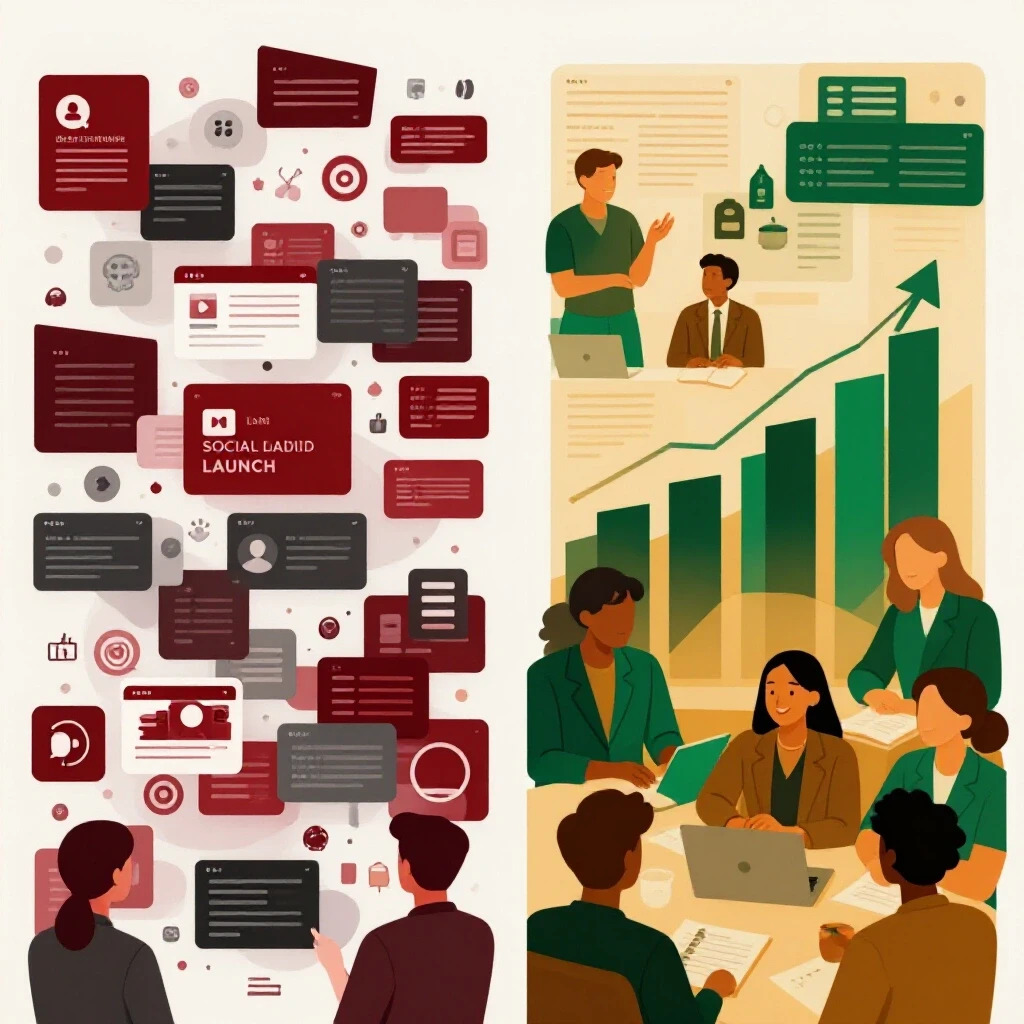
If you are looking for a way to go viral overnight or use aggressive scripts to close deals, this guide is not for you. In 13 years of marketing, I have seen many professionals chase “hacks” that actually damage their reputation. Building a brand as an executive or consultant is a slow-burning process. If you rush it with high-pressure tactics, you risk losing the very thing you need most: trust.
Defining Your Core Professional Expertise and Voice
Executive positioning is the strategic alignment of your real-world experience with a digital persona that feels authentic and reliable. It is about moving from being a “user” of social media to a “leader” of a specific conversation.

When I first transitioned from corporate marketing to independent consulting, I felt the same anxiety you likely do. I worried that if I didn’t post every day, I would be forgotten. I also worried that if I did post, I would look like I was “trying too hard.” This is a common hurdle in professional personal branding. The goal is not to be a “creator” in the sense of an entertainer, but to be a recognized authority in your niche.
To find your voice, you must identify your “Sweet Spot.” This is the intersection of what you know deeply, what your target audience struggles with, and the unique way you solve those problems. For an executive, this often involves sharing the “why” behind industry shifts rather than just the “what.”
Why Over-Hyped Brand Styles Fail Professionals—And How to Formulate a Real Trust Strategy
Digital trust architecture is the framework of content and interactions that proves your competence and character to a digital audience over time. It relies on consistency and vulnerability rather than polished perfection.
Many consultants fail because they adopt a “guru” tone. They use hyperbolic language and make big promises. For a corporate audience, this is a red flag. Academic studies on digital professional reputation show that “perceived expertise” is closely tied to “perceived honesty.” If your content feels like a sales pitch, your authority drops.
Instead, focus on sustainable authority-building. This means sharing your process, your failures, and your nuanced views on industry trends. When you show the “workings” of your professional life, you build a deeper level of trust than any “top 10 tips” list ever could.
| Metric Category | Superficial Metrics (Avoid Chasing) | Trust-Based Metrics (Focus Here) |
|---|---|---|
| Engagement | Viral likes from non-industry accounts | Comments from peers and target clients |
| Reach | High impressions with low relevance | Profile visits from specific companies |
| Growth | Rapid follower spikes from “pods” | Slow, steady growth of qualified leads |
| Conversion | High-pressure DM “closes” | Inbound inquiries for discovery calls |
Developing Content Themes for Sustainable Authority-Building
Content pillars are the 3-4 primary topics you discuss consistently to build a recognizable area of expertise. They act as a compass for your digital presence, ensuring you don’t drift into irrelevant subjects.
I once worked with a CFO who felt he had nothing “exciting” to share. We developed a strategy around the theme of “Financial Literacy for Non-Financial Founders.” He didn’t need to be exciting; he needed to be useful. By sticking to this pillar, he attracted founders who felt intimidated by finance but trusted his calm, educational tone.
Your pillars should reflect your B2B thought leadership. One pillar might be “Industry Trends,” where you analyze news. Another could be “Leadership Lessons,” where you share personal stories. The third should be “Problem-Solving,” where you address specific pain points your clients face.
- Pillar 1: The Visionary. Discuss where your industry is going in 5 years.
- Pillar 2: The Practitioner. Share a step-by-step breakdown of a recent project.
- Pillar 3: The Human. Share a challenge you faced and how you handled it.
Choosing Strategic Channels for B2B Thought Leadership
Audience mapping is the process of identifying exactly where your ideal clients spend their time and what kind of information they seek on those platforms. For most professionals, this means focusing on LinkedIn, with Instagram as a secondary “behind-the-scenes” channel.
LinkedIn is the gold standard for reputation management. It is where professional context is already established. Instagram, however, can be powerful for solopreneurs who want to show the human side of their business. I use Instagram to show my office setup, the books I’m reading, and my daily routine. This “humanizes” the high-level expertise I share on LinkedIn.
Don’t try to be everywhere. It is better to have a robust, engaged presence on one platform than a thin, automated presence on four. For an executive, 2-3 high-quality posts per week are often more effective than daily “filler” content.
Crafting Content That Builds Digital Trust
Professional personal branding requires a shift from “broadcasting” to “conversing.” This means writing in a way that invites a response and shows you value the reader’s time.
When writing, use the “Problem-Agitation-Solution” (PAS) framework, but keep it professional. Identify a common industry problem, explain why it is difficult to solve, and offer a nuanced perspective. Avoid “clickbait” headlines. Instead, use clear, descriptive titles that tell the reader exactly what they will gain.
I remember a client, a specialized consultant in supply chain logistics, who struggled with “looking unprofessional.” We shifted her strategy from sharing news links to writing 300-word reflections on those links. This small change transformed her from a “content curator” to a “thought leader.” She wasn’t just sharing news; she was providing the lens through which to view it.
Managing Consistency Without Burnout
A platform consistency calendar is a realistic schedule that balances your professional workload with the need for a digital presence. For most of my clients, I recommend a “2-4 hour weekly” commitment.
Consistency is not about frequency; it is about reliability. If you post every Tuesday and Thursday, your audience begins to expect you. This creates a “rhythm of trust.” To manage this, use tools that allow you to draft and schedule content in advance.
- Buffer or Taplio: For scheduling LinkedIn posts and tracking engagement.
- Notion: For building a “content bank” of ideas and drafts.
- Canva: For creating simple, professional-looking templates for data or quotes.
- Shield App: For deep analytics on LinkedIn to see which posts are actually reaching decision-makers.
Building Relationships Through Trust-Based Networking
Algorithmic networking weights are the “invisible” scores platforms give your profile based on how you interact with others. If you only post and never comment, the algorithm (and your network) sees you as a broadcaster, not a community member.
The most effective way to turn an audience into clients is to engage with their content. Spend 15 minutes a day commenting on the posts of peers, potential clients, and industry leaders. These comments should be more than “Great post!” They should add value, ask a question, or provide a different perspective.
When someone comments on your post, reply. This is where the real “conversion” happens. A thoughtful reply to a comment can often lead to a direct message, which can then lead to a discovery call. This is the essence of trust-based networking.
Transforming Visibility into Tangible Professional Opportunities
Digital lead conversion for professionals is the process of moving a contact from a public interaction to a private, value-driven conversation. This is not about “closing” a deal in the DMs; it is about opening a door.
Avoid high-pressure sales. Instead, offer “low-friction” next steps. This could be a link to a longer article you wrote, an invitation to a webinar, or a simple suggestion to “continue this conversation over a brief call.”
| Stage | Action | Goal |
|---|---|---|
| Awareness | Educational post on a specific problem | Get a profile visit |
| Interest | Reader comments or likes multiple posts | Establish familiarity |
| Trust | You provide a helpful resource in a DM | Move to a private channel |
| Lead | Reader asks a specific question about your work | Schedule a discovery call |
The timeline for this is often 3-6 months. In my own practice, I’ve found that the clients who stay the longest are the ones who followed my content for half a year before ever reaching out. They already knew my philosophy and trusted my expertise.
Measuring Reputation Management and Brand Equity
Qualitative trust metrics are indicators of your brand’s health that go beyond simple numbers. They include the “quality” of people reaching out to you and the “nature” of the conversations you are having.
Don’t just look at follower counts. Look at your “Profile Visit Conversion Rate.” If 100 people visit your profile and 5 of them are your ideal clients, that is a success. Use a “Personal Brand Audit” every quarter to see if your content is still aligned with your professional goals.
- Metric 1: Are you being invited to speak on podcasts or at events?
- Metric 2: Are peers tagging you in relevant industry discussions?
- Metric 3: Is the “People Also Viewed” section of your LinkedIn profile filled with your actual competitors or peers?
Practical Steps for Your First 30 Days
To build a sustainable, reputation-first brand, start small. Do not try to overhaul your entire digital presence in one weekend.
- Week 1: Optimize your LinkedIn profile. Ensure your headline clearly states the value you provide, not just your job title. Use a professional headshot.
- Week 2: Identify your 3 content pillars. Write down 5 sub-topics for each.
- Week 3: Start commenting. Find 10 industry leaders and engage with their posts daily.
- Week 4: Post your first “Value-First” piece of content. Focus on a specific problem you solved for a client (anonymized).
Conclusion: The Long-Term View of Digital Authority
Building a personal brand as an executive is an investment in your “career insurance.” It is about ensuring that when people search for you—or the problem you solve—they find a consistent, credible, and human voice.
I have seen professionals with fewer than 1,000 followers build multi-million dollar consulting businesses. They didn’t do it by being “famous.” They did it by being “trusted” by the right 1,000 people. Focus on the depth of your connections, not the breadth of your reach. The opportunities will follow the authority you build.
Frequently Asked Questions
What if I don’t have time to post every day? You don’t need to post every day. For executives and solopreneurs, consistency is more important than frequency. Two high-quality, thoughtful posts per week are much better than five rushed ones. Focus on “quality over quantity” to maintain your professional reputation.
How do I avoid looking like a “self-promoter”? The best way to avoid looking like a self-promoter is to provide 80% value and 20% “ask.” Share insights, lessons, and data that help your audience. When you do talk about your services, frame it as a solution to a problem you’ve already discussed.
What should I do if a post gets zero engagement? Don’t delete it. Low engagement happens to everyone, often due to platform algorithms rather than the quality of your content. Use it as data. Ask yourself: Was the hook clear? Was it relevant to my audience? Move on to the next post.
How do I transition a “fan” into a “client” without being pushy? Watch for “buying signals,” such as someone asking a specific question about your process or liking every post you write about a certain service. Reach out with a helpful resource related to their interest. Let the conversation develop naturally.
Do I need a professional photographer and editor? Not necessarily. While a professional headshot is essential for LinkedIn, your daily content can be more “organic.” High-quality smartphone photos or simple text-based posts often perform better because they feel more authentic and less like an ad.
What is the biggest mistake executives make on social media? The biggest mistake is being too formal or “corporate.” People connect with people, not logos. If your writing sounds like a press release, people will scroll past. Use a conversational tone, share personal stories, and don’t be afraid to show a bit of personality.
How long does it take to see actual business results? Typically, it takes 3 to 6 months of consistent activity to see a steady stream of inbound opportunities. Trust takes time to build. Think of it as a long-term asset rather than a quick-fix marketing campaign.
Should I talk about my personal life? Share personal stories only if they have a professional lesson or help define your values. You don’t need to share what you had for breakfast, but sharing a challenge you overcame while training for a marathon can show discipline and resilience.
How do I handle negative comments or “trolls”? For professionals, the best approach is a “polite but firm” response or simply ignoring them. If the comment is constructive, address it. If it is purely negative, don’t engage. Your audience will judge you by how you handle the situation.
Can I outsource my personal branding? You can outsource the “mechanics” (scheduling, formatting, editing), but you cannot outsource the “thinking.” Your unique insights and voice are what build trust. A consultant can help you extract those ideas, but the core must come from you.
(This article was written by one of our staff writers, Alexander Voss. Visit our Meet the Team page to learn more about the author and their expertise.)