How to Fix Low-Conversion Social Media Launches (Step-by-Step)
Highlighting innovation often means stepping into the unknown, which carries the inherent risk of a quiet market response. As a consultant with 13 years in the field, I have seen that even the most seasoned professionals can stumble when translating their real-world expertise into a digital campaign. Recently, I managed a specialized offer launch that did not meet its conversion targets. This experience was a humbling reminder that sustainable authority-building requires more than just high-level knowledge; it demands tactical precision and a deep alignment with how your network perceives value.
In my work helping executives establish their voices on LinkedIn and Instagram, I emphasize that reputation is a slow-burning asset. When a specific campaign underperforms, it is rarely because the professional lacks expertise. Instead, the friction usually exists in the technical execution—the audience segmentation, the creative testing, or the funnel structure. By analyzing these tactical missteps, we can identify how to better protect our professional personal branding while pursuing growth.
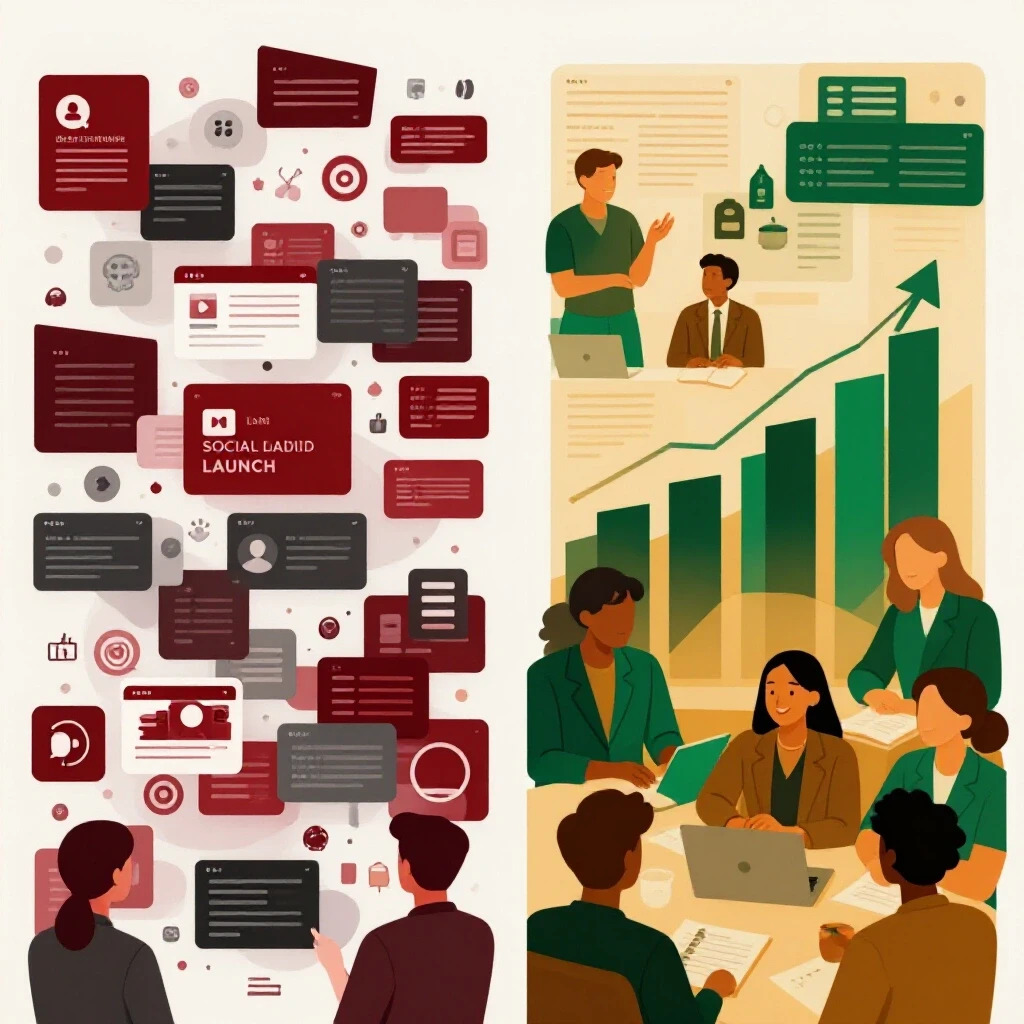
Why Misaligned Audience Mapping Dilutes Professional Authority
Audience mapping is the process of identifying exactly who your content is for and what specific problems they need solved. It involves moving beyond broad job titles to understand the psychological triggers and daily challenges of your ideal client. Without this clarity, your message becomes too diluted to spark action.
In the underperforming campaign I analyzed, my primary error was targeting too wide a demographic. I focused on “corporate leaders” as a whole, rather than narrowing the scope to “mid-sized tech founders facing Series B scaling hurdles.” This lack of specificity meant that while my engagement numbers were decent, the actual conversion to leads was low.
When your audience is too broad, your B2B thought leadership lacks the “sharpness” required to stop the scroll. Executives often fear that narrowing their niche will limit their opportunities. However, in digital spaces, being everything to everyone often results in being nothing to anyone.
- The Mistake: Using broad professional categories instead of specific pain points.
- The Impact: High “vanity” engagement (likes) but zero “intent” engagement (inquiries).
- The Lesson: Professional personal branding relies on being the definitive answer to a very specific question.
Creative Testing Errors in Sustainable Authority-Building
Creative testing is the practice of running different versions of visuals and copy to see which resonates most with your audience. It allows you to move away from assumptions and rely on actual user behavior to guide your strategy. For professionals, this means testing different “tones” of authority to see what builds the most trust.
During this specific launch, I relied on a single set of highly polished, “corporate-style” graphics. I assumed that because my clients were executives, they would prefer a formal, sterile aesthetic. I failed to test more “human” or “behind-the-scenes” visuals that show the person behind the title.
Data from digital trust studies suggests that users on platforms like LinkedIn are increasingly drawn to “authentic” imagery over stock photos or over-produced designs. By not testing a variety of creative assets, I missed the opportunity to see that my audience actually preferred a more approachable, conversational visual style.
| Metric Category | Superficial Metrics (Vanity) | Trust-Based Metrics (Quality) |
|---|---|---|
| Engagement | Total Likes and Emoji Reactions | Long-form Comments and Direct Questions |
| Reach | Total Impressions (Views) | Profile Visits from Target Job Titles |
| Conversion | Link Clicks without Action | Newsletter Sign-ups or Consultation Requests |
| Networking | Follower Count Growth | Inbound Connection Requests from Peers |
How Poor Posting Cadence Disrupts Executive Social Media Strategy
Posting cadence refers to the frequency and timing of your content distribution. It is not just about “staying active”; it is about creating a predictable rhythm that your network can rely on. A consistent executive social media strategy builds a sense of reliability and presence in the minds of your peers.
In my underperforming launch, my posting schedule was erratic. I started with high energy, posting twice a day, but then dropped to once a week when the initial results were slow. This inconsistency signaled a lack of commitment to the offer. It also confused the platform algorithms, which prioritize accounts that maintain a steady flow of interaction.
For a busy solopreneur, a sustainable schedule is more important than a high-frequency one. If you can only manage two high-quality posts per week, that is far better than five rushed posts followed by a month of silence. Trust is built through the “mere exposure effect,” where people develop a preference for things merely because they are familiar with them.
- Consistency Parameter: Aim for 3 posts per week as a baseline.
- Time Commitment: Dedicate 2 hours on Sunday for drafting and 15 minutes daily for engagement.
- Reputation Risk: Ghosting your audience during a launch suggests that your business operations might be equally disorganized.
Correcting Conversion Funnel Gaps in B2B Thought Leadership
A conversion funnel is the structured path a prospect takes from first discovering your brand to eventually making a purchase or booking a call. In professional services, this funnel must be built on a foundation of education and proof. It moves the user from “Who is this?” to “I trust this person’s expertise.”
The friction in my recent campaign occurred at the transition from the social post to the landing page. My LinkedIn posts were high-level and strategic, but the landing page was too “salesy” and aggressive. This created a cognitive dissonance for the reader. They felt they were engaging with a peer on social media, but then felt they were being “pitched” by a stranger on the website.
To maintain reputation management, every step of the funnel must feel like a continuation of the same conversation. If your social media voice is calm and analytical, your sales page cannot be loud and full of “limited time offer” countdown timers. This mismatch destroys the trust you worked so hard to build.
One of my biggest fears during the low-response launch was looking “unsuccessful” in front of my peers. I worried that if the campaign didn’t result in a flood of public comments, people would think my expertise was waning. This fear led me to hesitate in my follow-up communications, which further hurt the conversion rates.
I have learned that most of your audience is watching silently. Academic research into “lurker behavior” shows that up to 90% of social media users consume content without ever liking or commenting. Just because the public metrics are low does not mean your authority is not being established. The real “conversion” often happens in the DMs or via a direct email months later.
- Actionable Benchmark: Track “Profile Visits” rather than “Post Likes.” High profile visits indicate that people are curious about your background, even if they aren’t clicking “like.”
- Professional Standard: Ensure your profile is 100% optimized with a professional headshot and a value-driven headline before any launch.
Analyzing Lead Generation Conversion Timelines
Lead generation in the B2B world is rarely instant. It is a process of nurturing relationships over time through trust-based networking. Unlike consumer products, high-ticket professional services require multiple “touchpoints” before a lead feels comfortable reaching out.
In my failed launch, I expected results within seven days. I did not account for the fact that my target audience—busy executives—might need two or three weeks to even see my content, let alone process the offer. I judged the campaign’s success far too early.
| Phase | Activity | Expected Outcome |
|---|---|---|
| Week 1-2 | Problem Awareness Posts | High Reach, Low Conversion |
| Week 3-4 | Framework & Logic Posts | Increased Profile Visits, Inbound Questions |
| Week 5-6 | Direct Offer & Proof | Qualified Lead Inquiries |
By understanding this timeline, you can avoid the anxiety that comes with a slow start. Sustainable authority-building is a marathon, not a sprint. If you stop your campaign at week two because you haven’t seen a “return on investment,” you are quitting right before the trust starts to solidify.
Practical Tools for Managing a Professional Digital Presence
Managing a brand while running a business requires the right infrastructure. You do not need a massive team, but you do need systems that prevent “content burnout” and ensure your executive social media strategy remains consistent.
- AuthoredUp: This tool allows you to preview how your LinkedIn posts will look on different devices, ensuring your formatting is professional and readable.
- Shield Analytics: This provides deep data on your LinkedIn performance, helping you see which “types” of posts are actually reaching your target companies.
- Taplio or Buffer: Use these for scheduling, but always spend 10 minutes manually engaging after a post goes live to maintain the “human” element.
- Notion or Trello: Create a “Content Library” where you store your best ideas, frameworks, and client stories so you never have to start from a blank page.
Personal Brand Audit Checklist for Executives
Before launching any new offer or initiative, use this checklist to ensure your digital foundation is strong enough to support your reputation.
- Profile Alignment: Does my “About” section speak to the specific problem I am currently solving?
- Social Proof: Do I have at least three recent recommendations or featured posts that validate my expertise?
- Visual Consistency: Are my graphics, headshots, and banners consistent in color and tone?
- Friction Check: Have I clicked through my own funnel on a mobile device to ensure the “sign-up” process is easy?
- Engagement Plan: Do I have a list of 20 “industry peers” whose content I will comment on daily during the launch?
Conclusion: Lessons for Long-Term Authority
The most important takeaway from my recent experience is that a “failure” in conversion is simply a data point in a larger journey. For an executive or solopreneur, your brand is not a single campaign; it is the sum of your interactions over years. By focusing on sustainable authority-building rather than “hacks,” you ensure that even an underperforming launch contributes to your long-term credibility.
The errors I made—broad targeting, lack of creative testing, and inconsistent cadence—are easily fixed. What is harder to fix is a lost reputation caused by “hypey” or unprofessional behavior. Stay grounded, stay consistent, and remember that deep trust is the only currency that truly matters in the professional world.
Frequently Asked Questions
How do I know if my audience segmentation is too broad?
Why does a “polished” look sometimes perform worse than a “raw” one?
In digital spaces, over-produced content can feel like an advertisement, which people instinctively ignore. A “raw” or “human” photo (like a shot of your workspace or a candid photo from a conference) feels like a personal update from a colleague, which builds more immediate trust.
How often should an executive post to stay relevant without looking “spammy”?
Three times a week is the “goldilocks” zone for most professionals. It provides enough frequency to stay top-of-mind but isn’t so frequent that it overwhelms your network or makes you look like you have nothing else to do.
What is the most common friction point in a B2B conversion funnel?
The most common point is the “ask.” Many professionals either never ask for the business, or they ask too abruptly. The transition from “helpful content” to “paid offer” should feel like a natural next step, not a hard pivot.
How do I manage my reputation if a post or campaign gets zero engagement?
The best approach is to leave it up and stay consistent. Deleting posts can look insecure. Remember that many high-level executives are “silent readers.” I have had clients reach out to me about posts that had only two likes, but those two likes didn’t represent the 200 people who read the post and found it valuable.
Should I use automated tools for networking?
No. Automated “connection request” tools often violate platform terms and, more importantly, they feel robotic. For professional personal branding, 10 personalized, thoughtful connection requests per week are far more effective than 100 automated ones.
How much time should I realistically spend on my digital brand each week?
For most of my clients, 3 to 5 hours per week is sufficient. This includes content creation, engaging with others’ posts, and responding to direct messages. It is about the quality of the time spent, not the sheer volume.
What is the difference between “vanity metrics” and “authority metrics”?
Vanity metrics are things like total followers or likes, which look good but don’t pay the bills. Authority metrics include the number of times your profile is viewed by decision-makers, the depth of the comments you receive, and the number of inbound inquiries for your services.
How do I overcome the fear of looking unprofessional online?
Focus on being “helpful” rather than “promotional.” If your goal is to provide value and solve problems for your network, you will never look unprofessional. Professionalism is about the quality of your insights, not the perfection of your video editing.
Is Instagram relevant for B2B thought leadership?
Yes, but it serves a different purpose than LinkedIn. While LinkedIn is your “digital office,” Instagram is often your “digital coffee shop.” It is a great place to show the human side of your brand and build a more personal connection with your audience.
(This article was written by one of our staff writers, Alexander Voss. Visit our Meet the Team page to learn more about the author and their expertise.)