How to Fix Broken Ad Sequences in Social Media Campaigns (Guide)
Every major brand manager eventually faces a moment where the metrics simply stop making sense. You open your dashboard to find that reach has plummeted, costs have spiked, and the once-reliable flow of engagement has dried up. In my 14 years of managing high-visibility accounts, I have learned that these moments are rarely random. They are usually the result of a specific breakdown in the logical flow of your paid campaigns. While the initial drop causes significant stress, it also offers a unique opportunity to audit your operations and build a more stable foundation for future growth.
Diagnosing Sudden Performance Drops in Paid Social Funnels
Algorithmic penalty diagnosis is the process of identifying why a platform has restricted your content’s reach or why your delivery logic is failing. It involves looking past surface-level metrics like clicks to find the underlying technical or behavioral triggers. By isolating these variables, you can determine if the issue is a platform-level restriction or a manual error in your campaign setup.
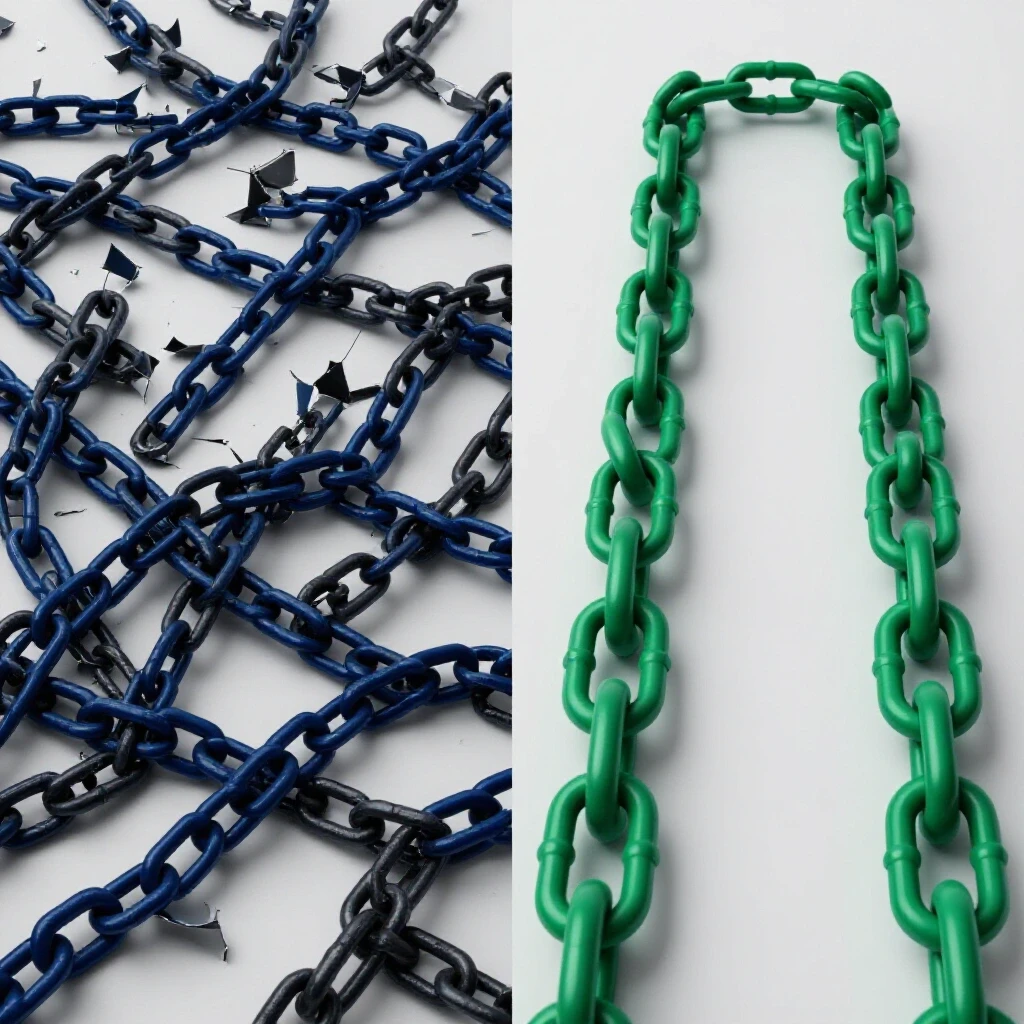
When I managed a global retail account, we saw a 40% drop in reach velocity over forty-eight hours. The team was panicked, fearing a shadowban—a term for when a platform limits your visibility without formal notice. I began by checking our “account health” tab and found no explicit violations. This suggested the issue was not a policy strike but a breakdown in our audience sequencing. Our retargeting loops were overlapping, causing the algorithm to suppress our ads because we were essentially bidding against ourselves for the same small group of users.
To find the root cause, you must look at the engagement variance threshold. This is the difference between your expected interaction rate and your actual performance. If your ads are being shown but not clicked, the platform’s content filtration system may mark your brand as “low quality.” This lowers your priority in the auction. I use a specific checklist to separate technical glitches from audience fatigue.
| Diagnostic Factor | Indicator of Logic Failure | Indicator of Platform Penalty |
|---|---|---|
| Reach Velocity | Gradual decline over 7–10 days | Sharp drop (>50%) in 24 hours |
| Frequency Metrics | High frequency (>4) with low CTR | Normal frequency with zero reach |
| CPM Trends | Steady increase as audience saturates | Sudden, unexplained spike in costs |
| Quality Scores | “Average” or “Below Average” ranking | “Account Restricted” or “Under Review” |
Identifying Platform Policy Triggers and Content Filtration
Platform policy scoring is a hidden metric used by social networks to determine the “safety” and “relevance” of your brand. If your ads receive a high ratio of “Hide Ad” reports or if your landing pages have high bounce rates, the system may place your account in a lower tier of delivery. Understanding these thresholds is vital for any brand reputation recovery effort.
I once worked with a brand that unknowingly triggered a content moderation threshold by using “clickbait” style headlines that violated updated community guidelines. We didn’t get an email; we just saw our impressions vanish. This is why I emphasize monitoring your report-to-view ratio. If more than one out of every 5,000 people reports your content, you are entering a high-risk zone.
When the algorithm detects a pattern of negative feedback, it doesn’t just stop that one ad. It often suppresses the entire account’s reach to protect the user experience. To recover, you must first identify which specific creative or audience segment caused the friction. Once that “toxic” element is removed, the account can begin its baseline rehabilitation period, which typically lasts two to three weeks.
- Content Filtration Systems: These are automated programs that scan your ads for prohibited keywords or visual patterns.
- User Report Algorithms: These track how often users interact negatively with your brand (e.g., “See fewer ads like this”).
- Brand Safety Validation: Platforms check if your ads appear next to controversial content, which can affect your auction bid strength.
Formulating Stakeholder Communications During a Performance Crisis
Internal stakeholder alignment is the act of explaining complex technical failures to leadership in a way that manages expectations and reduces pressure. It involves translating “algorithmic penalties” into “operational recovery timelines.” Effective communication prevents knee-jerk reactions, such as turning off all ads, which can actually hurt your recovery.
During a major reach drop for a high-spend client, the CMO demanded an “instant restoration” of traffic. I had to explain that social platforms are like credit scores; you can ruin them in a day, but rebuilding trust takes time. I presented a Trust Recovery Phase Timeline to show that we were moving through a logical process. This helped shift the conversation from “why is this happening?” to “how are we fixing it?”
When speaking to upper management, avoid technical jargon. Instead of talking about “pixel firing errors,” talk about “data feedback loops.” Explain that the algorithm needs a “cooling-off period” to reset its perception of the brand. Providing a 5–15 business day window for the initial recovery phase sets a realistic benchmark and reduces the stress on your operational team.
- Acknowledge the Gap: State the exact percentage of the reach drop.
- Define the Cause: Briefly explain the sequencing error or policy trigger.
- Outline the Fix: Detail the changes being made to ad rotation and audience targeting.
- Set the Timeline: Give a date for the first incremental engagement check.
Executing a Systematic Recovery Campaign for Paid Social
An audience reach recovery campaign is a structured series of actions designed to prove to the platform that your account is once again providing value to users. It involves moving away from aggressive “sales-first” ads and toward high-engagement, low-friction content. This process helps “warm up” the account after a period of stagnation or penalty.
In one instance where our retargeting logic had completely broken, we had to stop all conversion-focused ads for seven days. We replaced them with a “community recovery sequence.” This consisted of educational videos and helpful resources that required no purchase. Because these ads had a high completion rate and positive sentiment index ratings, the platform’s algorithm began to favor our account again.
The key to this stage is incremental engagement. You cannot go from a shadowban to a million-dollar launch overnight. You must start with small budgets and broad audiences to show the system that your content is safe and relevant. Once your engagement variance returns to a normal range, you can slowly reintroduce your original sales funnel.
- Step 1: Audit the Logic. Check for audience overlap and frequency caps.
- Step 2: Pause the Friction. Stop any ads with high negative feedback or low quality scores.
- Step 3: Seed Positive Data. Run high-value, non-commercial content to reset the quality score.
- Step 4: Monitor and Scale. Use a 10% daily budget increase as reach stabilizes.
Submitting Platform Appeals and Navigating Support Interfaces
The platform appeals process is the formal method of asking a social network to review a restriction or a drop in delivery. It is often an administrative hurdle that requires patience and specific documentation. Knowing how to navigate these interfaces is essential when your account has been flagged for a policy violation you believe is an error.
I have spent countless hours in support chats, and I can tell you that “being right” isn’t enough. You need to provide data. When we faced an engagement drop resolution for a brand falsely flagged for “coordinated behavior,” I submitted a report showing our historical reach velocity and the exact moment the drop occurred. I referenced specific platform policy documentation to show we were in compliance.
The timeline for these appeals is often 5 to 15 business days. During this time, do not try to “trick” the system by creating new accounts or changing your business name. This often triggers more severe penalties. Instead, use the support interface to check the status of your ticket every 48 hours. Persistence, paired with professional data, is the only way to move through the queue.
| Recovery Milestone | Expected Timeframe | Key Metric to Watch |
|---|---|---|
| Initial Diagnosis | 24–48 Hours | Reach Velocity |
| Creative Reset | 3–5 Days | Sentiment Index |
| Platform Appeal | 5–15 Days | Support Ticket Status |
| Baseline Rehabilitation | 14–21 Days | Interaction Rate |
| Full Restoration | 30+ Days | ROAS / CPA |
Adjusting Creative Strategies and Ad Rotation Logic
Adjusting your creative strategy involves changing the visual and text elements of your ads to reduce “ad fatigue” and improve user sentiment. When a funnel breaks, it is often because the same audience has seen the same ad too many times. This lead to a “social media shadowban” effect where the algorithm stops showing your content because it is no longer interesting to users.
I recall a campaign where our ROAS plummeted because our retargeting sequence was too aggressive. We were showing the same “Buy Now” ad to the same people ten times a week. To fix this, I implemented a strict ad rotation schedule. We moved to a “storytelling” approach, where the user saw a different aspect of the brand every time they logged in. This lowered our frequency and immediately improved our reach.
To maintain a healthy account, you should monitor your audience sentiment index. This is a manual or automated calculation of positive versus negative comments on your ads. If the sentiment turns negative, it is a sign that your creative is failing. Changing your creative every 14 to 21 days for high-frequency audiences is a best practice that prevents the algorithm from deprioritizing your brand.
- Analyze Frequency: If frequency is above 3.0 in a 7-day period, change the creative.
- Diversify Formats: Mix static images, short-form video, and carousels.
- Test New Hooks: Change the first three seconds of your videos to recapture attention.
- Audit Landing Pages: Ensure the ad matches the destination to prevent high bounce rates.
Implementing Ongoing Account Audits and Risk Containment
Account protection is a proactive strategy involving regular audits to ensure your campaigns remain in compliance with platform rules. It is about catching small errors before they turn into major reach drops. By setting up a “risk containment” framework, you can protect your brand’s reputation and your advertising budget.
I recommend a monthly “deep-dive” into your account’s backend. Look for any ads that were rejected, even if you didn’t intend to run them. These “ghost” violations can add up and lower your overall account health score. I also use reach tracking calculators to compare our current performance against a six-month rolling average. If we deviate by more than 15%, we start a diagnostic workflow immediately.
Rookie mistakes often include ignoring “minor” policy warnings or failing to update your privacy policy on your website. These small details are what platform safety validation protocols look for. Staying ahead of these requirements means you won’t be caught off guard when a platform updates its algorithm.
- Monthly Policy Review: Read the latest updates from platform newsrooms.
- Creative Refresh: Retire any ad that has been running for more than 30 days.
- Audience Overlap Check: Ensure different ad sets are not targeting the exact same people.
- Comment Moderation: Use tools to hide or address negative feedback that can hurt your sentiment score.
Conclusion
Recovering from a breakdown in your paid social logic is a marathon, not a sprint. It requires a calm, data-backed approach that prioritizes long-term account health over short-term gains. By systematically diagnosing the root cause—whether it is a policy trigger, a sequencing error, or audience fatigue—you can implement a recovery plan that restores your brand’s reach. Remember to communicate clearly with your team, stay patient during the appeal process, and always put the user experience first. Your next step should be to run a full audit of your current ad frequency and sentiment index to identify any early warning signs of a performance drop.
FAQ
What is the first thing I should do if my ad reach suddenly drops? The first step is to check your account health status for any explicit policy violations. If no warnings are present, analyze your reach velocity and frequency metrics. A sharp drop often indicates a platform penalty, while a gradual decline suggests audience fatigue or a breakdown in your delivery logic.
How long does it take to recover from an algorithmic penalty? A typical baseline rehabilitation period lasts between 14 and 21 days. During this time, the platform’s algorithm needs to see a consistent pattern of positive user engagement and policy compliance. Full restoration of reach can take 30 days or longer, depending on the severity of the initial trigger.
What is a sentiment index rating, and why does it matter? A sentiment index rating is a metric that tracks the ratio of positive to negative interactions (comments, likes, shares, hides) on your content. Platforms use this to judge “brand safety.” If your sentiment is low, the algorithm may limit your reach to protect the user experience, even if you haven’t broken any official rules.
Can I fix a “shadowban” by simply increasing my budget? No. In fact, increasing your budget during a penalty can make the situation worse. If your content is being suppressed because of low quality scores or high report rates, spending more money will only show that “bad” content to more people, leading to more reports and a deeper penalty.
How do I know if my audience sequencing is “broken”? Check your audience overlap and frequency. If the same users are seeing multiple ads from different ad sets simultaneously, your sequencing is broken. This leads to high costs and low engagement because the algorithm sees your ads as repetitive or spammy.
What should I include in a recovery report for my manager? Include the exact percentage of the reach drop, the identified root cause (e.g., a policy trigger or a technical overlap), the steps taken to mitigate the risk, and a clear timeline for recovery. Use data like “engagement variance thresholds” to show that you are tracking the problem scientifically.
Is it better to appeal a rejected ad or just delete it? If you are certain the ad does not violate policies, you should appeal it. Deleting rejected ads doesn’t always remove the “strike” from your account history. A successful appeal proves to the system that your brand is a responsible advertiser.
What is a content moderation threshold? This is a limit set by the platform on how much “negative” feedback an account can receive before automatic restrictions are applied. This includes “Hide Ad” clicks, report flags, and high bounce rates from your landing pages.
How often should I rotate my ad creative to avoid penalties? For high-visibility brands, a creative refresh should happen every 14 to 21 days for retargeting audiences. For broader awareness audiences, you may be able to wait 30 to 45 days. Monitoring your CTR and frequency will tell you exactly when your audience is starting to tune out.
What are the most common “rookie mistakes” in account recovery? The biggest mistakes are panicking and turning everything off, trying to “game” the system with new accounts, or ignoring the underlying data that caused the drop. Recovery requires a methodical, slow reset rather than a quick fix.
(This article was written by one of our staff writers, Andrew Collins. Visit our Meet the Team page to learn more about the author and their expertise.)