How to Match Landing Pages to Ad Copy for Higher Conversions (Guide)
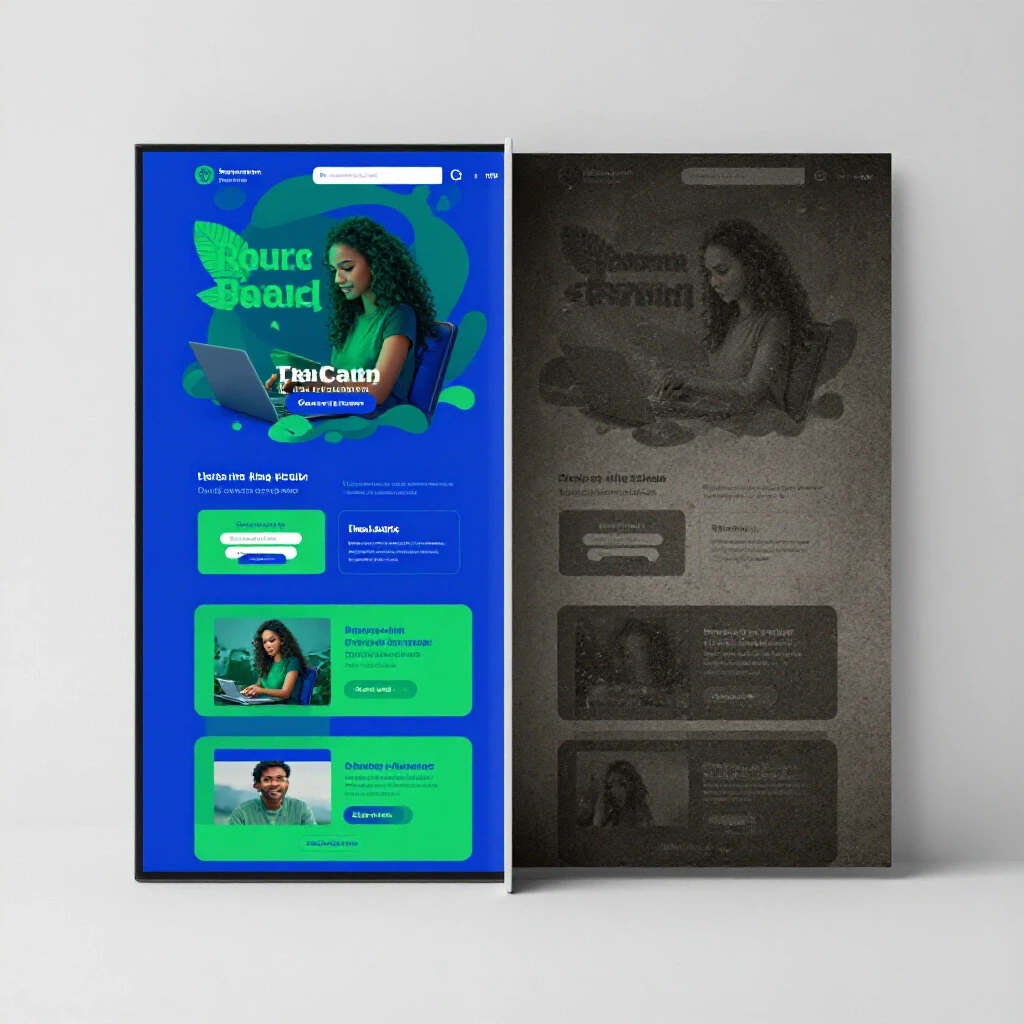
I remember sitting in a quiet office three years ago, watching a live dashboard for a high-spend campaign. We were pushing a new software tool through Instagram Stories. The ad featured a vibrant, neon-green interface that promised a “one-click setup.” It was getting an incredible click-through rate. However, once users landed on the page, the color palette shifted to a dull gray, and the headline focused on “enterprise-grade security.” The conversion rate was nearly zero. I watched thousands of dollars vanish because the expectation set by the ad did not match the reality of the page. This experience taught me that the bridge between the click and the conversion is often where the most critical data lives.
Establishing a Framework for Message Continuity
Message continuity is the practice of aligning the visual and textual promises of an ad with the content on the destination page. This ensures the user feels they have arrived at the right place, reducing bounce rates and increasing the likelihood of a conversion.
In my nine years of running social media testing, I have found that users make a stay-or-go decision in less than two seconds. If the “scent” of the ad disappears upon landing, they leave. To study this, I focus on three pillars: headline synchronization, visual consistency, and offer reinforcement. When I design a data-driven content strategy, I treat the ad and the page as a single unit rather than two separate assets.
A common mistake is focusing only on the ad creative. I once managed a project where the team spent weeks perfecting a TikTok video. It was engaging and high-energy. However, the destination page was a long-form text article. The data showed a 98% drop-off within five seconds. By adjusting the landing page to include a similar video and a punchy, bulleted list, we saw a 40% increase in lead quality. This taught me that campaign variable isolation must include the destination experience to be valid.
Why Variable Isolation Matters in Message Alignment
Variable isolation is a testing technique where only one element is changed at a time to identify what specifically drives performance shifts. This method prevents “noisy” data from obscuring the true cause of a conversion lift or drop.
When you change the ad copy and the landing page layout at the same time, you cannot know which change worked. I prefer a clean A/B testing methodology. For example, I might keep the ad identical for two groups but send Group A to a page with a matching headline and Group B to a generic page. This isolates the “match” as the only variable.
- Hypothesis: If the landing page headline mirrors the ad copy, the conversion rate will increase by at least 15%.
- Control Group: Users see a standard ad and a generic company homepage.
- Testing Variant: Users see the same ad but land on a page with a headline that repeats the ad’s main hook.
- Metric: We measure the conversion rate and the time spent on the page.
| Test Element | Control Group (Generic) | Variant Group (Matched) | Expected Outcome |
|---|---|---|---|
| Headline | “Welcome to Our Site” | “Get Your One-Click Setup” | Higher relevance score |
| Color Scheme | Brand Blue | Ad-matching Neon Green | Reduced bounce rate |
| Call to Action | “Sign Up” | “Start My One-Click Setup” | Increased click-to-lead |
Defining Statistical Significance in Marketing
Statistical significance is a mathematical measure used to determine if a result is likely caused by something other than chance. In marketing, a 95% confidence level is the standard for declaring a test “winner.”
I often see growth hackers stop a test too early because one version looks like it is winning. This is a trap. If your sample size is too small, a few random clicks can skew the results. I use a null hypothesis approach. This assumes there is no relationship between the ad-to-page match and the conversion rate. Only when the data strongly contradicts this assumption do I accept the results.
To reach statistical significance marketing goals, I look for a p-value of less than 0.05. This means there is less than a 5% chance the results occurred by accident. I also look at the confidence interval. If the range of possible outcomes is too wide, I keep the test running. I typically recommend a minimum of 100 conversions per variant before making a final call.
Designing Rigorous Social Media Experiments
A rigorous experiment is a structured test that follows a set timeline and uses specific data points to verify a theory. It requires a clear start date, a set budget, and a defined goal to avoid “p-hacking” or cherry-picking data.
I recommend a testing duration of 7 to 14 days. This accounts for different user behaviors on weekends versus weekdays. If you only run a test for 48 hours, you might catch a specific cohort of users that does not represent your entire audience. During this time, I monitor the cost-per-acquisition (CPA) deviation. If one variant has a CPA that is 30% higher than the other after 5 days, I don’t stop it yet, but I do look for tracking anomalies.
- Formulate Hypothesis: State exactly what you believe will happen.
- Determine Sample Size: Use a calculator to see how many visitors you need for a valid result.
- Set Up Tracking: Ensure your pixel and server-side API are firing correctly on both the ad and the page.
- Launch Simultaneously: Run both versions at the same time to avoid seasonal bias.
- Verify Data: Compare native platform analytics with your internal CRM data.
Analyzing Native vs. Third-Party Attribution Differences
Attribution is the process of identifying which touchpoint led to a conversion. Native platform tools (like Meta Ads Manager) often report differently than third-party tools (like Google Analytics or Northbeam).
In my experience, native platforms tend to be “greedy.” They might claim credit for a conversion even if the user saw the ad but didn’t click, or if they clicked but converted much later. Third-party tools often use last-click attribution, which can undervalue the ad’s impact. I use a blended approach. I look at the “Marketing Efficiency Ratio” (MER), which is total revenue divided by total ad spend, to see the big picture.
- Native Analytics: Good for seeing real-time engagement and platform-specific behavior.
- Third-Party Tools: Better for seeing the user’s journey after they leave the social platform.
- Server-Side Tracking: Essential for capturing data that browser-based cookies might miss due to privacy settings.
| Metric | Native Platform Data | Third-Party Tracking | Internal CRM Data |
|---|---|---|---|
| Clicks | Often higher (includes all clicks) | Lower (filters out bots/accidental) | N/A |
| Conversions | High (includes view-throughs) | Moderate (last-click focus) | The “Source of Truth” |
| CPA | Usually looks more favorable | Usually looks more expensive | Actual cost per real customer |
Case Study: The Visual Continuity Experiment
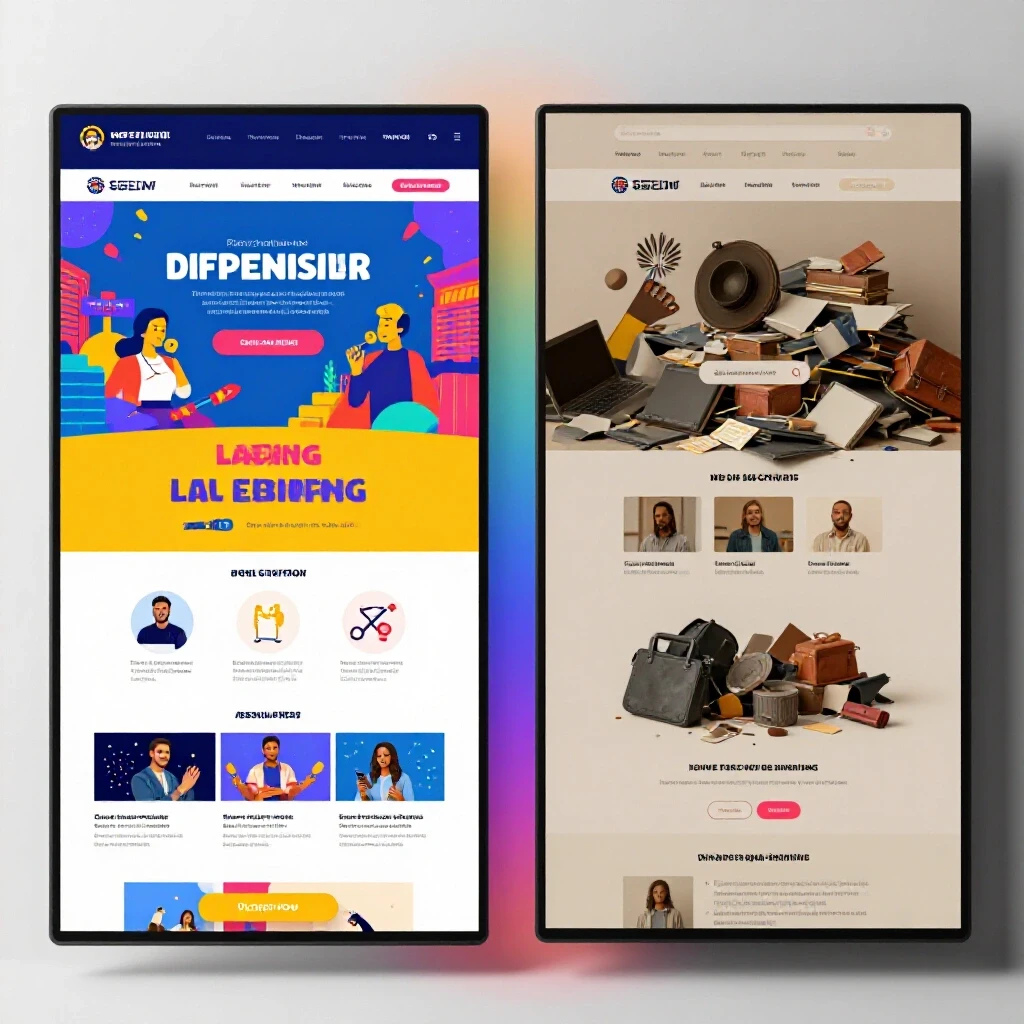
I once worked with a fitness brand that was struggling with high bounce rates on their mobile landing pages. Their ads featured high-energy workout videos with a specific trainer. However, the landing page was a static image of the product on a white background. I hypothesized that the lack of visual continuity was causing a cognitive disconnect.
I ran a content format testing cycle. Variant A used the static product page. Variant B used a landing page that featured a GIF of the trainer from the ad and a headline that used the exact same wording as the ad’s caption. We ran this for 10 days with a budget of $2,000 per variant.
The results were clear. Variant B had a 22% higher conversion rate. Interestingly, the click-through rate on the ads was the same for both. This proved that the improvement happened entirely because of the alignment between the ad and the page. The statistical significance reached 97% by day eight. This case study confirms that maintaining the “visual scent” is not just a creative preference; it is a measurable driver of ROI.
Common Pitfalls in Campaign Variable Isolation
Isolating variables is harder than it sounds because social media environments are constantly shifting. Platform updates, holiday spikes, or even a viral comment on an ad can skew your data.
One mistake I see often is testing too many things at once. If you change the ad’s image, the headline, and the landing page button color, you have created a multivariate test. These require much larger sample sizes to reach significance. For most mid-sized budgets, I stick to simple A/B tests. Another pitfall is ignoring “post-test decay.” This happens when a winning variant starts to perform poorly after the test ends. I always monitor my winners for another 14 days to ensure the lift was permanent.
- Overlapping Audiences: Ensure your test groups are not seeing both versions of the ad.
- Inconsistent Budgets: Give each variant the same amount of money to ensure a fair fight.
- Ignoring Lead Quality: A high conversion rate is useless if the leads are fake or low-intent.
- Tracking Gaps: Always check if your landing page “Thank You” page is firing the conversion pixel correctly.
Essential Tools for Data-Driven Strategists
To run these experiments properly, you need a stack of tools that prioritize data integrity over flashy visuals. I rely on a mix of platform-native tools and independent calculators.
- Statistical Significance Calculators: Tools like ABTasty or CXL’s calculator help determine if your results are valid.
- Ad Customizers: These allow you to dynamically insert text into ads to match specific landing page themes.
- Event Managers: Use these within social platforms to define exactly what a “conversion” looks like (e.g., a button click vs. a page view).
- Documentation Logs: I keep a simple spreadsheet of every test, the hypothesis, the duration, and the outcome. This prevents me from running the same failed test twice.
- Heatmaps: Tools that show where users click on your landing page can reveal if they are looking for something promised in the ad that they can’t find.
Final Validation Checklist for Your Experiment
Before you turn on your ads, go through this checklist. It will save you from wasting budget on flawed data.
- Is the headline on the page an exact or near-match to the ad’s hook?
- Do the colors and imagery on the page mirror the ad’s creative style?
- Is the call to action (CTA) consistent in both places?
- Have you set a minimum sample size and a 7-14 day window?
- Is your tracking firing correctly on both mobile and desktop?
- Are you testing only one major variable at a time?
When you follow a methodical approach, you stop guessing. You start knowing. The goal is not to find a “magic” ad but to build a reliable system where every click has a high probability of turning into a customer. By focusing on the alignment between the initial promise and the final destination, you create a seamless experience that respects the user’s time and your budget.
Frequently Asked Questions
What is the most important element to match between an ad and a page?
The headline is typically the most critical element. It is the first thing a user reads after clicking. If the headline does not immediately confirm the promise made in the ad, the user will likely bounce. Visual color schemes are a close second for maintaining “scent.”
How long should I run a conversion match test?
I recommend a minimum of 7 days and a maximum of 14 days for most social media tests. Running it for a full week ensures you capture behavior across all days. Going beyond 14 days can introduce “audience fatigue” or “creative wear-out,” which might skew the results.
What if my test results are not statistically significant?
If you reach your sample size and the significance is low (e.g., 60%), it means the change you made didn’t have a meaningful impact. In this case, the “null hypothesis” wins. You should go back, form a bolder hypothesis, and test a more significant variable.
Can I test multiple landing pages against one ad?
Yes, this is a common way to find the best destination. However, make sure the ad copy is neutral enough to apply to both pages, or you will create a mismatch that ruins the test. It is usually better to test “Ad A + Page A” against “Ad B + Page B.”
How do I handle tracking discrepancies between Meta and Google Analytics?
Accept that they will never match 100%. Meta tracks based on a user profile, while Google tracks based on a browser session. Focus on the trend rather than the exact number. If both tools show Variant B is winning by 20%, you can trust the result.
What is a good sample size for a social media conversion study?
While it depends on your baseline conversion rate, I generally look for at least 50 to 100 conversions per variant. If your conversion rate is 1%, you would need about 5,000 to 10,000 visitors per variant to reach a high level of confidence.
Does visual match matter on platforms like TikTok as much as Instagram?
Yes, perhaps even more so. TikTok users are used to fast-paced, immersive content. If they click a high-energy video and land on a slow, corporate-looking page, the “vibe shift” is jarring and leads to immediate exits.
How do I isolate variables if the platform’s algorithm is changing who sees the ad?
Use the “A/B Test” feature built into the ad manager. These tools are designed to split your audience randomly and ensure that there is no overlap. This is the most effective way to account for the platform’s internal delivery shifts.
Should I match the ad copy to the landing page or the landing page to the ad copy?
It is usually easier to adjust the landing page. You can create multiple versions of a page quickly. I start with the strongest ad hook that my data supports, then I build a specific landing page that “closes the loop” on that specific hook.
What is “post-test decay” in marketing experiments?
This refers to a drop in performance after a winning variant is rolled out at scale. Sometimes a variant wins because it was “new” or “novel” to a small group. I always keep a small “control” group running even after a test is over to verify the long-term lift.
(This article was written by one of our staff writers, David Thompson. Visit our Meet the Team page to learn more about the author and their expertise.)