How Changing Social Media Ads Can Grow Your Brand Faster (Case Study)
There is a specific kind of quiet confidence that comes with a well-tailored suit or a perfectly timed silence in a boardroom. It is the hallmark of someone who does not need to shout to be heard. In the digital world, however, many executives feel forced to trade this elegance for noisy tactics that feel beneath their professional standing. For years, I have watched brilliant consultants and founders hesitate to use paid promotion because they fear looking like just another “internet personality.”
The truth I have discovered through thirteen years of marketing is that the right kind of visibility does not diminish your reputation; it protects it. When we talk about professional personal branding, we are not talking about chasing viral fame. We are talking about sustainable authority-building. This involves making sure your insights reach the right desks without you having to spend forty hours a week on social media.

Recently, I worked with a senior partner at a specialized firm who was struggling to translate his decades of expertise into a digital presence. He was posting occasionally, but the results were inconsistent. We decided to experiment with his paid strategy. By making one specific adjustment to how he presented his expertise in sponsored posts, we saw a dramatic shift in how his network perceived him. This case study explores how refining the intent behind your paid reach can accelerate your professional standing.
Refining the Strategy for Professional Personal Branding
Professional personal branding is the intentional process of defining and communicating your unique value proposition to a specific audience. It is not about being famous; it is about being known, liked, and trusted by the people who make decisions in your industry.
For the executive or solopreneur, the goal of any paid effort should be to amplify existing authority, not to manufacture it from thin air. Many professionals make the mistake of using ads to “sell” a service immediately. This often triggers a “sales defense” in the minds of high-level peers. Building a sustainable brand requires a different approach: using paid channels to distribute high-value insights that prove your competence before you ever ask for a meeting.
In my own experiments, I found that when I stopped trying to get “clicks” and started trying to earn “respect,” the quality of my leads shifted. I moved away from broad targeting and focused on a small, highly specific group of industry leaders. This shift in paid positioning ensured that my face and my ideas appeared consistently in front of the people who actually mattered to my business.
Why Sustainable Authority-Building Matters for Longevity
Sustainable authority-building is the practice of creating a professional reputation that grows over time through consistent, high-quality interactions. It prioritizes long-term trust over short-term engagement metrics like likes or shares.
When you focus on sustainability, you avoid the burnout associated with the “content treadmill.” You aren’t posting just to satisfy an algorithm; you are building a library of thought leadership that works for you 24/7. This is especially vital for those aged 30 to 55 who have established careers and cannot afford to look like they are trying too hard for digital attention.
| Metric Type | Superficial Engagement | Trust-Based Authority |
|---|---|---|
| Primary Goal | High view counts and likes | Profile visits from decision-makers |
| Content Style | Trendy, “hack” based, high energy | Insightful, nuanced, data-driven |
| Ad Objective | Lead generation forms (cold) | Content consumption and awareness |
| Long-term Result | Quick spikes, low loyalty | Deep industry reputation and referrals |
The Strategic Shift in Paid Positioning
Paid positioning refers to the use of advertising spend to place your professional content in front of a curated audience. It allows you to bypass the unpredictability of organic reach to ensure your best ideas are seen by your target niche.
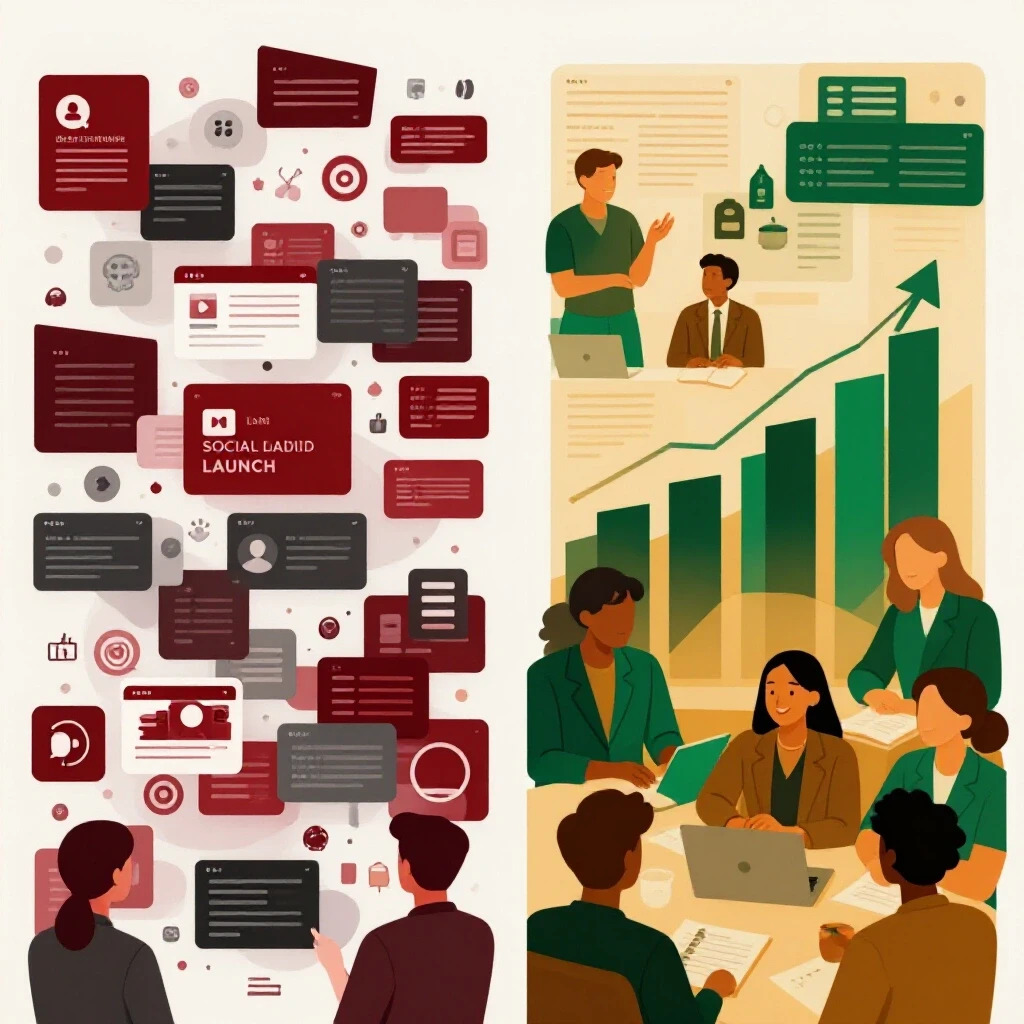
The “ad change” that transformed my client’s results—and my own—was moving from “direct response” ads to “authority-building” ads. Instead of an ad that said, “Book a consultation,” we promoted a deep-dive analysis of a current industry shift. This didn’t just get clicks; it started conversations. It positioned the professional as a teacher and a leader rather than a salesperson.
Interestingly, this approach actually lowered the cost of acquiring a client over time. Because the audience had already consumed three or four pieces of high-value content, by the time they reached out, the trust was already established. We weren’t starting from zero.
Crafting B2B Thought Leadership Through Sponsored Content
B2B thought leadership is the delivery of specialized knowledge that addresses the specific pain points of other businesses or professionals. It is the “what” and “why” behind your industry’s most complex challenges.
To execute this, I recommend a “Content-First” framework. You aren’t advertising your services; you are advertising your perspective. For an executive, this might mean taking a 1,000-word white paper and breaking it down into three distinct, sponsored LinkedIn posts. Each post should solve one small problem or offer one unique insight.
- Step 1: Identify a common misconception in your industry.
- Step 2: Write a concise post explaining the reality of the situation.
- Step 3: Use a small daily budget to show this post specifically to job titles that match your ideal client.
This method ensures that your reputation management is proactive. You are controlling the narrative of your expertise rather than leaving it to chance.
Managing Consistency Without the Time Drain
Executive social media strategy is a planned approach to digital presence that fits into a busy professional schedule. It focuses on high-impact activities that yield the most significant networking and branding results.
One of the biggest hurdles for my clients is the “blank page” syndrome. They have the knowledge, but they lack the time to format it for social media. By using a paid strategy, you can actually post less frequently while having a greater impact. If you write one exceptional piece of content per week and put a small amount of spend behind it, it will perform better than five mediocre posts that no one sees.
I often advise my clients to set aside just two hours on a Sunday or Monday morning. During this time, they draft their core insight for the week. We then use scheduling tools to ensure it goes live at the optimal time, and we set up the paid promotion to run for the next seven days.
Tools for Streamlining Your Professional Brand
- AuthoredUp: A tool specifically for LinkedIn that helps you preview how your posts will look on mobile and desktop, ensuring a professional appearance.
- Shield Analytics: This provides deeper insights into who is actually engaging with your content, allowing you to see if you are reaching the right seniority levels.
- Buffer or FeedHive: These platforms allow you to schedule your content in advance, maintaining a consistent presence even when you are in back-to-back meetings.
- LinkedIn Campaign Manager: The primary tool for managing your paid positioning, where you can select specific company names or job titles to target.
Building Deep Trust Through Digital Networking
Trust-based networking is the shift from “collecting” connections to “cultivating” relationships. It involves using your digital presence as a conversation starter rather than a broadcast tower.
When someone engages with your sponsored thought leadership, that is your cue to start a relationship. But don’t send a sales pitch. I taught a founder to look at who was liking his promoted posts and reach out with a simple, “I noticed you found my piece on [Topic] interesting. I’d love to hear your perspective on how that’s affecting your sector.”
This approach turns a cold “ad” into a warm introduction. It feels natural and professional. According to academic studies on digital trust, “social proof” (seeing others engage with you) and “consistency” (seeing you regularly) are two of the strongest drivers of professional credibility online.
Establishing a Reputation-First Content Calendar
A content calendar is a schedule that outlines when and what you will post. For an executive, this should be a balance of industry news, personal lessons, and “deep-dive” expertise.
- Week 1: A “contrarian” take on a popular industry trend (Sponsored for reach).
- Week 2: A personal story about a professional failure and what it taught you (Organic for human connection).
- Week 3: A case study of a recent project or success (Sponsored for authority).
- Week 4: A curated list of resources or books that shaped your thinking (Organic for value).
This rotation ensures you don’t look like a “one-trick pony.” It shows the breadth of your character and the depth of your skill.
Evaluating Brand Equity and Growth
Qualitative trust metrics are indicators of success that go beyond numbers. They include the seniority of people commenting, the quality of the messages in your inbox, and the “real-world” mentions of your content.
In the case study of the senior partner, we didn’t just look at how many people saw his ads. We looked at the fact that at his next industry conference, three potential clients mentioned they had been “following his work lately.” That is the true measure of a successful “ad change.” It’s the transition from being a stranger to being a recognized authority before the first handshake.
| Indicator | Low Authority | High Authority |
|---|---|---|
| Inbound Messages | “Can I sell you something?” | “I loved your post; can we chat?” |
| Comment Quality | “Great post!” or “Agree.” | Nuanced questions and debate. |
| Profile Views | Random, non-industry people. | Peers, competitors, and prospects. |
| Meeting Prep | You have to explain who you are. | They already know your stance. |
Avoiding Common Reputation Risks
Reputation management in the digital age requires a “safety-first” mindset. For an executive, one “viral” post for the wrong reasons can undo years of hard work.
Avoid the “engagement hack” trap. This includes things like “comment ‘YES’ below to get my PDF” or using overly dramatic, clickbait headlines. These might get you numbers, but they erode the very trust you are trying to build. If your peers see you using “marketing-speak,” you lose a bit of your executive presence.
Always ask yourself: “Would I be comfortable with this post being printed and handed to my Board of Directors?” If the answer is no, don’t post it—and certainly don’t put money behind it.
Practical Benchmarks for Success
- Time Commitment: 2 to 4 hours per week for content creation and engagement.
- Post Frequency: 2 to 3 high-quality posts per week.
- Profile Conversion: Aim for a 5% to 10% “Follow” or “Connect” rate from people who visit your profile.
- Ad Spend: Even a modest $10–$20 a day can significantly change the “velocity” of your brand growth.
Conclusion: The Path to Sustainable Influence
Building a professional brand is a marathon, not a sprint. The “ad change” we have discussed—moving from sales-driven ads to authority-driven distribution—is about playing the long game. It respects your audience’s intelligence and protects your professional dignity.
By focusing on trust, consistency, and high-value insights, you can create a digital presence that reflects the caliber of your real-world work. You don’t need to be a full-time content creator to have a powerful voice. You simply need to be intentional about how you use the tools available to you.
Start by identifying one core insight you want to be known for this month. Write it down, refine it, and consider how a small, targeted spend could help it reach the people who need to hear it most.
Frequently Asked Questions
How much should an executive spend on personal branding ads?
You do not need a corporate-sized budget. Most solopreneurs and executives find success with $300 to $1,000 per month. The goal is not to reach everyone, but to be “omnipresent” for a very specific list of potential clients or peers.
Will using ads make me look desperate for business?
Not if the content is valuable. If you run ads saying “Buy my services,” you may look desperate. If you run ads that share a brilliant solution to a common industry problem, you look like a generous leader. The intent of the content defines the perception of the ad.
Which platform is better for professional branding: LinkedIn or Instagram?
For most B2B professionals and executives, LinkedIn is the primary choice due to its professional context and targeting capabilities. However, Instagram is becoming increasingly valuable for “behind-the-scenes” authority and showing the human side of leadership, especially for founders.
How do I know if my paid strategy is actually working?
Look for “Qualitative Trust Metrics.” Are people in your industry mentioning your posts? Are you getting fewer “cold” calls and more “warm” inquiries? If the caliber of your network is improving, the strategy is working, regardless of the “like” count.
Can I delegate my personal brand to an assistant or agency?
You can delegate the distribution and formatting, but you cannot delegate the insight. Your brand must be built on your unique perspective. An agency can help you run the ads and schedule the posts, but the “soul” of the content must come from you.
What is the biggest mistake professionals make with paid content?
The biggest mistake is quitting too early. Trust takes time to build. Many people run ads for two weeks, don’t see a “sale,” and stop. Authority-building requires consistent visibility over months, not days.
How do I handle negative comments on my sponsored posts?
Professionalism is your best defense. If a comment is constructive but disagreeing, respond with curiosity and data. If it is “trolling,” simply delete and block. Your profile is your digital office; you have every right to maintain the decorum of the space.
Do I need a professional video setup for authority-building?
No. While high-quality video is great, a well-written, insightful text post or a simple, clear photo of you at work often performs better for executives. Authenticity and “brain-power” matter more than high production values.
How often should I update my paid content?
I recommend refreshing your “authority” ads every 2 to 4 weeks. This prevents “ad fatigue” where your target audience sees the same thing so many times they start to ignore it.
Is it better to target by job title or by specific company names?
If you have a “Dream 100” list of companies you want to work with, targeting by company name is incredibly effective. If you want to build a broader industry reputation, targeting by job title and seniority is the better path.
(This article was written by one of our staff writers, Alexander Voss. Visit our Meet the Team page to learn more about the author and their expertise.)