How to Overcome Paid TikTok Growth Challenges (Step-by-Step)
I remember sitting in a boardroom in 2014, explaining to a skeptical CEO why we needed to shift a portion of our television budget into social media. Back then, the digital landscape felt like a wide-open frontier where a small increase in spend led to a predictable, linear rise in results. Today, that simplicity is gone. As I manage diversified portfolios across various channels, I find that increasing investment in short-form video environments is no longer a matter of just turning a dial. Instead, it is a complex balancing act where the rules of engagement change the moment you try to grow.

The Friction of Rapid Expenditure Growth
In my experience, many managers hit what I call the “spend ceiling.” You might see great returns at $1,000 a day, but when you jump to $5,000, your cost per acquisition (CPA) doesn’t just rise; it often doubles. This happens because the bidding system prioritizes the “low-hanging fruit” first. When you demand more volume, the system reaches out to less relevant users, or it shows the same ad to the same person too many times.
I once worked with a mid-sized e-commerce brand that attempted to triple their daily spend over a holiday weekend. Within 48 hours, their click-through rate (CTR) plummeted by 40%. The issue wasn’t the product; it was that the system was forcing the ad into placements that didn’t align with the user’s current intent. This is a primary hurdle in social channel optimization: the algorithm’s hunger for spend can sometimes outpace its ability to find quality leads.
Identifying Audience Saturation and Frequency Fatigue
Audience saturation occurs when your ads have reached the majority of your target demographic, leading to high frequency and diminishing returns. This forces a shift in targeting strategy to maintain ROI, as seeing the same content repeatedly leads to “ad blindness” and a significant drop in user engagement.
When we look at audience demographic trends, we see that the user base is maturing. According to eMarketer, the 35 to 48 age bracket is one of the fastest-growing segments on the platform. However, even with a larger pool of users, scaling spend often leads to “frequency fatigue.” This is a metric I track closely in my platform comparison analysis. If your average frequency passes 3.0 within a seven-day window, your performance will likely dip.
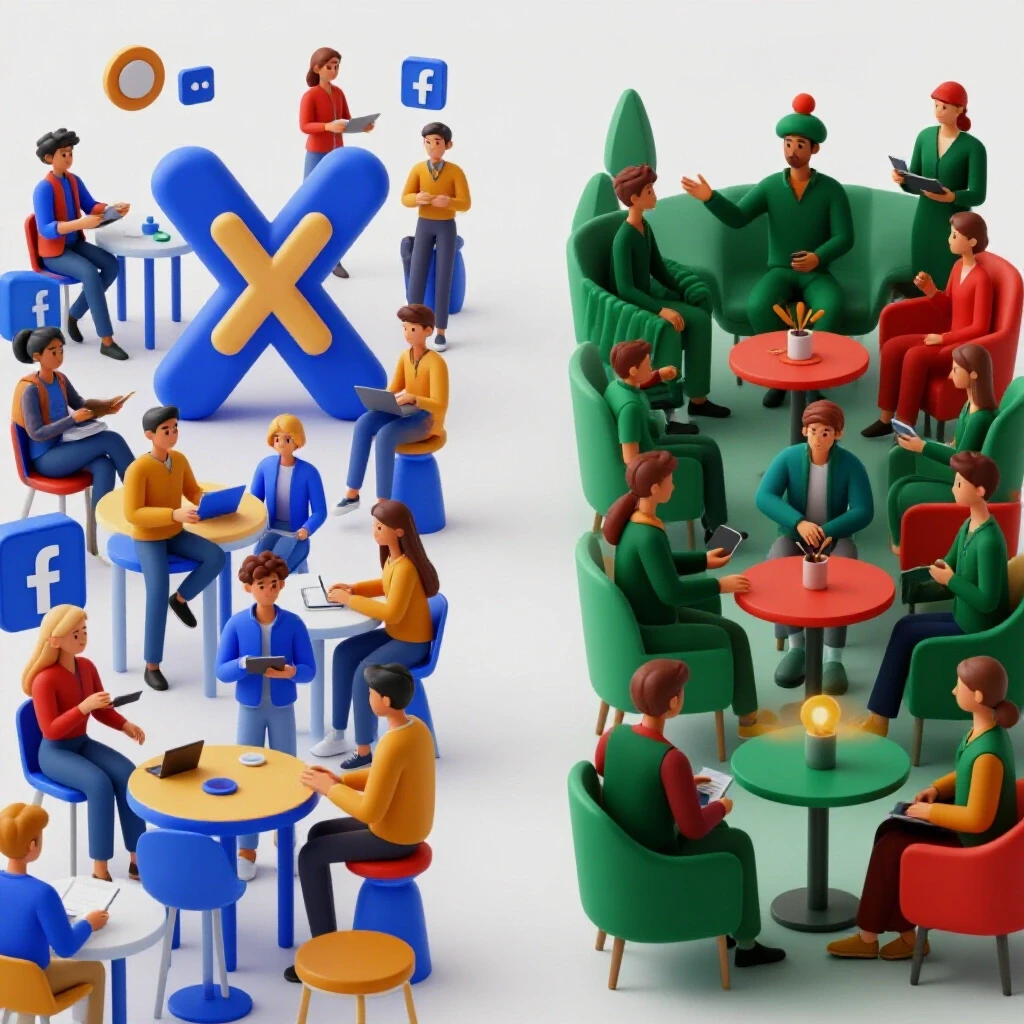
| Metric | TikTok Benchmark (Scaling) | Facebook Benchmark (Scaling) | LinkedIn Benchmark (Scaling) |
|---|---|---|---|
| Optimal Frequency (7-day) | 2.2 – 3.4 | 1.5 – 2.5 | 1.0 – 2.0 |
| Average CTR (Paid) | 0.8% – 1.2% | 0.9% – 1.5% | 0.4% – 0.6% |
| Creative Lifespan | 7 – 14 Days | 30 – 45 Days | 60 – 90 Days |
| Primary User Intent | Entertainment/Discovery | Social/Connection | Professional/Utility |
Interestingly, the “broad targeting” approach that works so well on other platforms can be a trap here. While it allows for lower initial costs, it often leads to a “flatline” in performance once the initial high-intent users are exhausted. I have found that layering “Interest” and “Purchase Intent” targets is necessary when your daily spend exceeds a certain threshold, even if the platform suggests keeping it wide open.
The Reality of Creative Decay in High-Volume Campaigns
Creative decay is the rapid decline in an ad’s performance as the audience becomes accustomed to the visuals and messaging. In this fast-paced environment, the cycle of exhaustion is significantly faster than on legacy social platforms, requiring a constant stream of new assets to sustain growth.
If you are used to the “set it and forget it” nature of Google Search or even some Facebook campaigns, the creative demands of scaling here will be a shock. In my longitudinal tracking, I’ve observed that a single video asset usually has a “peak performance” window of only 10 to 14 days when backed by significant spend. After that, the platform-native ad placements begin to feel like “old news” to the users.
To combat this, I recommend a tiered asset customization framework. You don’t always need a brand-new concept; sometimes, a new hook or a different music track can reset the decay.
- The Hook Swap: Change the first 3 seconds of the video every 7 days.
- The Narrative Shift: Move the call-to-action (CTA) from the end to the middle.
- The Visual Refresh: Change the text overlay colors or fonts to catch the eye again.
A project I managed last year failed because the client insisted on using a single “hero” video for a month-long campaign. By week three, the CPA was three times the original goal. We learned that in cross-platform marketing, what works as a long-term staple on YouTube acts as a “disposable” asset in a high-velocity feed.
Navigating Attribution Gaps and Data Discrepancies
Attribution gaps refer to the difference between what a platform reports as a conversion and what your internal CRM or Google Analytics shows. This is often caused by cookie-less tracking and cross-device behavior, making it difficult for managers to justify spend to executive boards.
One of the biggest pain points I hear from other managers is that their TikTok dashboard says they made $50,000, but their Shopify store only shows $20,000 from that source. This discrepancy is a result of “view-through” conversions. Users often see an ad, don’t click, but search for the brand later on a different device.
Research from the Reuters Institute suggests that younger and middle-aged users often use social platforms as discovery engines rather than direct shopping carts. This means your platform-native ad placements are doing the heavy lifting for brand awareness, even if the “last-click” credit goes to Google.
To present a balanced view to your board, I suggest using a “Unified Report Card.”
- Platform-Reported ROI: The direct numbers from the dashboard.
- Post-Purchase Surveys: Asking customers, “Where did you first hear about us?”
- Media Mix Modeling (MMM): Observing how total sales rise or fall in correlation with your spend on the platform.
Policy Shifts and Algorithmic Volatility at Scale
Algorithmic volatility describes the unpredictable changes in how the bidding system prioritizes your ads. Sudden policy shifts can restrict previously successful targeting or creative styles, often without warning, which can disrupt the stability of high-budget campaigns and cause sudden performance drops.
I’ve seen campaigns that were performing beautifully suddenly “break” because of a minor update to the platform’s advertising policies. For example, changes in how “Sensitive Categories” are handled can overnight limit your ability to reach specific age groups or interests. This is why I never recommend putting 100% of your budget into a single channel.
A 60/40 budget split is often the safest bet. I typically advise my clients to keep 60% of their budget in a “lead” channel that offers more stability (like Search or Meta) and 40% in “secondary support” channels like TikTok. This way, if the algorithm takes a sudden turn, your entire lead flow doesn’t vanish.
- Step 1: Monitor your daily spend pacing. If the platform fails to spend your full budget, it’s a sign of a policy or auction issue.
- Step 2: Check your “Ad Quality Score.” If this drops, the algorithm will deprioritize your ads in the auction.
- Step 3: Diversify your “Landing Page” destinations. Sometimes the friction isn’t the ad, but the way the platform’s in-app browser interacts with your site.
Strategic Budget Reallocation and Performance Reporting
Effective reporting requires looking beyond the dashboard to understand how increased spend impacts the entire marketing ecosystem. This involves using unified report cards and budget split models to determine the true value of your investment across different stages of the funnel.
When you are scaling, your reporting must move from “What happened?” to “Why did it happen?” I use a specific checklist to verify our setup before we increase spend by more than 20%.
- Creative Pipeline Check: Do we have 5 new assets ready for next week?
- Frequency Cap Review: Is our reach-to-frequency ratio staying under 3.5?
- Attribution Window Alignment: Are we comparing “7-day click” data across all platforms?
- Comment Sentiment Analysis: Are the users reacting positively, or is the high frequency causing a backlash?
I once had to retire a high-performing account because we couldn’t keep up with the creative demand. It was a hard conversation to have with the client, but it was better than wasting their money on “tired” ads. We moved the budget back to Instagram Reels, where the organic reach comparison showed a longer shelf-life for our content at that specific time.
Practical Steps for Sustainable Expansion
To grow your presence without losing your ROI, you must be disciplined. Scaling isn’t just about spending more; it’s about supporting that spend with the right infrastructure.
- Start with a “Testing” Phase: Allocate 10% of your budget to test 5 different creative hooks before you scale the winner.
- Use the “20% Rule”: Never increase your daily budget by more than 20% every 48 hours. This allows the algorithm to find new pockets of users without panicking.
- Monitor “Watch Time” Benchmarks: On TikTok, if your video has a 50% drop-off in the first 2 seconds, it will never scale efficiently. Aim for at least a 25% “watch-to-end” rate.
- Focus on “Signal” over “Noise”: Don’t get distracted by likes or shares. If the “Add to Cart” rate isn’t moving with your spend, the scaling is failing.
By following these steps, you can justify your budget choices to your board with hard data and a clear understanding of the risks involved. You aren’t just buying ads; you are managing a volatile but powerful engine of growth.
FAQ
Why does my CPA increase so much when I raise my daily budget? When you increase your budget, the auction system has to find more people to show your ad to. It starts with the most likely buyers. As the budget grows, it has to reach people who are less “ready” to buy or who have already seen your ad multiple times, which naturally increases the cost of each acquisition.
How often should I change my ad creatives when scaling? At high spend levels, you should expect to refresh your primary assets every 7 to 14 days. This doesn’t always mean a full production; often, changing the music, the text overlay, or the first three seconds of the video is enough to “reset” the creative in the eyes of the algorithm.
What is a healthy frequency for a scaled campaign? For most direct-response campaigns, you want to keep your 7-day frequency between 2.0 and 3.5. If it goes higher, you are likely over-saturating your audience, and your ROI will begin to drop as users start to ignore or even hide your ads.
How do I handle the data gap between TikTok and Google Analytics? Use a combination of “Last-Click” and “View-Through” data. TikTok is often a discovery platform, meaning people see an ad but don’t click immediately. Implement a post-purchase survey on your site to see how many customers mention the platform, even if Google Analytics attributes the sale to “Direct” or “Organic Search.”
Is broad targeting better than interest targeting for growth? Broad targeting allows the algorithm the most freedom, which can be good for initial discovery. However, as you scale, the lack of guardrails can lead to wasted spend on irrelevant audiences. I recommend a “hybrid” approach: use broad for one campaign and “high-intent interest” layering for another to see which holds its ROI better at volume.
What is the “Creative Cliff”? The “Creative Cliff” is a phenomenon where an ad’s performance drops off suddenly and sharply. This usually happens when the “reach” has hit a saturation point within a specific sub-segment of the audience, and the creative no longer feels fresh or engaging.
How much should I increase my budget at one time? The safest way to scale is to increase your budget by no more than 20% every 48 to 72 hours. This gives the bidding system enough time to adjust to the new spend level without resetting the “learning phase” or causing a spike in costs.
Why are my video watch times dropping as I spend more? As you scale, your ads are shown to a broader, less targeted audience. These “fringe” users are less likely to be immediately interested in your content, which leads to lower average watch times. If your “watch-to-end” rate drops below 15-20%, it’s a sign that your creative isn’t resonating with the broader audience you are trying to reach.
How does platform policy affect my ability to grow? Platform policies regarding “Ad Quality” and “User Experience” are strict. If your ads receive high “hide” rates or negative comments, the algorithm will penalize you by making your auction bids more expensive. Scaling spend increases your visibility, which also increases the risk of negative feedback if the creative is too aggressive or repetitive.
Should I use the same ads for TikTok and Instagram Reels? While the formats are similar, the user behaviors differ. TikTok users generally prefer more “lo-fi” and authentic-feeling content, while Reels users are more accustomed to “polished” visuals. If you are scaling, I recommend creating platform-native assets to ensure the best possible performance on each channel.
(This article was written by one of our staff writers, Jonathan Mercer. Visit our Meet the Team page to learn more about the author and their expertise.)