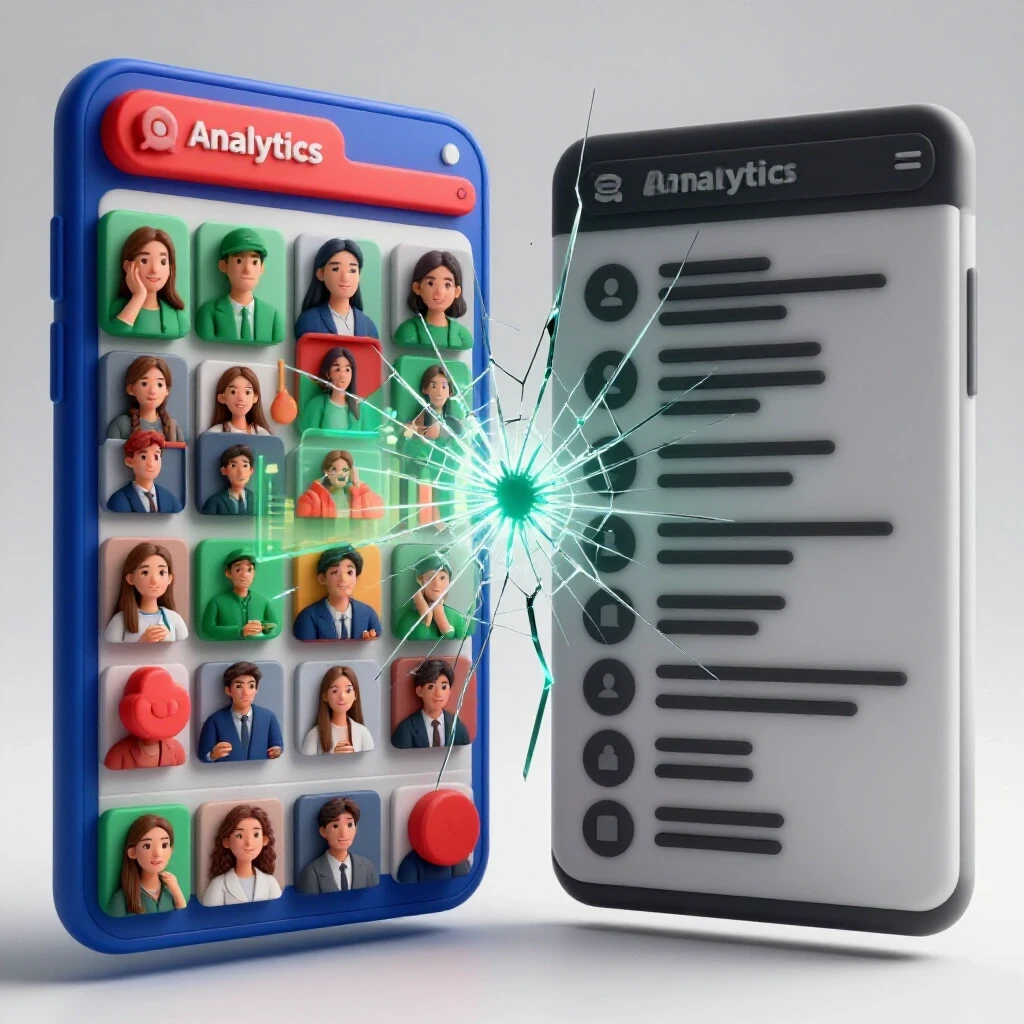
How Chasing Social Media Trends Impacts Audience Growth (Guide)
Bringing up eco-friendly options is a common way brands try to stay relevant, but my experience shows that forced relevance often leads to a sharp decline in account health. In my 14 years of managing high-visibility social media operations, I have seen many teams abandon their core strategy to chase viral moments. While the initial spike in numbers feels like a victory, the long-term outcome of chasing trends is often a severe algorithmic penalty or a complete loss of audience trust.
Why Sudden Reach Drops Strike Brands Following Trend Saturation
This section explores the mechanics of why accounts experience a sudden engagement drop resolution after pivoting heavily toward viral content. It defines the “trend hangover,” where the algorithm no longer recognizes your core audience, leading to a significant loss in reach and impressions across major social platforms.

In my career, I once managed a retail account that saw a 400% lift in reach over two weeks by jumping on every TikTok sound and Instagram transition. However, by the third week, our engagement variance threshold hit a dangerous low. The algorithm had indexed our content for a “transient audience” that had no interest in our actual products. When we returned to our brand pillars, our reach dropped by 70% because the system could no longer find a relevant audience for our standard posts.
This is what I call the algorithmic penalty of misalignment. When you chase trends, you train the platform’s recommendation engine to show your content to people who like the format, not the brand. When the trend dies, so does your visibility.
Understanding Algorithmic Penalty Diagnosis
An algorithmic penalty diagnosis is the process of determining if your account’s reach has been suppressed due to policy violations or a lack of content relevance. It involves analyzing reach velocity drops to see if the decline is a natural market shift or a systemic restriction by the platform.
When I perform an algorithmic penalty diagnosis, I look for a specific pattern: a sharp, 50% or greater drop in non-follower reach that persists for more than 72 hours. This often happens after a brand uses “engagement bait” trends that violate platform quality guidelines.
- Reach Velocity Drops: A sudden decrease in how fast your content spreads to new users.
- Engagement Variance: The difference between your peak trend performance and your baseline brand content.
- Content Moderation Thresholds: The limit at which a platform begins to limit your distribution due to frequent low-quality reports.
Identifying the Platform Policy Trigger
This phase involves pinpointing the exact content or behavior that caused the platform to flag your account for search suppression or reach limitations. It requires a deep dive into platform policy documentation to see where trend-chasing behavior crossed the line into spam or low-quality signals.
I remember a specific case where a client faced a social media shadowban after using a trending but “borderline” audio clip that was later flagged for copyright and community standard issues. They didn’t realize that the trend itself was a policy trap. We had to audit every post from the previous month to find the trigger.
Defining the Social Media Shadowban
A social media shadowban, or search suppression, is a state where your content is not removed but is hidden from discovery surfaces like the “Explore” page or “For You” feed. It occurs when an account repeatedly pushes content that the platform deems low-value or potentially harmful to the user experience.
The biggest challenge with a shadowban is that the platform rarely notifies you. You only see the result: your impressions from “non-followers” drop to near zero. In my experience, recovering from this requires a baseline rehabilitation period of at least 14 to 30 days of “clean” posting.
| Metric | Healthy Account | Shadowbanned Account |
|---|---|---|
| Non-Follower Reach | 30% – 60% | < 5% |
| Search Visibility | Appears in top results | Hidden or requires full name |
| Hashtag Performance | Significant traffic source | Zero impressions from tags |
| Engagement Rate | Consistent with baseline | Sudden 50%+ drop |
Formulating Stakeholder Communications During a Crisis
This involves the strategic process of explaining technical reach losses and algorithmic penalties to upper management or clients. It focuses on translating complex data into actionable business insights while managing the high stress associated with traffic losses and public relations setbacks.
One of the hardest meetings I ever had involved explaining to a CEO why our “viral” strategy resulted in a 60% drop in ad ROI the following month. I had to show that while the trend gave us views, it destroyed our audience reach recovery potential by attracting the wrong demographic.
- Transparency: Be honest about the trend-chasing error.
- Data-Backed Evidence: Use reach velocity charts to show the exact moment the decline began.
- Recovery Timeline: Set realistic expectations, usually a 5–15 business day window for initial appeal responses.
Managing Audience Crisis Management
Audience crisis management is the tactical response to negative feedback or a loss of trust following a brand’s failed attempt at a trend. It focuses on restoring brand reputation recovery through direct engagement and a return to authentic brand values rather than defensive posting.
When a brand I worked with faced backlash for a “tone-deaf” trend response, the instinct was to delete everything and go silent. I advised against this. Instead, we implemented a community recovery sequence that acknowledged the shift and returned to the core content our long-term followers actually valued.
Executing a Community Recovery Sequence
A community recovery sequence is a structured content plan designed to signal to both the algorithm and the audience that the account is returning to high-quality, relevant posting. It prioritizes engagement from core followers to “re-train” the platform’s recommendation engine.
The goal here is to restore your “Trust Score” with the platform. I recommend a “Back to Basics” approach for at least two weeks. This means no trends, no flashy transitions, and no high-risk audio. Just pure, value-driven content that your most loyal fans will interact with.
- Stop the Bleed: Cease all trend-based posting immediately.
- Audit and Archive: Remove or archive content that triggered the engagement drop.
- Engagement Pulse Check: Post a high-value, evergreen piece of content and monitor the first 60 minutes of reach.
- Direct Interaction: Spend 30 minutes daily responding to comments to signal “human” activity to the algorithm.
Implementing Ongoing Account Audits
Ongoing account audits are regular, systematic reviews of account health, policy compliance, and reach trends to prevent future penalties. This proactive approach ensures that the brand stays within the “safe zones” of platform algorithms while maintaining steady growth.
I now require my teams to perform a “Trend Risk Assessment” before joining any viral movement. We ask: Does this align with our pillars? Is the audio safe? Will this attract our target buyer? If the answer is no, we skip it, regardless of how popular it is.
Data-Backed Recovery Campaigns and Metrics
This section details the specific numbers and Key Performance Indicators (KPIs) used to track the progress of an account’s return to health. It emphasizes the importance of measuring sentiment index ratings and reach restoration times to validate the recovery strategy.
Recovery is not a straight line. It is a slow climb. In my project logs, I track the “Sentiment Index,” which measures the ratio of positive to negative comments. A recovering account should see this index move from “Negative/Volatile” to “Neutral/Stable” within the first 10 days of a recovery campaign.
- Reach Restoration Time: The number of days it takes for non-follower reach to return to 80% of its pre-penalty baseline.
- Sentiment Index Rating: A score from 1-10 based on the tone of audience interactions.
- Report-to-View Ratio: A critical metric for brand safety; if more than 0.1% of viewers report a post, a penalty is likely.
Rebuilding Trust After Audience Backlash
Rebuilding trust is the psychological and operational process of winning back the loyalty of your core community after a period of inconsistent or trend-chasing behavior. It requires a commitment to transparency and a shift away from “chasing numbers” toward “building relationships.”
I once saw a brand lose its most loyal customers because it started posting “Gen Z memes” that didn’t fit its luxury persona. We recovered by creating a “Founder’s Series” that spoke directly to the original audience’s pain points. It took three months, but the engagement rate eventually surpassed our pre-trend levels.
Diagnostic Tools and Platform Interfaces
To effectively manage a recovery, you need the right tools. These resources help you monitor backend signals that are not always visible in the standard app interface.
- Platform Transparency Tools: Use the “Account Status” feature in Instagram or the “Creator Tools” in TikTok to check for active violations.
- Sentiment Monitoring Software: Tools like Brandwatch or Sprout Social help track the shift in audience mood.
- Reach Velocity Calculators: Custom spreadsheets that compare daily reach against a 30-day moving average to spot anomalies.
- Brand Protection Databases: Internal logs of past policy triggers and successful appeal templates.
| Phase | Action | Goal |
|---|---|---|
| Diagnosis | Audit last 30 days of content | Identify the trigger |
| Containment | Pause all automated posting | Prevent further flags |
| Communication | Brief stakeholders with data | Manage expectations |
| Recovery | Post core brand pillars | Re-train the algorithm |
| Monitoring | Track Reach Velocity | Verify restoration |
Conclusion: Moving Toward Resilient Growth
The outcome of chasing trends is rarely the sustained growth brands hope for. Instead, it often leads to a cycle of high-stress traffic losses and algorithmic confusion. By following a methodical, data-backed recovery plan, you can restore your account’s reach and rebuild a more stable, loyal audience.
Your first step today should be a deep dive into your reach metrics. If you see a sustained drop in non-follower impressions, stop chasing the next trend. Return to your core brand values, audit your recent content for policy triggers, and begin the slow but sure process of algorithmic rehabilitation.
FAQ
What is the first sign of an algorithmic penalty? The most common sign is a sudden, unexplained drop in reach from people who do not follow you. If your “Explore” or “For You” page traffic disappears overnight while your follower engagement remains relatively stable, the platform has likely flagged your account for a reach limitation.
How long does it take to recover from a social media shadowban? Recovery typically takes between 14 and 30 days. This period is necessary for the platform to “re-evaluate” your account based on a new stream of high-quality, policy-compliant content. Some severe cases may take up to 90 days of consistent posting to fully restore previous reach levels.
Can I appeal a reach drop to the platform? You can generally only appeal specific content removals or formal strikes. Most algorithmic penalties are “soft” restrictions that do not have a formal appeal button. In these cases, the “appeal” is your change in posting behavior, which the algorithm will eventually recognize.
Why did my viral trend post cause a drop in later engagement? Viral trends often attract a “low-intent” audience. When you go back to your regular content, these new “followers” do not engage. The algorithm sees this low engagement rate as a signal that your content is no longer interesting, leading it to suppress your reach even further.
What is a “Sentiment Index Rating” and why does it matter? A Sentiment Index Rating tracks the emotional tone of your comments and mentions. It matters because platforms use “negative signals” (like hides, reports, or angry comments) to determine if your content should be promoted. A high sentiment score helps protect your account from shadowbans.
How do I explain a 50% reach drop to my boss? Focus on the “Quality vs. Quantity” argument. Explain that the previous spike was based on transient trends that didn’t align with the brand. Frame the current drop as a necessary “reset” period to re-align the account with a high-intent audience that will actually drive business ROI.
Should I delete the posts that caused the engagement drop? In many cases, archiving is better than deleting. Archiving removes the content from public view and stops the negative signals but preserves the data for your internal audit. However, if a post is a direct policy violation, deleting it is often the safest route to stop ongoing penalties.
What are reach velocity drops? Reach velocity refers to the speed at which your content gains impressions in the first few hours of posting. A “drop” in velocity means the platform is intentionally slowing down the distribution of your content, usually because it has flagged your account as potentially low-quality or spammy.
What is a baseline rehabilitation period? This is a set timeframe—usually 2 to 4 weeks—where you post only safe, high-quality, non-controversial content. The goal is to provide the platform’s moderation system with a consistent stream of “good” data to overwrite the “bad” data from the trend-chasing period.
How can I test if my account is still suppressed? The best test is to check your “Reach” breakdown in insights. If “Non-followers” accounts for less than 5% of your total reach over several posts, you are likely still facing suppression. Another test is to see if your account appears in search results for your specific handle from a third-party account.
What is an engagement drop resolution? This is a systematic plan to return an account to its baseline engagement levels. It involves diagnosing the cause of the drop, removing the offending content, and implementing a “Community Recovery Sequence” to signal a return to quality to the platform’s algorithm.
How do I prevent future algorithmic penalties? Implement a “Trend Risk Assessment” for every post. Ensure that every trend you participate in is a natural fit for your brand and follows all platform community guidelines. Avoid “engagement bait” and prioritize building a deep connection with your core audience over chasing wide, shallow reach.
(This article was written by one of our staff writers, Andrew Collins. Visit our Meet the Team page to learn more about the author and their expertise.)