How Better Segmentation Lowers Social Media Ad Costs (Case Study)
Focusing on bold designs is often the first instinct for a media buyer when campaign performance starts to dip. We tell ourselves that a fresh color palette or a punchier headline will solve the problem of rising customer acquisition costs. However, after twelve years of managing multi-million dollar spends across Meta, LinkedIn, and TikTok, I have learned that the most effective way to lower costs isn’t always through the creative lens. In my latest testing cycle, I found that the secret to driving down the price of an acquisition lay entirely within the precision of my audience segments. By narrowing who saw the ads, the platforms actually rewarded the account with better efficiency.

This realization came during a particularly stressful quarter. I was managing a diversified portfolio for a high-growth brand where the cost-per-click (CPC) on LinkedIn had spiked by 40% overnight. The executive board was demanding answers, and my first instinct was to blame the creative fatigue. But the data told a different story. The broad targeting I was using meant the algorithm was showing my ads to people who had zero intent to buy. By refining those segments and using tighter interest stacks and behavioral layers, the cost of reaching the right person dropped significantly.
The Financial Logic of Precise Audience Targeting
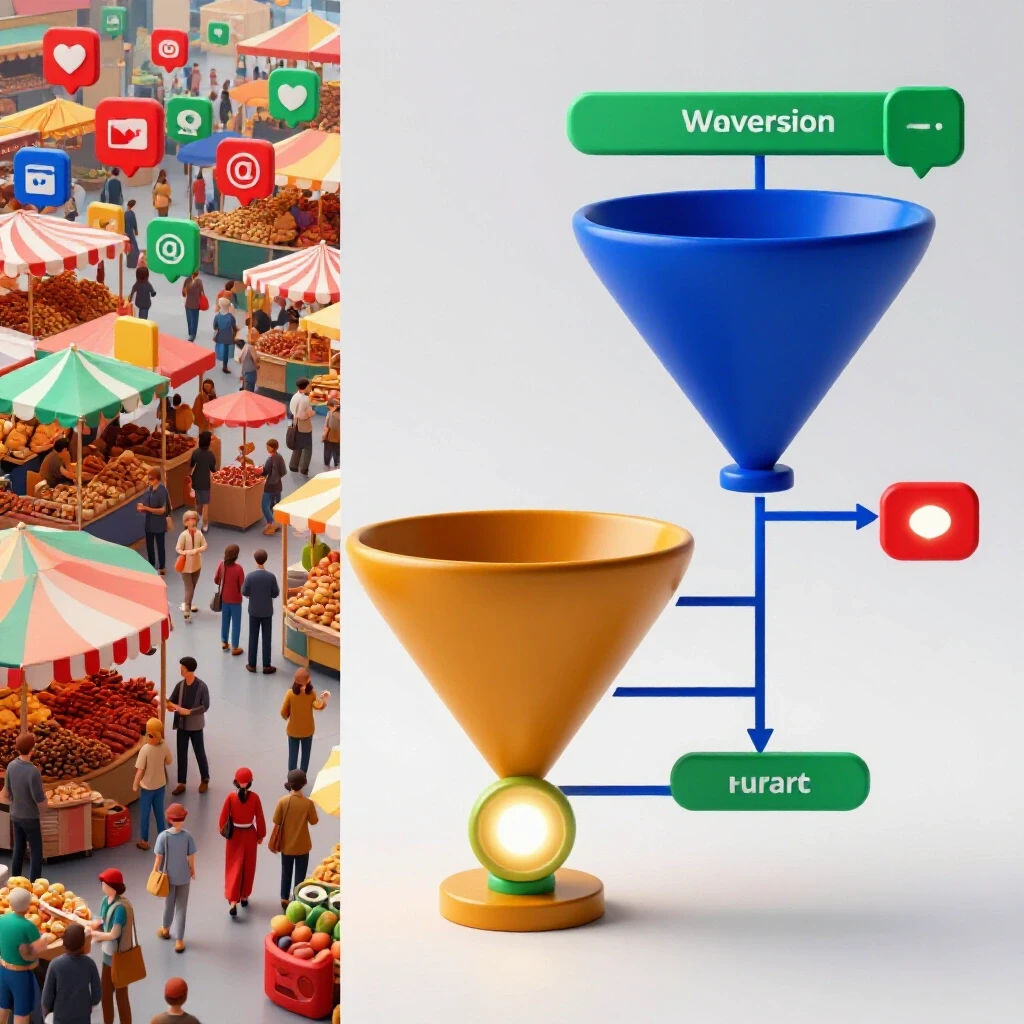
Audience segmentation is the process of dividing a broad market into smaller, more manageable groups based on shared characteristics. In paid social, this means moving away from “wide net” targeting toward specific interest stacks, lookalike percentages, and behavioral filters to improve relevance.
When you target a broad audience, you are essentially competing for every possible impression in a massive pool. This often leads to high waste. In my experience, the platform algorithms—whether it is Meta’s Advantage+ or LinkedIn’s Campaign Manager—function on a relevance score. If your ad is shown to 1,000 people and only one clicks, the platform views your content as low-value. To compensate for this perceived lack of quality, the platform charges you more to stay in the auction.
Interestingly, when I narrowed my focus to specific sub-segments, my relevance scores improved. Because the ad was more aligned with the specific needs of that smaller group, the click-through rate (CTR) climbed. As a result, the platform’s “tax” on my impressions decreased. This is the fundamental economic shift: better alignment between the user and the message leads to lower platform costs.
Setting Up the Test: Variables for Lowering Acquisition Costs
A controlled segmentation test involves isolating specific audience variables—such as job titles, specific interests, or past behaviors—while keeping all other factors like budget and creative assets identical. This allows you to measure the direct impact of targeting on your financial metrics.
To prove this theory, I ran a 30-day test across Meta and TikTok. I split the budget into two distinct groups. Group A used a broad, “open” targeting approach with only basic age and location filters. Group B used “layered” segmentation. This included a mix of high-intent interests and “and” logic (e.g., users must be interested in “SaaS” AND “Venture Capital”).
I also utilized exclusion lists, which are often the most overlooked part of segmentation. By excluding existing customers and people who had visited the site in the last 180 days, I ensured that every dollar was spent on true prospecting. The results were immediate. While the reach of Group B was smaller, the cost to acquire a lead was nearly 25% lower than the broad group.
Key Metrics for Segmentation Success
When analyzing these tests, I rely on three primary financial indicators:
- Customer Acquisition Cost (CAC): The total spend divided by the number of new customers.
- Marketing Efficiency Ratio (MER): Also known as blended ROAS, this is your total revenue divided by total ad spend across all platforms.
- Target CPA Limits: The maximum amount you are willing to pay for a conversion based on your product margins.
| Platform | Targeting Type | Avg. CPC | Avg. CPA | Relevance Score |
|---|---|---|---|---|
| Meta | Broad (Open) | $1.45 | $42.00 | 4/10 |
| Meta | Segmented (Interests) | $0.98 | $31.50 | 8/10 |
| TikTok | Broad (Open) | $0.65 | $28.00 | 5/10 |
| TikTok | Segmented (Behavioral) | $0.42 | $19.00 | 9/10 |
| Broad (Job Function) | $8.50 | $120.00 | 3/10 | |
| Segmented (Member Skills) | $5.20 | $88.00 | 7/10 |
Why Fragmented Platform Data Skews ROI Calculations
Platform fragmentation occurs when different social networks report different conversion numbers for the same sale due to overlapping attribution windows. This makes it difficult to see which specific segment actually drove the final purchase decision.
One of the biggest hurdles I face is explaining to clients why Meta says we have 50 conversions while LinkedIn claims 20, but the Shopify backend only shows 55 total orders. This discrepancy happens because each platform wants to take credit for the sale. If a user sees a LinkedIn ad in the morning and clicks a Meta ad in the evening before buying, both platforms will claim that conversion if they are within their attribution window.
To combat this, I focus on “Blended ROAS” or MER. Instead of looking at each platform in a vacuum, I look at the total investment versus the total return. This high-level view helps me see if my segmentation strategy is actually moving the needle for the business or just shifting numbers around between dashboards. Building a realistic path to profitability requires looking past the “vanity” metrics of a single platform and focusing on the bank account.
The Impact of Audience Exclusions on Efficiency
Audience exclusions are a segmentation tactic where you intentionally prevent your ads from showing to specific groups, such as current subscribers or recent buyers. This prevents “cannibalization” of your budget and ensures you aren’t paying to reach people who would have bought anyway.
In one project for a subscription-based e-commerce store, we were seeing our CAC creep up every month. After a deep dive into the segments, I realized we were spending nearly 15% of our budget showing “New Customer” offers to people who had been subscribers for two years. The algorithm found them “easy” to convert, so it kept serving them ads.
Once we implemented strict exclusion segments using first-party data loops (uploading our customer lists to the ad managers), our efficiency skyrocketed. We weren’t necessarily getting “better” at marketing; we were just getting better at not wasting money. This is a crucial lesson for any media buyer: sometimes the best way to make your ads cheaper is to stop showing them to the wrong people.
Creative Variation by Platform and Segment
Creative variation involves tailoring the visual and written message of an ad to match the specific interests or pain points of a narrow audience segment. This ensures that the high-relevance targeting is met with equally relevant content.
While my test focused on segmentation as the primary driver, the creative still plays a supporting role. If you segment your audience into “Small Business Owners” and “Enterprise Executives,” you cannot show them the same ad and expect the same cost efficiency. The “Enterprise” segment needs to see data-driven whitepapers, while the “Small Business” segment might respond better to quick time-saving tips.
I have found that when the segment and the creative are perfectly aligned, the platform rewards the account with a lower “bid multiplier.” This means you can actually win auctions against competitors who are bidding more money but have less relevant ads. This is how small brands can often outmaneuver giants with ten times the budget.
Bidding and Scaling Strategies for Tight Segments
Bidding strategies are the manual or automated rules you set to tell the platform how much you are willing to pay for an action. Scaling involves increasing the budget once a specific segment proves to be profitable.
When you move to tighter segmentation, you have to be careful with how you scale. Smaller audiences saturate faster. If you have a segment of only 50,000 people and you throw $1,000 a day at it, your frequency will skyrocket, and your costs will follow. In my career, I have seen many managers “break” a profitable campaign by trying to scale it too fast.
The key is a 7-to-14-day feedback loop. I increase budgets by no more than 20% every week. This gives the platform’s machine learning time to adjust to the new spending level without exiting the “learning phase” or spiking the CPM (cost per thousand impressions).
- Identify the Winning Segment: Look for the lowest CPA over a 14-day window.
- Check Frequency: Ensure your frequency is below 3.0 for prospecting.
- Incremental Increase: Raise the daily budget by 15-20%.
- Monitor Blended ROAS: Ensure the total business profit is growing, not just the platform spend.
Preparing Executive Dashboards for Justification
An executive dashboard is a simplified reporting tool that translates complex ad metrics into business outcomes like revenue, profit margin, and customer lifetime value. It strips away the jargon to show stakeholders the actual ROI of marketing efforts.
Marketing managers often fail because they talk about “CTR” and “CPC” to a CFO who only cares about “EBITDA” and “Cash Flow.” When I present the results of my segmentation tests, I use a framework that highlights the “Cost of Waste.” I show them how much we were spending on non-converting broad audiences versus how much we saved by refining those groups.
I use a simple three-tier reporting model: * Tier 1 (The CFO View): Total Spend, Total Revenue, Blended ROAS (MER). * Tier 2 (The Marketing Manager View): Platform-specific CPA, Conversion Rate, and Customer Lifetime Value (LTV). * Tier 3 (The Specialist View): Frequency, CPM, and Relevance Scores.
By structuring the data this way, I can justify the “smaller” reach of my segmented campaigns by pointing directly to the higher profit margins they produce.
Common Mistakes in Audience Refinement
Rookie mistakes in segmentation usually involve over-segmenting to the point where the audience is too small for the algorithm to learn, or failing to update exclusion lists regularly. Both lead to stagnant performance and rising costs.
I once worked with a brand that wanted to target “Left-handed doctors who live in Chicago and like jazz.” The audience was so small (less than 1,000 people) that the CPM was $150. We were paying a massive premium for precision that didn’t actually result in more sales. There is a “sweet spot” for segmentation—usually between 500,000 and 2 million people for Meta, and slightly smaller for LinkedIn.
Another mistake is “set it and forget it” segmentation. Markets change, and people’s interests shift. I make it a habit to audit my segments every 30 days. If a lookalike audience that was a 1% match is no longer performing, I might test a 3% or 5% match to give the algorithm more room to breathe.
Practical Tools for Tracking and Optimization
Tracking tools are software or scripts used to follow a user’s journey from an ad click to a final purchase. These are essential for verifying that your segmentation strategy is actually working across different devices and platforms.
To manage a multi-channel portfolio effectively, you need a stack that provides a single source of truth. Relying solely on the Facebook Pixel is no longer enough in a privacy-first world.
- Conversion APIs (CAPI): These send server-side data directly to the platforms, bypassing browser limitations and cookie blocking.
- Triple Whale or Northbeam: These are attribution aggregators that help calculate your MER and show the path customers take across TikTok, Meta, and Google.
- Google Analytics 4 (GA4): While not perfect for social attribution, it is excellent for seeing how segmented traffic behaves once it hits your site (e.g., bounce rates and time on page).
- Custom UTM Parameters: A standardized naming convention for every link ensures that your data remains clean when it hits your reporting engine.
Conclusion: Building a Realistic Path to Profitability
The journey to lower ad costs isn’t about finding a “magic” button in the Ads Manager. It is about a disciplined, financial approach to how you allocate your budget. By moving away from broad, wasteful targeting and embracing refined audience segments, you can improve your relevance scores and lower your acquisition costs.
In my experience, the most successful media buyers are those who act like portfolio managers. They aren’t just “running ads”; they are deploying capital into the segments that offer the highest return. If you start by refining your exclusions and layering your interests, you will likely see your costs begin to stabilize. From there, it is a matter of constant testing, honest reporting, and staying grounded in the actual economics of your business.
Frequently Asked Questions
Why did my CPC drop when I targeted a smaller audience?
When your targeting is more precise, your ad becomes more relevant to the people seeing it. Social media platforms use relevance as a major factor in their bidding auctions. High relevance leads to higher click-through rates, and platforms reward this by lowering your cost-per-click to keep their users engaged with quality content.
What is the ideal audience size for a segmented campaign?
For platforms like Meta and TikTok, a “sweet spot” is often between 1 million and 3 million people for prospecting. If the audience is smaller than 500,000, you risk high CPMs due to limited inventory. If it is larger than 10 million, you may face the “broad targeting tax” where relevance scores drop.
How do I know if my segmentation is too narrow?
The clearest sign of over-segmentation is a very high CPM (Cost Per Mille) combined with a high frequency (the average number of times a person sees your ad). If your frequency hits 4.0 or higher within a week, your audience is likely too small for your current daily budget.
What is the difference between ROAS and MER?
ROAS (Return on Ad Spend) is typically measured within a single platform (e.g., Meta says you made $5 for every $1 spent). MER (Marketing Efficiency Ratio) is your total revenue divided by your total ad spend across all platforms. MER is a more accurate “business” metric because it accounts for the overlap between channels.
Should I always exclude my existing customers from my ads?
For prospecting campaigns, yes. You don’t want to pay “new customer” acquisition prices for people who are already in your database. However, you should create separate “retention” or “upsell” segments specifically for those customers with a different message and a smaller, dedicated budget.
How long should I run a segmentation test before making changes?
I recommend a minimum of 7 to 14 days. Most social platform algorithms need about 50 conversions per week to exit the “learning phase.” Making changes too early can reset this process and lead to fluctuating costs that don’t reflect the true potential of the segment.
Does better segmentation help with tracking issues like iOS14?
Yes, indirectly. While segmentation doesn’t fix the technical tracking gaps, it improves the “signal” you send to the platform. By feeding the algorithm higher-intent users through specific targeting, the platform can more easily identify patterns of success even with limited data points.
Can I use the same creative for every segment?
You can, but it is not optimal. The goal of segmentation is to speak directly to a specific group’s needs. While a “general” ad might work, a “tailored” ad that mentions a specific job title or interest will almost always result in a higher CTR and a lower effective CPA.
What are “Lookalike Audiences” and are they still effective?
Lookalike audiences are groups created by the platform that “look like” your existing customers based on thousands of data points. While their effectiveness has fluctuated with privacy updates, they remain a strong segmentation tool when based on high-quality data, such as your top 20% of customers by lifetime value.
Why is my blended ROAS more important than my platform ROAS?
Platform ROAS is often inflated by “view-through” conversions (people who saw an ad but didn’t click). Blended ROAS (MER) tells you the actual financial health of your marketing. If your platform ROAS looks great but your bank account isn’t growing, your segmentation or attribution is likely misleading you.
(This article was written by one of our staff writers, James Harrington. Visit our Meet the Team page to learn more about the author and their expertise.)