Landing Page vs Ad Creative: Which Drives Better Social Ad ROI? (Guide)
For years, I believed the “creative is the variable” mantra was the only truth in paid media. I spent late nights obsessing over hex codes, video hooks, and the first three seconds of TikTok clips. However, a recent campaign shift taught me a humbling lesson: you can have the most engaging ad in the world, but if the post-click experience doesn’t carry the weight, your budget is effectively a donation to the platform.
Aligning Multi-Channel Advertising Budgets with Bottom-Line Goals
Setting a multi-channel advertising budget requires a disciplined approach to how money moves through the funnel. It involves balancing high-reach platforms like Meta with high-intent environments like LinkedIn. This foundation ensures that every dollar spent is tied to a measurable business outcome rather than just vanity metrics like likes or impressions.
In my twelve years of managing ad accounts, I have learned that a 50/30/20 budget split often provides the most stability. I typically allocate 50% of the funds to a core, proven platform like Meta or Instagram. Then, I put 30% into a secondary channel like LinkedIn or TikTok to diversify the audience. The remaining 20% goes toward emerging channels or experimental creative formats.
This structure helps manage the rising customer acquisition cost (CAC) we see across the board. When I managed a large e-commerce portfolio last year, we saw Meta costs spike by 22% in a single quarter. Because we had a diversified budget, we shifted weight to LinkedIn, where the lead quality was higher, even if the clicks cost more. This flexibility is what keeps a brand profitable when platform algorithms shift.
- Core Platform (50%): Focuses on steady volume and historical performance data.
- Secondary Channel (30%): Targets different user mindsets or demographic pockets.
- Experimental (20%): Tests new placements or high-risk, high-reward creative concepts.
Why Message Match Between Ads and Destinations Drives Higher Conversions
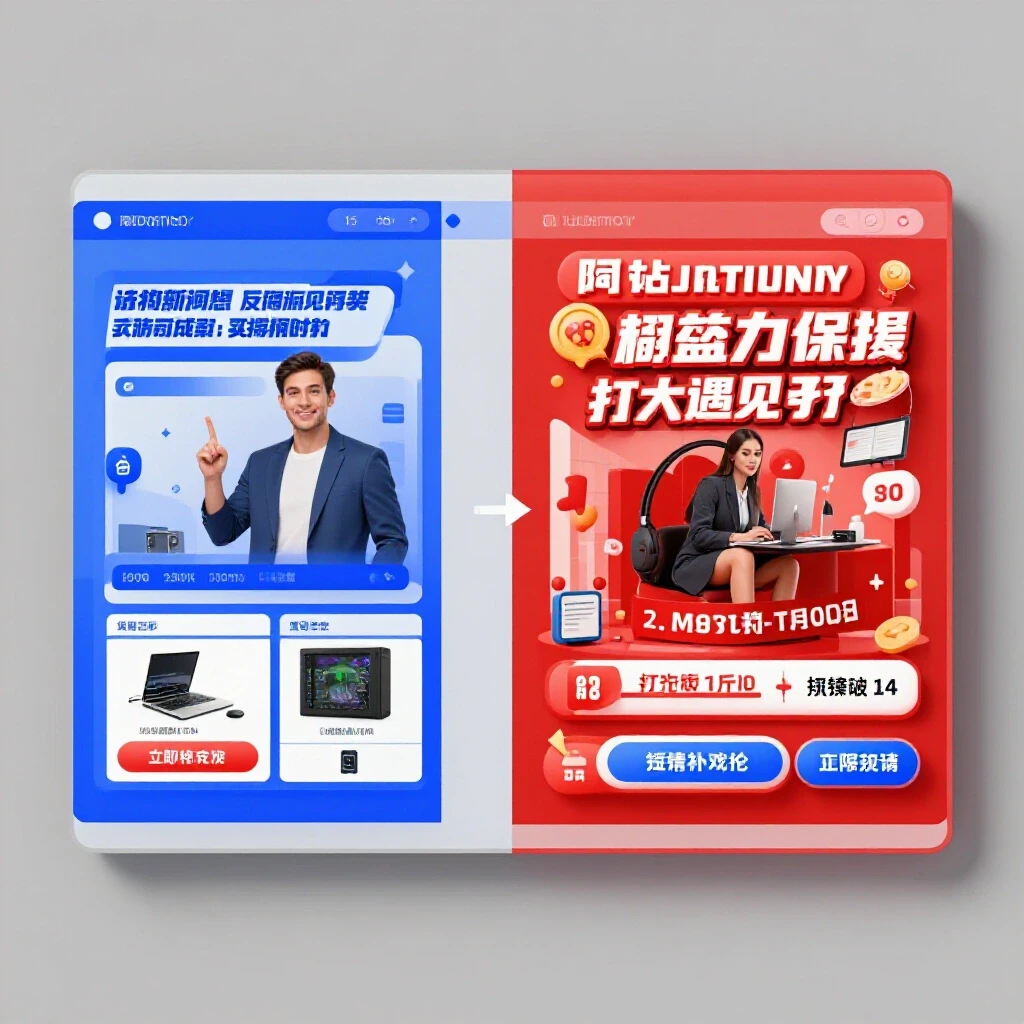
Message match is the degree to which your ad creative and your landing page tell the same story. When a user clicks an ad, they have a specific expectation based on the visual and the copy. If the landing page fails to meet that expectation immediately, the user bounces, and your ad spend is wasted.
I once worked on a campaign for a SaaS client where the ad creative was winning every award for engagement. The click-through rate (CTR) was a massive 4.5% on Instagram. But when I looked at the backend, the conversion rate was nearly zero. We realized the ad promised a “quick setup,” but the landing page was a dense, 2,000-word white paper.
The surprise was that when we simplified the ad to look “boring” but matched it perfectly to the landing page’s technical depth, our ROI tracking framework showed a 40% increase in qualified leads. The ad wasn’t the hero; the consistency was. To maintain a healthy cross-platform performance, your destination must be a natural extension of the ad’s promise.
| Platform | Typical CTR Benchmarks | Expected Conversion Rate | User Intent Level |
|---|---|---|---|
| Meta (FB/IG) | 0.9% – 1.6% | 3% – 9% | Medium / Discovery |
| 0.4% – 0.6% | 2% – 5% | High / Professional | |
| TikTok | 1.5% – 3.0% | 1% – 3% | Low / Entertainment |
| X (Twitter) | 0.5% – 0.8% | 1% – 2% | Medium / News-driven |
The Role of Technical Performance in Social Media Ad ROI
Technical performance refers to the speed and functionality of the page where the user lands after clicking an ad. In a mobile-first world, page load speed and mobile responsiveness are non-negotiable factors for profitability. Even a two-second delay in loading can cause a significant drop in your return on ad spend.
I have seen campaigns fail not because the creative was bad, but because the landing page took five seconds to load on a 4G connection. TikTok users, in particular, have zero patience for slow sites. If they click an ad and see a white screen for more than a second, they are back in their feed.
To combat this, I use a strict checklist before any budget is scaled. We test the destination URL on multiple devices and connection speeds. We also implement first-party data loops and conversion APIs to ensure that the data we do get is as accurate as possible in a post-privacy world.
- Check mobile load speed using tools that simulate real-world mobile data.
- Verify that the “Add to Cart” or “Sign Up” button is visible without scrolling.
- Ensure the Conversion API (CAPI) is firing correctly to bypass browser limitations.
- Remove any intrusive pop-ups that might trigger ad platform penalties.
Comparing Platform Intent and Post-Click Behavior Across Social Networks
Each social media platform attracts users in a different state of mind, which dictates how they interact with landing pages. Understanding whether a user is in a “discovery” mode or a “solution-seeking” mode helps you tailor the destination. This alignment is critical for maintaining a low customer acquisition cost.
On LinkedIn, users are often in a professional mindset. They are willing to read longer forms of content if it provides value. Conversely, on Instagram, the behavior is more visual and impulsive. If I send a LinkedIn user to a page with a 15-second video and no text, they might find it unprofessional. If I send an Instagram user to a text-heavy page, they will leave.
Interestingly, my data shows that TikTok users often have a high “bounce” rate but a high “return” rate. They might click, look for three seconds, leave, and then come back later through a direct search. This makes view-through attribution essential. You cannot just look at last-click data; you have to see how the platforms work together over a 7-to-14-day window.
- Instagram: High visual expectation, needs fast checkout.
- LinkedIn: High information expectation, needs social proof and data.
- TikTok: High entertainment expectation, needs a seamless transition to the offer.
- X: High urgency expectation, needs clear, concise headlines.
Building a Reporting Framework to Justify Ad Spend to Stakeholders
A reporting framework is a structured way to present data that moves beyond platform-specific metrics to show actual business value. It often uses “Blended ROAS” or “Marketing Efficiency Ratio” (MER) to account for the gaps in modern tracking. This approach helps stakeholders understand the total impact of marketing spend.
When I present to boards, I avoid talking about “Cost Per Click” (CPC). Instead, I focus on the target CPA limits we have set. I explain that while the ad creative gets them in the door, the landing page is what closes the deal. I use a “blended” model because platform attribution is often optimistic.
For example, Meta might claim 50 conversions, but the Shopify backend only shows 40. This discrepancy is normal now. By focusing on the total revenue divided by total spend, we get a “source of truth” that everyone can agree on. This honesty builds trust and makes it easier to ask for more budget when things are working.
- Blended ROAS (Total Revenue / Total Ad Spend): The ultimate health metric.
- Customer Lifetime Value (LTV) Mapping: How much a customer is worth over a year.
- Platform Attribution Window: Usually set to a 7-day click or 1-day view.
- First-Party Data Match Rate: How well our customer list matches the platform’s data.
Resolving Platform Attribution Gaps with Modern Tracking Methods
Attribution gaps occur when ad platforms cannot accurately track a user from a click to a final purchase due to privacy settings or device switching. Resolving these gaps requires a move away from simple cookies toward more robust server-side tracking and first-party data. This ensures your ad spend justification is based on reality.
Since the major privacy updates a few years ago, platform-reported ROAS has become less reliable. I recently managed a campaign where the Facebook Ads Manager showed a 1.5x ROAS, which looked like a failure. However, our internal data showed that the customers who clicked those ads were spending three times more over their lifetime than any other group.
To fix this, we implemented a server-to-server tracking system. This allowed us to send conversion data directly from our server to the ad platform, bypassing the browser. It didn’t make the tracking perfect, but it reduced the “dark” conversions that were previously invisible. This is now a requirement for any brand spending more than $10,000 a month.
- Set up a Conversion API (CAPI) for Meta and TikTok.
- Use UTM parameters consistently across every single link.
- Implement a “How did you hear about us?” survey on the thank-you page.
- Compare platform data against your bank account weekly.
Practical Steps for Optimizing the Post-Click Experience
Optimizing the post-click experience involves making small, data-driven changes to the landing page to improve the conversion rate. This is often more cost-effective than constantly refreshing ad creative. It focuses on reducing friction and making the path to purchase as easy as possible for the user.
I always tell my team to “kill your darlings.” Just because you love a specific landing page design doesn’t mean it’s working. We run A/B tests on headlines, button colors, and form lengths. In one case, simply removing two fields from a lead form dropped our CPA by 15% overnight.
We also look at “scroll depth.” If users are clicking the ad but only scrolling through 10% of the landing page, we know the “hook” on the page is failing. We then move the most important information higher up. This iterative process is how you turn a mediocre campaign into a profitable one without changing a single ad visual.
- Test one variable at a time (e.g., headline vs. image).
- Ensure the “Call to Action” (CTA) is the most prominent element.
- Use heatmaps to see where users are getting stuck or lost.
- Match the tone of the landing page copy to the specific ad that drove the click.
Moving Toward a More Holistic View of Social Media Ad ROI
To find long-term success, you must look at the entire journey from the first impression to the final sale. This holistic view acknowledges that while the ad starts the conversation, the landing page is the one that earns the revenue. By balancing your focus between the two, you create a more resilient marketing strategy.
The most successful campaigns I have run were not the ones with the most “viral” ads. They were the ones where we spent as much time on the landing page as we did on the creative. We monitored the metrics daily, adjusted bids based on real sales, and were never afraid to admit when a platform wasn’t the right fit for the product.
Start by auditing your current top-performing ads. Look at where they are sending people. Is that page fast? Is the message clear? Does it work on a phone? If you fix the destination, you might find that your “bad” ads were actually great all along—they just didn’t have a place to land.
Frequently Asked Questions
Why is my ad getting a high click-through rate but no sales? This usually indicates a disconnect between the ad’s promise and the landing page’s reality. Users are interested in the hook, but once they arrive at the destination, they don’t find what they expected. It can also be caused by technical issues like slow load speeds or a confusing checkout process that creates friction for the buyer.
How do I calculate Blended ROAS or MER? To calculate the Marketing Efficiency Ratio (MER), take your total revenue from all sources and divide it by your total ad spend across all platforms for the same period. For example, if you earned $100,000 and spent $25,000 on ads, your MER is 4.0. This provides a high-level view of how effectively your total budget is generating income.
What is a good conversion rate for a social media landing page? While it varies by industry, a healthy benchmark for e-commerce is between 2% and 5%. For lead generation, you should aim for 10% or higher. If your rate is below 1%, you likely have a significant issue with either your audience targeting or the user experience on the page itself.
How does page load speed affect my cost-per-acquisition? Every second of delay in page load time can decrease conversions by up to 7%. When conversions drop, the ad platform’s algorithm sees your ad as less relevant, which can increase your costs. Improving speed directly lowers your CPA by keeping more users on the site and signaling high quality to the ad networks.
Should I use a different landing page for each social platform? Ideally, yes. A LinkedIn user expects a different tone and level of detail than a TikTok user. While the core offer remains the same, tweaking the headlines, imagery, and social proof to match the platform’s “vibe” can significantly improve your conversion rates and overall ROI.
What is the “scent” of an ad, and why does it matter? The “scent” refers to the visual and textual cues that carry over from the ad to the landing page. If your ad is bright and energetic but your landing page is dark and corporate, the user loses the “scent” and feels like they are in the wrong place. Maintaining this continuity is vital for building trust and reducing bounce rates.
How do I justify ad spend when platform tracking is inaccurate? Focus on “business outcomes” rather than platform dashboard metrics. Show stakeholders the correlation between increased ad spend and total revenue growth. Use third-party analytics and “How did you hear about us?” surveys to provide a more complete picture of the customer journey that platform pixels might miss.
What are the most common landing page mistakes for paid media? The most common errors include having too many distracting links, slow load times, a lack of mobile optimization, and a confusing call to action. Another major mistake is asking for too much information too early in the relationship, which causes users to abandon the form before completing it.
How often should I update my landing page for an active campaign? You should monitor performance daily but only make significant changes after you have enough data for statistical significance—usually every 7 to 14 days. Constantly changing the page makes it impossible to know what is actually working. Small, iterative tests are always better than massive, unproven overhauls.
Does video on a landing page improve conversion rates? It can, but it must be used carefully. A short, relevant video can increase time on page and trust, but a large video file that slows down the page will hurt you. Always ensure videos are optimized for fast loading and that the most important information is also available in text format for those who don’t want to watch.
(This article was written by one of our staff writers, James Harrington. Visit our Meet the Team page to learn more about the author and their expertise.)