Which Social Platform Reaches Niche Audiences Best (Expert Guide)
In the movie Moneyball, Billy Beane focuses on the “island of misfit toys”—players who have one specific, overlooked skill that wins games. In my ten years of managing digital budgets, I have seen marketing managers make the same mistake as the old-school scouts. They chase massive reach and broad visibility while ignoring the specialized segments that actually drive revenue. Precision is the only way to survive in a landscape where every dollar is scrutinized by a board of directors.
Defining Precision Parameters for Specialized Segments
Precision marketing involves using granular data filters to reach a specific group of people based on their professional history, buying habits, or deep-seated interests. Instead of targeting everyone interested in “fitness,” a precision approach targets “triathletes aged 35–50 who have purchased high-end cycling gear in the last six months.”
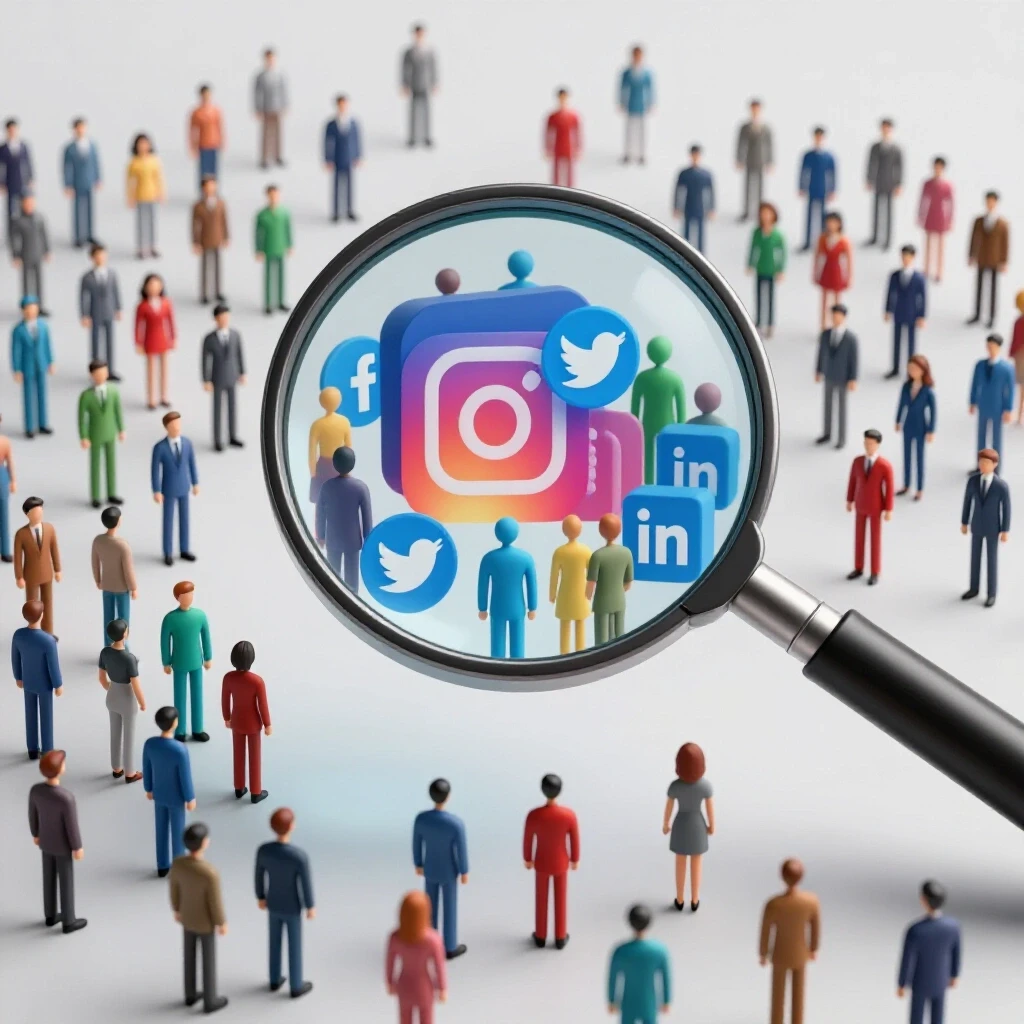
When I first started in this industry, we relied heavily on broad interest categories. Today, that approach is a recipe for budget depletion. Through years of side-by-side testing, I have found that the most successful campaigns rely on a combination of platform-native data and third-party intent signals. My role has evolved from a creative director to something more like a data scientist. I spend my days looking at how different filters overlap. For example, a “lookalike audience” on Facebook might perform well for a consumer product, but for a niche B2B software, I have to rely on LinkedIn’s professional mapping.
Understanding the “why” behind these parameters is vital. We use these filters because organic reach has decayed significantly. On most major platforms, your unpaid posts reach less than 5% of your followers. To bridge that gap, you must use paid tools to find the exact people who need your solution. This is not about being seen by everyone; it is about being seen by the right ten people who have the authority to sign a contract.
Mapping Audience Demographic Trends Across Core Channels
Audience demographic trends refer to the shifting age, gender, and professional makeup of a platform’s active user base over time. Tracking these shifts allows managers to move budgets before a platform becomes too saturated or the target group migrates elsewhere.
In my experience, relying on last year’s demographic data is a dangerous game. I remember a project three years ago where we assumed a specific professional segment was only on LinkedIn. After a month of high costs and low engagement, we ran a small test on TikTok. To our surprise, the “work-life” content on TikTok had captured that exact professional niche during their off-hours. This taught me that people do not stop being professionals when they switch apps.
| Platform | Primary Age Bracket | Key Behavioral Trait | Best Niche Use Case |
|---|---|---|---|
| 30–55 | Career-focused, high intent | B2B, Professional Services | |
| 24–40 | Visual discovery, trend-driven | Lifestyle, Boutique Retail | |
| TikTok | 18–34 | Entertainment-first, high engagement | Emerging Trends, Education |
| 35–65+ | Community-oriented, local | Local Services, Family-centric | |
| 25–45 | Future-planning, high purchase intent | Home Decor, Hobbies |
As the table shows, the splits are distinct. If you are targeting a niche of custom furniture builders, Pinterest offers a higher intent-to-buy ratio than Facebook. I have watched Facebook’s demographic lean older over the last decade, which makes it excellent for reaching decision-makers in established industries but less effective for the “creator economy” niche.
Navigating Platform-Native Ad Placements for Granular Reach
Platform-native ad placements are the specific locations within an app where your content appears, such as the main feed, stories, or the right-hand column. Each placement has a different “psychology of use,” meaning users interact with ads differently depending on where they see them.
I have managed several cross-channel tests where the creative was identical, but the placement was different. The results are almost always varied. For instance, a detailed infographic performs poorly in Instagram Stories because the user is in a “fast-swipe” mindset. However, that same infographic in a LinkedIn feed can see a click-through rate (CTR) that is 30% higher than the platform average.
- Feed Placements: Best for long-form messaging and building trust.
- Stories/Reels: Best for quick “hooks” and driving immediate action.
- Sidebar/Right Column: Best for retargeting users who have already visited your site.
- In-Mail/Direct Message: High-touch, but carries a risk of being perceived as intrusive.
When I evaluate platform-native ad placements, I look at the average watch time for video content. On TikTok, if you don’t hook a niche viewer in the first 1.5 seconds, they are gone. On LinkedIn, you have about 3 to 4 seconds. This subtle difference changes how you should distribute your production budget. I often recommend a 60/40 split, where 60% of the budget goes to the primary “lead” placement and 40% supports secondary placements to keep the brand top-of-mind.
Platform Comparison Analysis: Measuring True Business Outcomes
A platform comparison analysis is a systematic review of how different social networks perform against specific KPIs like Cost Per Lead (CPL) or Return on Ad Spend (ROAS). This analysis moves beyond “likes” and “shares” to focus on the financial impact of each channel.
I recently had to justify a significant budget shift to a client who was obsessed with Instagram followers. I showed them a platform comparison analysis that tracked the journey of 1,000 leads. While Instagram provided the most “buzz,” the leads from LinkedIn had a 40% higher closing rate. We were paying more per click on LinkedIn, but the cost per acquired customer was actually lower.
- LinkedIn: High CPC ($5–$12), but high lead quality for B2B.
- Facebook: Moderate CPC ($0.50–$2.00), excellent for retargeting broad interests.
- TikTok: Low CPC ($0.20–$0.50), but requires high-volume creative testing.
- Pinterest: Moderate CPC, but users have a “planning” mindset, leading to higher average order values.
This data-driven approach helps you survive board meetings. When a director asks why you aren’t on the “hottest new platform,” you can point to your longitudinal data. I have retired several underperforming accounts over the years because the audience demographic trends shifted away from our target niche. It is better to do two platforms perfectly than five platforms poorly.
Cross-Platform Marketing and Algorithmic Evolution
Cross-platform marketing is the strategy of using multiple social channels in a coordinated way to reach a single audience segment. This requires understanding how different algorithms prioritize content, whether they favor “social graphs” (who you know) or “interest graphs” (what you like).
Algorithms change constantly, and these updates often conflict with one another. Facebook might prioritize “meaningful social interactions,” while TikTok prioritizes “watch time.” I have spent years tracking these updates, and the biggest trend is the move toward the interest graph. This is good news for reaching specialized groups. It means the platforms are getting better at finding people based on their behavior rather than just their friend list.
However, this algorithmic shift has led to significant organic reach comparison issues. In 2014, a niche brand could grow entirely through organic posts. In 2024, that is nearly impossible. I tell my clients to view organic content as a “validation tool”—it’s there to prove you are a real company when a paid lead clicks on your profile. The real growth happens in the paid auction.
Social Channel Optimization Strategies for High-Intent Groups
Social channel optimization is the process of refining your ad settings, creative assets, and bidding strategies to improve performance over time. It involves constant A/B testing and a willingness to “kill” underperforming ads quickly.
For a specialized audience, “broad” bidding is your enemy. I use a “manual bidding” strategy when the audience size is small (under 50,000 people). This ensures that I am not overpaying for clicks just because the platform’s automated system is trying to spend my daily budget.
- Audience Mapping: Identify the 3–5 core traits of your niche.
- Creative Tailoring: Build assets that use the specific language of that niche.
- Testing Sequence: Run a 7-day “split test” with low budget to see which hook resonates.
- Performance Tracking: Use UTM parameters to track the lead all the way to the sale.
- Reallocation: Move budget from the losing creative to the winning one every Monday.
One rookie mistake I often see is changing the strategy too quickly. Algorithms need a “learning phase,” usually about 50 conversions, before they optimize. If you touch the dials too often, you reset that learning phase and waste money. I’ve learned to be patient, even when a client is hovering over my shoulder.
Unified Reporting and Overcoming Metric Discrepancies
Unified reporting is the practice of pulling data from multiple platforms into a single dashboard to see the big picture. This is necessary because platforms often “double-count” conversions, leading to conflicting data that can confuse stakeholders.
If a user sees an ad on LinkedIn and then clicks an ad on Facebook before buying, both platforms might claim the sale. I use third-party tracking tools to create a “source of truth.” This allows me to see the “assisted conversion” value of each platform.
- Direct-Response Metrics: CTR, CPL, and Conversion Rate.
- Brand Awareness Metrics: Reach, Frequency, and Sentiment.
- Retention Signals: Video completion rates and repeat website visits.
I provide my clients with a “Unified Report Card” every month. It doesn’t just show the numbers; it explains the “why” behind them. If the CPL on Pinterest went up, I explain that it was due to seasonal competition in that niche. This level of transparency builds trust and makes it much easier to justify budget increases for the following quarter.
Practical Steps for Immediate Implementation
To start reaching specialized groups with more precision, you don’t need a million-dollar budget. You need a structured process. I recommend starting with a “pilot” on the platform that most closely matches your audience’s professional or intent-based behavior.
- Audit your current tracking: Ensure your pixels and API conversions are firing correctly.
- Define your “Anti-Persona”: Who do you not want to reach? Use exclusion filters to save money.
- Create “Platform-Native” Content: Do not just cross-post the same video. Adjust the aspect ratio and the first three seconds for each app.
- Set a “Floor” for ROI: Determine the maximum you are willing to pay for a lead before you pause a campaign.
- Review the “Frequency” Metric: If your niche is small, people will see your ad too many times. If frequency goes above 4.0, it’s time for new creative.
Success in this field is about being a “skeptical optimist.” You have to believe the data is there, but you have to test every claim the platforms make. My most successful campaigns weren’t the ones with the biggest budgets; they were the ones where we were the most disciplined about who we were not talking to.
Frequently Asked Questions
Which platform is best for reaching high-level B2B decision-makers? LinkedIn remains the primary choice due to its professional data filters. However, retargeting those same users on Facebook or Instagram can often lower the overall acquisition cost because the ad inventory is cheaper on those platforms.
How do I justify a higher Cost Per Click (CPC) to my executive board? Focus on the “Downstream ROI.” A $10 click that leads to a $50,000 contract is much more valuable than a $0.50 click that leads to a “junk” lead. Use a platform comparison analysis to show the lead-to-close ratio.
Why are my Facebook ads showing to the wrong people even with filters? Facebook’s “Advantage+” settings often expand your audience beyond your filters to find more clicks. If you need strict precision, you must manually opt out of these expansion features and use “Original Audience Options.”
How often should I update my creative for a niche audience? Because niche audiences are smaller, “ad fatigue” sets in much faster. Monitor your “Frequency” metric. Once it hits 3 or 4, your audience has seen the ad enough, and your CTR will likely drop. Plan for new creative every 2–4 weeks.
Is Pinterest actually useful for anything other than weddings and recipes? Yes. Pinterest is a powerful “intent” engine. People go there to plan. If your niche involves home improvement, financial planning, or professional office setups, you can reach people in the “consideration” phase of the funnel.
What is a “Native” ad placement? This refers to an ad that mimics the form and function of the platform it is on. For example, a TikTok ad should look like a TikTok video, not a polished TV commercial. Native placements usually have 20–30% higher engagement rates.
How do I handle conflicting data between Google Analytics and Facebook Ads Manager? Always trust your internal CRM or “Source of Truth” first. Platforms use “Attribution Windows” (like 7-day click or 1-day view) that favor their own results. Use UTM parameters for every single link to track clicks objectively.
What is the “Learning Phase” in social advertising? This is the period where the platform’s algorithm tests your ad against different segments of your target audience to see who responds best. It usually takes about 50 conversion events. Avoid making changes during this time.
Can I reach specialized audiences without a large following? Absolutely. Paid advertising allows you to bypass the need for a large organic following. In fact, many of the most successful niche brands I’ve managed have very small organic profiles but highly profitable paid campaigns.
Should I use “Interests” or “Job Titles” for targeting? On LinkedIn, job titles are more precise. On Meta (Facebook/Instagram), interests are often more reliable because many users do not update their professional info. A combination of both, layered with “Behavior” filters, usually yields the best results.
(This article was written by one of our staff writers, Jonathan Mercer. Visit our Meet the Team page to learn more about the author and their expertise.)