How to Turn Angry Social Media Followers Into Loyal Fans (Case Study)
Discussing noise reduction in a digital environment often feels like trying to find a single voice in a crowded stadium. When an established brand account hits a wall, the noise isn’t just external; it is the internal clamor of falling metrics and the frantic questions from leadership. Over my 14 years in social media operations, I have learned that the loudest response is rarely the most effective. Instead, recovery begins with a deliberate quietness, a pause to diagnose why the connection between a brand and its audience has fractured.
Identifying the Root Causes of Algorithmic Penalty and Reach Stagnation
Identifying the root cause involves separating technical platform violations from organic audience rejection. This process requires auditing recent content against community guidelines and analyzing reach velocity to see if your account has been suppressed or if your community is simply choosing not to engage with your latest messaging.
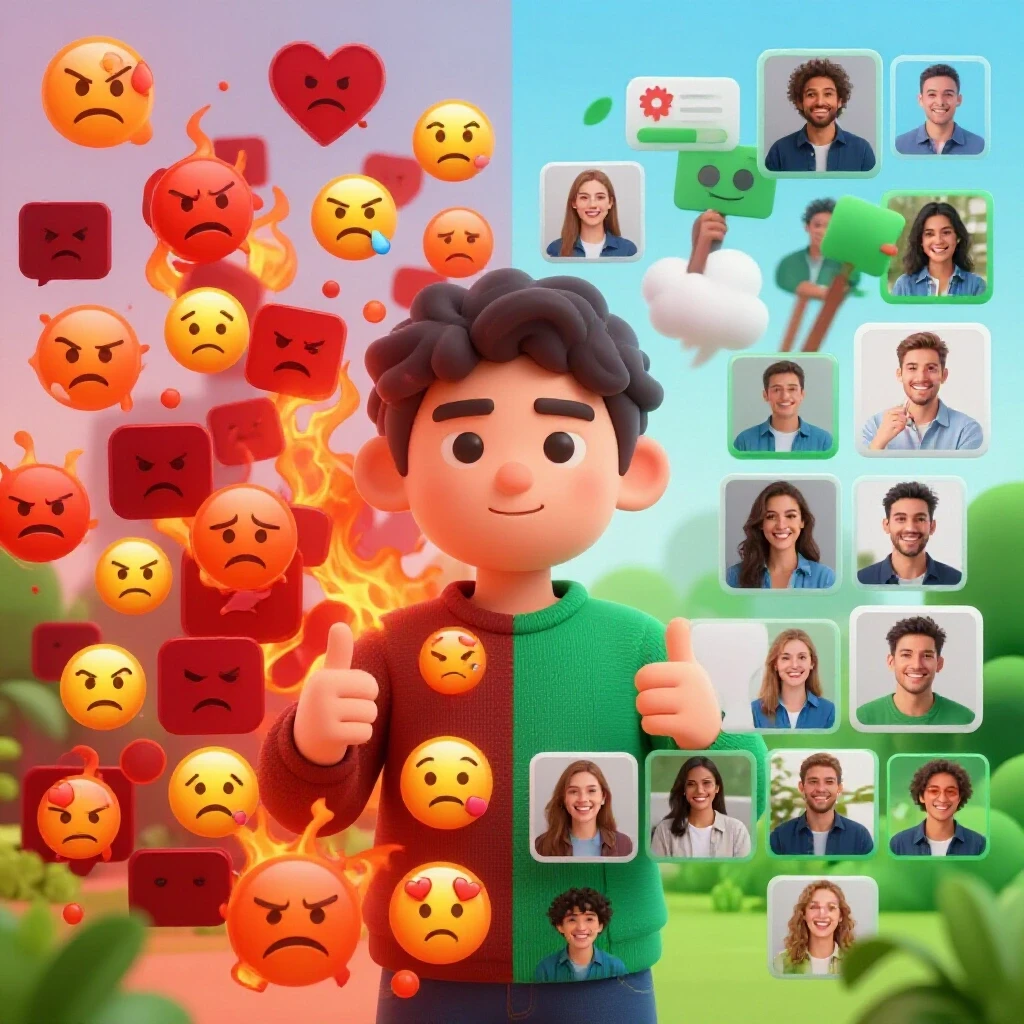
In my experience, when a brand faces a sudden, severe engagement drop, the first instinct is to post more. This is usually a mistake. I remember managing a high-visibility retail account that saw its reach plummet by 70% in 48 hours. The team was panicked, fearing a “shadowban.” We had to stop and look at the data. Was it a policy violation, or had we simply alienated the core audience with a tone-deaf campaign?
Algorithmic penalties often stem from “content moderation thresholds.” Every platform has a limit on how many user reports or policy flags an account can receive before the system automatically suppresses its reach. This is a protective measure by the platform to keep the ecosystem safe. If your brand has recently shared something controversial, the volume of “hide post” or “report” actions can trigger an automatic suppression.
To help you diagnose your situation, I use a Root Cause Diagnostic Checklist. This helps separate technical issues from sentiment-based ones.
| Diagnostic Factor | Algorithmic Penalty Indicators | Audience Sentiment Indicators |
|---|---|---|
| Reach Velocity | Sudden, vertical drop across all posts. | Gradual decline over several campaigns. |
| Search Visibility | Profile or hashtags do not appear in search. | Profile is visible, but engagement is low. |
| Engagement Type | Low impressions from non-followers. | High impressions, but high “negative” actions. |
| Notification Status | Possible “Account Status” warnings in settings. | No warnings, but comments are hostile. |
Defining Search Suppression and Shadowbans for Brand Safety
Search suppression, often called a shadowban, occurs when a platform limits your content’s visibility without a formal notification. This usually happens after repeated minor policy violations or high user report rates. Understanding this mechanism is vital for specialists who need to explain sudden traffic losses to their leadership teams.
A shadowban isn’t a myth; it is a functional part of platform backend infrastructure. Platforms like Instagram and X (formerly Twitter) use “visibility filtering” to demote content that borders on violating community standards. This “borderline content” might not be removed, but it won’t be recommended to new audiences. For a brand protection specialist, this is a nightmare because the account looks active, but it is effectively shouting into a void.
When I analyze search suppression, I look at the “reach velocity drop.” This is the speed at which your impressions fall compared to your 30-day average. If your reach to non-followers drops by more than 50% overnight without a change in posting frequency, you are likely facing a platform-level restriction.
- Step 1: Check your account status in the platform settings.
- Step 2: Search for your exact username from an unrelated account.
- Step 3: Review recent posts for “low-quality” signals like excessive hashtags or repetitive links.
Managing Internal Stakeholder Communications During a Brand Crisis
Effective stakeholder communication ensures that leadership understands the technical nature of an engagement drop. Instead of focusing on vanity metrics, you must present data-backed recovery timelines and explain the administrative process of platform appeals. This transparency reduces internal pressure and allows for a more methodical, successful recovery effort.
One of the hardest parts of my job has been sitting in boardrooms explaining why a million-follower account is only getting 200 likes. Executives often want an “instant restoration” of traffic. I have to be the one to tell them that brand reputation recovery is a marathon, not a sprint. You cannot “hack” your way out of a trust deficit or an algorithmic penalty.
When communicating with management, I focus on the “baseline rehabilitation period.” This is the 30-to-90-day window required to prove to both the algorithm and the audience that the brand has corrected its course. I use a Trust Recovery Phase Timeline to set realistic expectations.
- Diagnosis Phase (Days 1–5): Identifying the trigger and pausing problematic content.
- Containment Phase (Days 6–15): Submitting appeals and addressing negative feedback directly.
- Rehabilitation Phase (Days 16–45): Posting “safe,” high-value content to reset algorithmic scoring.
- Restoration Phase (Days 46–90): Gradually returning to normal reach levels as trust is rebuilt.
Building on this, you must be honest about the appeal timeline ranges. Platform support interfaces are notoriously slow. A standard appeal can take anywhere from 5 to 15 business days to even be reviewed by a human. If you promise a fix by Monday, and the platform doesn’t respond until Friday, you lose your own internal credibility.
Executing a Data-Backed Strategy for Audience Sentiment Reversal
Reversing negative sentiment requires a shift from defensive PR to proactive, value-driven engagement. By analyzing the specific triggers of audience backlash, you can tailor your content to address concerns directly. This methodical approach helps rebuild the trust bridge between the brand and its followers over a sustained period.
Interestingly, the most effective way to handle an angry audience isn’t to delete their comments. It is to acknowledge them. In a project I handled for a tech brand facing a major service outage, the audience was furious. Our reach was being crushed because every post was a magnet for vitriol. We implemented a “proactive response framework.”
We stopped the marketing fluff and started posting technical updates. We turned the comment section into a resource. By providing real value during the crisis, we saw the “Sentiment Index” shift. We weren’t just a brand that messed up; we were a brand that stayed to clean up the mess. This is how you begin the process of turning critics into advocates.
Implementing a Community Recovery Sequence
A community recovery sequence is a planned series of posts and interactions designed to move the audience from anger to neutrality, and eventually back to positive engagement. This requires a deep understanding of content filtration systems, which prioritize posts that generate meaningful social interactions rather than just “outrage clicks.”
To execute this, you must audit your creative strategy. If your audience is angry, a “salesy” post will feel like an insult. As a result, you should pivot to “community-first” content. This includes:
- Transparency Posts: Explaining what went wrong and what is being fixed.
- Educational Content: Providing help or tutorials related to the brand’s core service.
- User-Centric Spotlights: Highlighting the community rather than the product.
I track this progress using a Sentiment Tracking Index. We rate comments on a scale of -1 (Hostile) to +1 (Advocate). If the average moves from -0.8 to -0.2 over a month, that is a massive victory, even if total reach is still lower than the previous year.
Navigating Platform Appeals and Administrative Recovery
The platform appeals process is the formal method of requesting a review of an account penalty or content removal. This involves using specific support interfaces to provide evidence that your account follows community guidelines. It is a slow, bureaucratic process that requires patience and precise documentation of your account’s history.
When submitting an appeal, avoid emotional language. The people reviewing these appeals see thousands of requests a day. They want facts. I once helped a client recover an account that was flagged for “coordinated inauthentic behavior” simply because they had a sudden surge of international followers from a viral post. We had to provide data logs showing the organic source of that traffic.
- Be Concise: State the exact post or action you are appealing.
- Reference Policies: Use the platform’s own community guidelines to explain why you believe the flag was an error.
- Provide Evidence: Attach screenshots or data exports from your analytics tools.
If you are dealing with an engagement drop resolution, remember that sometimes there is no “appeal” button for a shadowban. In these cases, the only way out is through “account auditing.” You must remove the triggers. This might mean deleting posts that had high report rates or disconnecting third-party apps that violate platform terms of service.
Measuring Long-Term Recovery and Brand Reputation Health
Measuring recovery involves tracking more than just likes or shares. You need to monitor reach velocity, sentiment index ratings, and the ratio of positive to negative interactions. These metrics provide a clear picture of whether your account is actually healing or if lingering algorithmic penalties are still in effect.
How do you know when you have truly recovered? I look for the “Engagement Variance Threshold.” This is the point where your engagement per post returns to within 10% of your historical average. If you were getting 1,000 interactions and you are now back to 900, your account is healthy again.
However, reach often lags behind engagement. The algorithm needs to see a consistent pattern of positive interactions before it opens the “reach gates” again. This is why I emphasize the 30-day baseline. You need 30 days of “clean” behavior—no flags, no high report rates, and steady engagement—to fully restore your standing in the platform’s trust safety validation protocols.
| Metric | Recovery Benchmark | Why It Matters |
|---|---|---|
| Reach Velocity | >15% growth week-over-week | Indicates the algorithm is relaxing restrictions. |
| Sentiment Index | >0.0 (Neutral to Positive) | Shows the audience is no longer actively hostile. |
| Report-to-View Ratio | <0.01% | Essential for staying below moderation thresholds. |
| Appeal Response Time | 5–15 Business Days | Sets the expectation for administrative fixes. |
Conclusion: The Path Forward for Brand Protection
Recovering from a major setback is less about “tricking” an algorithm and more about respecting the platform’s ecosystem and your audience’s intelligence. In my 14 years of doing this, I have seen that the brands that survive crises are those that remain data-driven and transparent. They don’t hide from the data; they use it to build a better strategy.
If you are currently facing a reach drop or an audience backlash, take a breath. Start with a root cause analysis. Stop any automated posting that might look like spam. Communicate clearly with your leadership about the 30-to-90-day recovery window. By following a systematic, evidence-based approach, you can restore your account’s health and turn a period of failure into a foundation for long-term resilience.
Frequently Asked Questions
How long does it typically take to recover from a shadowban? Most search suppression or shadowbans last between 14 and 30 days, provided the underlying cause is addressed. If you continue to violate policies or receive high report rates during this period, the restriction can be extended indefinitely. Recovery requires a “clean” period where no further flags are triggered.
What is the first thing I should do if my engagement drops by 50%? Your first step should be a “content freeze” for 24 to 48 hours. Use this time to check your account status in settings and audit your most recent posts for high “negative action” counts (like hides or reports). This prevents you from digging a deeper hole while you diagnose the trigger.
Can I appeal a reach drop if I didn’t get a formal violation notice? Generally, you cannot appeal a reach drop directly if no specific post was flagged. Instead, you must focus on “algorithmic rehabilitation.” This involves removing potentially problematic content, stopping the use of banned hashtags, and focusing on high-quality engagement with your existing followers to signal to the platform that your account is valuable.
How do I explain a shadowban to my CEO? Explain it as a “temporary platform-level visibility restriction” caused by automated safety filters. Use the analogy of a “probation period.” Emphasize that while the account is restricted, the focus must shift from reach to rebuilding trust with the current audience to satisfy the platform’s brand safety protocols.
Does deleting negative comments help or hurt recovery? Deleting comments often hurts more than it helps. It can frustrate an already angry audience, leading to more reports. Unless the comments violate safety guidelines (like hate speech), it is better to address them or leave them. High report rates are a much bigger threat to your reach than a few negative comments.
What is a “Sentiment Index” and how do I calculate it? A Sentiment Index is a way to quantify audience mood. You can calculate a basic version by taking a sample of 100 comments and assigning a value: +1 for positive, 0 for neutral, and -1 for negative. Add them up and divide by 100. A score below 0 indicates a need for a shift in your communication strategy.
What are “content moderation thresholds”? These are internal platform limits on how many negative signals an account can generate before automated suppression kicks in. Signals include “I don’t want to see this,” “Report post,” or “Block account.” Staying below these thresholds is the core of brand protection.
How do I know if my hashtags are “banned”? You can check this by searching for the hashtag. If the “Top Posts” appear but “Recent Posts” are hidden, or if the hashtag returns no results despite being common, it is likely restricted. Using restricted hashtags can trigger search suppression for your entire post.
Can third-party apps cause an engagement drop? Yes. Any app that uses “unauthorized API access” for automated liking, following, or even just advanced analytics can trigger a platform’s bot-detection systems. This often results in a severe algorithmic penalty. Always use platform-approved partners for scheduling and analytics.
What is “reach velocity”? Reach velocity is the rate at which your content spreads to new users. A healthy account has a steady or growing velocity. A sudden “stall” in reach—where a post gets initial views from followers but then stops completely—is a classic sign of an algorithmic penalty or a content filtration trigger.
(This article was written by one of our staff writers, Andrew Collins. Visit our Meet the Team page to learn more about the author and their expertise.)