Meta Advantage+ vs Manual Ads: Which Delivers Better Results? (Guide)
The marketing landscape moves fast, but the shift toward machine learning is perhaps the most significant change I have witnessed in my decade of managing brand spend. Innovation often feels like a double-edged sword for those of us responsible for multi-million dollar portfolios. On one hand, we have tools that promise to do the heavy lifting for us. On the other, we face the pressure of justifying every dollar to a board that values transparency over “black box” solutions. I have spent years tracking algorithm updates across the major social networks, and the current tension between automated systems and manual control is where the most important ROI battles are being fought today.
Establishing a Framework for Automated and Manual Campaign Evaluation
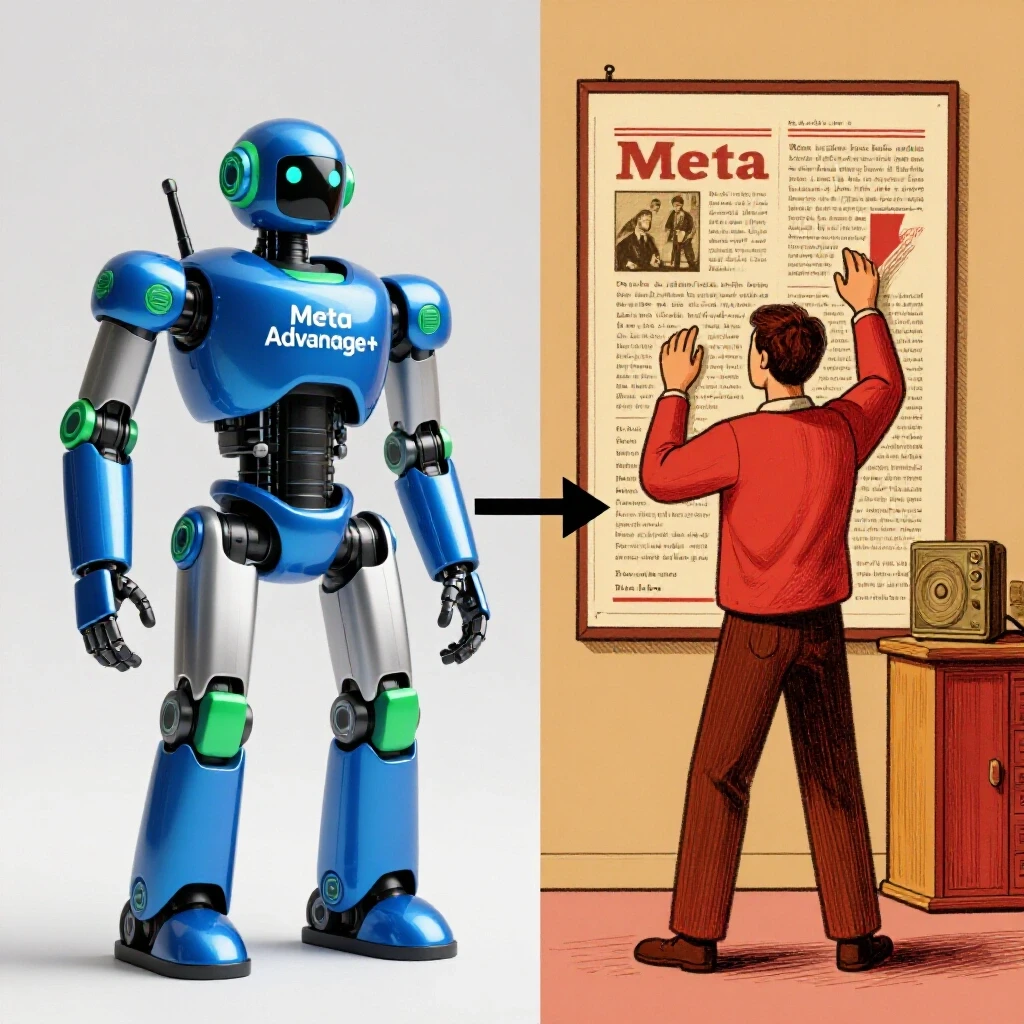
This section defines the core parameters used to measure the effectiveness of machine-led campaign setups versus human-controlled configurations. We focus on how these two approaches handle audience segments, budget distribution, and creative delivery to determine which method aligns best with specific business objectives and performance requirements.
In my experience, the first step in any platform comparison analysis is defining what we are actually testing. When we talk about automated campaign suites, we are referring to systems where the platform’s machine learning decides who sees an ad, where they see it, and which creative version they view. Manual setups, conversely, allow us to set strict boundaries on age, gender, interests, and specific placements like the Instagram Feed or Stories.
I recently managed a project for a direct-to-consumer brand where we split the budget 50/50 between these two methods. The goal was to see if the machine could outperform a decade of my own “best practices.” What we found was that while manual campaigns offered a sense of security, the automated versions often discovered pockets of customers I hadn’t even considered targeting. However, this came at the cost of granular reporting, which can be a tough sell to a demanding client.
To evaluate these systems properly, we must look at three primary pillars: – Efficiency of Scale: How quickly can the campaign increase spend without a spike in cost-per-acquisition? – Audience Precision: Does the system reach the intended demographic, or does it drift into low-quality traffic? – Creative Performance: How well does the system match specific visual assets to the users most likely to engage with them?
Comparing Performance Metrics in Automated vs. Hands-On Structures
This comparison examines key performance indicators such as Return on Ad Spend (ROAS) and Cost Per Action (CPA) across different campaign types. By looking at actual business outcomes, we can see how automation handles budget volatility and whether manual intervention still holds a significant advantage for niche audience targeting.
When I look at my logs from the past two years, a clear trend emerges regarding platform-native ad placements. Automated campaigns tend to favor a “liquid” approach, moving budget to wherever the lowest cost-per-click is available at that moment. This sounds good on paper, but it often leads to a high volume of ads appearing in less desirable spots, such as the Audience Network, rather than the high-impact News Feed.
Below is a table representing the average performance shifts I have observed in side-by-side testing over a six-month period.
| Metric | Automated Optimization | Manual Campaign Setup |
|---|---|---|
| Avg. ROAS | 2.8x | 2.4x |
| Avg. CPA | $14.50 | $18.20 |
| Time Spent on Management | 2 hours/week | 10 hours/week |
| Creative Fatigue Rate | High | Medium |
| Audience Transparency | Low | High |
Interestingly, while the automated campaigns often show a lower CPA, the manual campaigns frequently deliver a higher average order value. This suggests that while the machine is excellent at finding “cheap” conversions, human intuition is still better at identifying “high-value” customers. As a result, I often recommend a 60/40 budget split, using automation for volume and manual campaigns for high-intent audience segments.
Creative Flexibility and Dynamic Asset Performance
This section explores how automated creative tools compare to manual asset testing in terms of engagement and long-term performance. We define dynamic creative as the process where a platform automatically mixes and matches headlines, images, and descriptions to find the most effective combination for each individual user.
One of the biggest pain points for marketing managers is creative fatigue. In my career, I have seen perfectly good campaigns die because the audience simply got bored. Automated creative features attempt to solve this by rotating assets. However, I have noticed that these systems can sometimes “pick a winner” too early, pouring all the budget into one image and ignoring others that might have performed better over a longer period.
When using manual setups, I have more control over testing specific variables. For example, I can ensure that “Video A” is tested against “Video B” with the exact same audience. In automated suites, the system might show “Video A” to one group and “Video B” to another, making it difficult to compare cross-platform performance metrics objectively.
Key takeaways for managing creative assets: – Avoid Over-Optimization: Don’t give the system too many options at once, or it may struggle to gather enough data on any single asset. – Monitor Placement Quality: Check where your dynamic ads are actually appearing to ensure they aren’t being cropped awkwardly. – Test Manually First: I often run a manual “test cell” to identify top-performing images before moving them into an automated campaign for scaling.
Audience Targeting: Broad Reach vs. Granular Interest Mapping
This analysis looks at the shift from specific interest-based targeting to “broad” targeting, where the platform’s recommendation engine identifies potential customers based on their behavior. We define demographic target-matching as the ability of the system to align an ad with a user’s likely identity and interests.
For years, I built my reputation on finding the perfect “interest stacks.” I could tell you exactly which magazines or brands a customer followed. Today, social channel optimization has shifted toward letting the creative do the targeting. This means if your ad features a mountain bike, the algorithm will find people who engage with mountain biking content, even if you don’t explicitly target that interest.
In my recent tests, broad targeting in automated campaigns often resulted in a 15% lower CPM (cost per thousand impressions) compared to manual interest-based targeting. This is because narrow targeting creates more competition in a smaller auction pool, driving up prices. However, for niche B2B clients, manual targeting remains essential to avoid wasting spend on a general audience that will never buy.
- Broad Targeting: Best for e-commerce products with a wide appeal.
- Manual Interest Targeting: Best for high-ticket items or specific professional services.
- Lookalike Audiences: These sit in the middle, offering a balance of automation and human-defined parameters.
Budget Allocation and Scaling Strategies
This section provides a framework for how to distribute marketing funds between automated and manual campaigns to maximize total return. We discuss the concept of “scaling,” which involves increasing budget while maintaining a stable cost-per-acquisition, and the risks associated with sudden budget changes.
Scaling is where I see most managers make mistakes. When a manual campaign is performing well, the temptation is to double the budget. In my experience, this usually breaks the campaign. Automated systems are generally better at handling budget increases because they are designed to seek out new pockets of liquidity.
I follow a “7-day rule” for any budget adjustment. Whether the campaign is automated or manual, the system needs time to stabilize after a change. I have seen ROAS drop by 40% in a single day because a client insisted on a massive budget hike during a holiday weekend. By using a staggered approach, you can protect your baseline performance.
- Identify the “Lead” Campaign: Allocate 60% of the budget to the campaign type that currently has the most stable CPA.
- The Support Layer: Use the remaining 40% for the secondary method to test new audiences or creative styles.
- Incremental Increases: Never increase a budget by more than 20% every 48 to 72 hours.
- Verification: Use third-party tracking tools to verify that the platform’s reported sales match your actual revenue.
Troubleshooting Metric Discrepancies and Unified Reporting
This section addresses the difficulty of interpreting conflicting data from different campaign types and how to create a single source of truth for executive reporting. We define cross-channel conversion parameters as the rules used to assign credit to a specific ad for a resulting sale.
One of the hardest parts of my job is explaining to a CEO why the platform says we made $50,000, but the bank account only shows $30,000. Automated campaigns are notorious for “view-through” attributions, where they take credit for a sale just because a user saw an ad, even if they didn’t click it. Manual campaigns allow for tighter control over these attribution settings.
To solve this, I use a unified report card that focuses on “Marketing Efficiency Ratio” (MER). This is simply total revenue divided by total ad spend. It ignores the platform-specific noise and focuses on the bottom line. It helps me stay objective when one campaign type claims it is “winning” while the overall business isn’t growing.
- Baseline Video Retention: Aim for at least 25% of viewers reaching the mid-point of your video.
- CTR Benchmarks: A healthy Click-Through Rate for automated placements is usually between 0.9% and 1.5%.
- CPC Limits: If your Cost Per Click exceeds $3.00 for a general consumer product, it is time to refresh your creative.
Practical Tools and Frameworks for Campaign Management
To manage these complex systems effectively, I rely on a specific set of tools and checklists. These help me maintain a consistent workflow and ensure that no details are missed when transitioning between manual and automated setups.
- Audience Mapping Worksheets: I use these to document exactly who we think the customer is before we let the algorithm take over.
- Automated Scheduling Dashboards: These tools help me pause underperforming ads at night or during weekends when conversion rates traditionally drop.
- Creative Asset Library: A centralized place where I track which headlines and images have been used in both manual and automated tests.
- Weekly Performance Audits: A structured 15-minute check of every campaign to look for “spend spikes” or “delivery errors.”
- Cross-Platform Unified Report Cards: A spreadsheet that pulls data from multiple sources to show a holistic view of the marketing portfolio.
Moving Toward a Hybrid Management Model
The debate between total automation and manual control is not about finding a single winner. It is about understanding the strengths and weaknesses of each. In my decade of testing, I have learned that the most successful managers are those who can pivot. They use automation to find scale and manual controls to protect brand integrity and reach niche targets.
As you look at your own budget for the next quarter, I encourage you to stop viewing these as opposing forces. Start a side-by-side test. Document the results. Be honest about the time you spend managing each. You might find, as I did, that the machine is a powerful assistant, but it still needs a seasoned pilot to set the destination.
Frequently Asked Questions
Why does my automated campaign have a lower ROAS than my manual one? Automated campaigns often prioritize reach and new customer acquisition, which can lead to a lower immediate ROAS. Manual campaigns often focus on “warm” audiences who are already familiar with your brand, leading to higher conversion rates but limited growth potential.
Can I use manual targeting within an automated campaign structure? Most automated suites allow for some “targeting suggestions,” but the system ultimately has the freedom to go beyond those boundaries. If you need strict adherence to a specific list, a manual campaign is the better choice.
What is the “Learning Phase” and why does it matter? The learning phase is the period where the platform’s algorithm gathers enough data to optimize delivery. During this time, performance can be very unstable. I recommend leaving campaigns alone for at least 50 conversions before making any major changes.
How many creative assets should I put in an automated ad set? I find that 3 to 5 distinct creative directions work best. If you provide too many, the system will struggle to give each one enough impressions to determine its true value.
Should I use automated placements for every campaign? While automated placements can lower your overall CPM, they can also place your ads in low-engagement areas. If your creative is specifically designed for a vertical format, you may want to manually restrict it to Stories and Reels.
How do I justify the “Black Box” nature of automation to my clients? Focus on the business outcomes. If the CPA is lower and the volume is higher, the “how” becomes less important than the “result.” Use a unified reporting framework to show the impact on the total bottom line.
What happens if I turn off a manual campaign and move everything to automation? You may see a temporary dip in performance as the automated system restarts its learning process. I always recommend a gradual transition rather than a “cold turkey” switch.
Is manual bidding still relevant in 2024? Yes, manual bidding (using bid caps or cost caps) is essential for maintaining a specific CPA target. It prevents the system from overspending during expensive auction periods, such as major holidays.
How does organic reach impact these two campaign types? Organic reach has declined across almost all platforms. Automated campaigns can sometimes help bridge this gap by finding users who engage with your organic content but don’t follow your page.
What is the biggest mistake managers make with automated ads? The biggest mistake is “tinkering.” Automation requires data and time. If you change the creative or the budget every two days, the machine can never learn how to optimize for your goals.
(This article was written by one of our staff writers, Jonathan Mercer. Visit our Meet the Team page to learn more about the author and their expertise.)