How to Avoid Confusing Reach With Loyalty in Social Media (Guide)
If you lost your entire audience tomorrow, how many of them would actually come looking for you? This is the hard question I had to ask myself seven years into my career. I was managing a major retail account that was hitting record-breaking impression numbers every month. We were “viral” by every definition, yet when a minor policy misunderstanding led to a 70% drop in reach, our community went silent. We hadn’t built a fanbase; we had simply rented a crowd.
Diagnosing the Disconnect Between High Impressions and True Community Support
This diagnostic phase involves separating vanity metrics from meaningful audience signals to understand why an account is struggling. It requires looking past the total number of people who saw a post and focusing on how many of those people took an intentional action to stay connected.
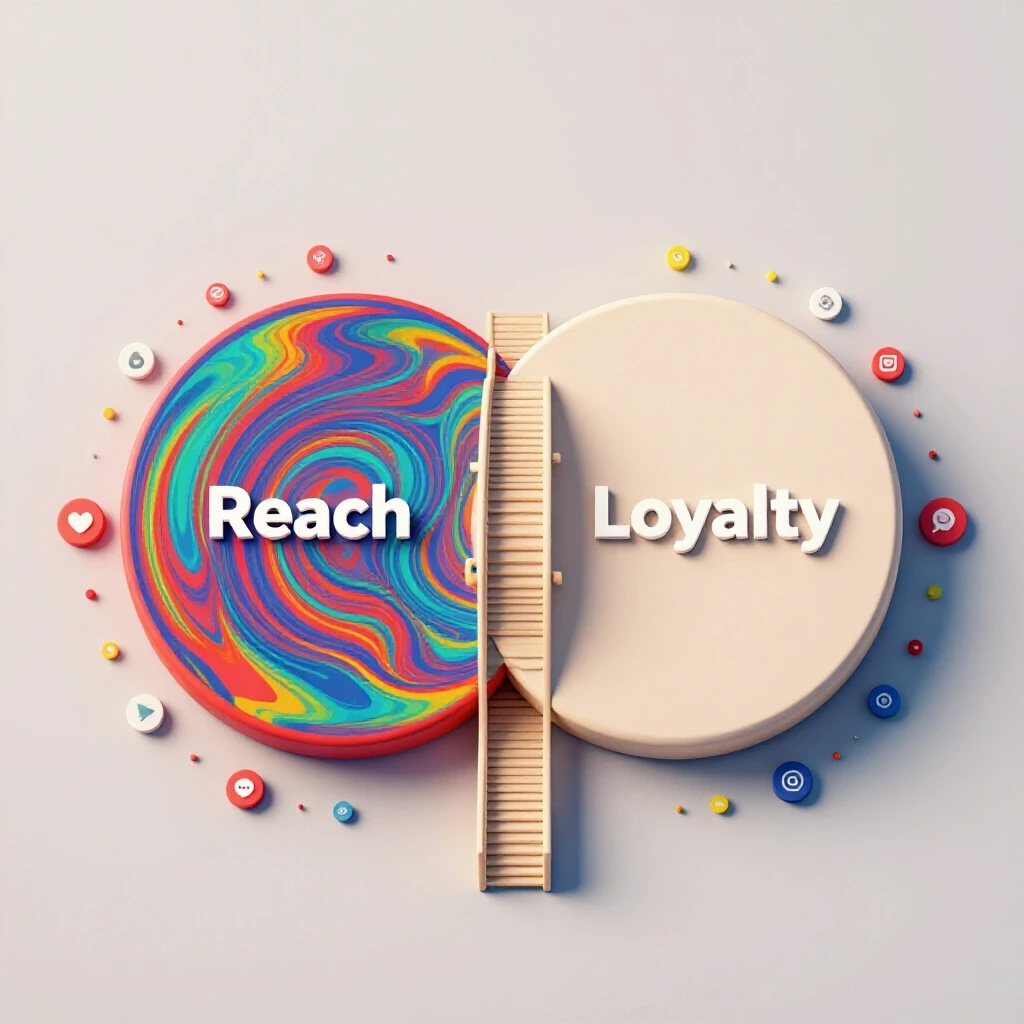
In my fourteen years of operations, I have seen many managers panic when their “Reach” metric turns red. They assume the algorithm is broken. However, the root cause is often a lack of audience depth. Reach is the total number of unique users who see your content. It is a measure of visibility. Loyalty, or audience retention, is the frequency with which those same users return to your page.
When I conducted a root cause analysis for a global travel brand, we found their reach was 5 million, but their “Return Visitor” rate was less than 2%. When the platform updated its content moderation thresholds, their reach plummeted. Because they had no core group of loyalists to signal to the algorithm that the content was still valuable, the account stayed in a slump for months.
- Reach Velocity: The speed at which your content spreads to new people.
- Engagement Variance: The gap between your highest-performing post and your average post.
- Retention Rate: The percentage of your audience that interacts with your content more than once a week.
Table 1: Root Cause Diagnostic Checklist
| Symptom | Potential Cause | Metric to Verify |
|---|---|---|
| Sudden 50%+ drop in reach | Algorithmic Penalty or Shadowban | Search visibility for hashtags |
| High reach but zero new followers | Content-Audience Mismatch | Profile visit-to-follow ratio |
| Steady decline in reach over 6 months | Audience Fatigue / Lack of Loyalty | Repeat engagement rate |
| High engagement but negative comments | Public Relations Crisis | Sentiment Index Rating |
Identifying Platform Policy Triggers and Algorithmic Suppression
Algorithmic suppression, often called a shadowban, is a state where a platform limits your content’s visibility without a formal notification. This usually happens when an account hits a specific threshold of user reports or automated flags for “borderline” content that doesn’t quite break rules but creates a poor user experience.
I once managed an account that was flagged because we used a trending audio clip that was later associated with a prohibited challenge. We didn’t break a rule, but the platform’s safety validation protocols categorized us as “high risk.” Our reach didn’t just dip; it flatlined.
Understanding the “why” behind these penalties is essential. Platforms use content filtration systems to protect their users. If your account has a high “Hide Post” or “Report” ratio compared to your views, the system will naturally pull back your amplification. This isn’t a personal attack; it is a brand safety protocol designed to keep the feed healthy.
- Shadowban: A temporary restriction where your content stops appearing in discovery feeds or search results.
- Content Moderation Thresholds: The specific limit of negative signals (reports, hides) an account can receive before being suppressed.
- Brand Safety Validation: The automated process platforms use to ensure an account is safe for advertisers.
Communicating Performance Plateaus and Crisis Metrics to Leadership
Communicating a crisis to upper management requires moving away from emotional language and focusing on data-backed recovery timelines. It involves explaining that a temporary loss in reach is often a symptom of a deeper strategic error rather than a random technical glitch.
One of the most stressful meetings of my career involved telling a CEO that our 20% engagement rate was a “false positive.” We were getting massive reach because of a controversial post, but our brand reputation was actually declining. I had to explain that while the numbers looked good, the audience sentiment was toxic.
To handle these meetings, I use a “Recovery Phase Timeline.” I tell leadership that we cannot buy or “hack” our way back to our old numbers. Instead, we must go through a rehabilitation period. This period usually lasts 30 to 90 days, depending on the severity of the penalty.
- Acknowledge the Signal: Explain that the platform has flagged our recent activity.
- Define the Impact: Use “Reach Velocity Drops” to show exactly how much visibility we have lost.
- Propose the Pivot: Shift the focus from “getting more views” to “re-engaging the people who already follow us.”
Executing a Recovery Campaign Focused on Audience Retention
A recovery campaign is a deliberate shift in content strategy aimed at rebuilding trust with both the platform and the audience. It prioritizes high-quality interactions over broad visibility, focusing on content that encourages saves, shares, and long-form comments.
When I assist brands in recovery, we stop trying to go viral. Virality is what got us into trouble by attracting a “shallow” audience that didn’t care about the brand. Instead, we execute a community recovery sequence. We post content that is specifically designed for our most loyal fans.
We look for a “Sentiment Index Rating” of at least 80% positive before we try to scale our reach again. This means for every 100 comments, 80 should be helpful or supportive. If we can’t get our own followers to like us, the algorithm certainly won’t recommend us to strangers.
- Step 1: Content Audit. Delete or archive posts that have high “hide” rates.
- Step 2: Engagement Sprints. Spend 15 minutes a day responding to every single comment to signal to the platform that the account is active and helpful.
- Step 3: Quality over Quantity. Reduce posting frequency but increase the value of each post to ensure high interaction-to-view ratios.
Table 2: Reach vs. Advocacy Metric Comparison
| Metric Type | Reach-Focused (The Old Way) | Loyalty-Focused (The Recovery Way) |
|---|---|---|
| Primary Goal | Total Impressions | Repeat Interactions |
| Success Signal | Going Viral | High Save-to-View Ratio |
| Audience Type | Passive Scrollers | Active Brand Advocates |
| Resilience | Low (Crashes during penalties) | High (Supports you during crises) |
Submitting Platform Appeals and Navigating Support Interfaces
The appeals process is the formal method of asking a platform to review a penalty or a content takedown. It is often a slow, administrative task that requires clear documentation and a thorough understanding of platform community guidelines.
In my experience, the biggest mistake managers make is sending emotional or angry appeals. I have found that a clinical, data-driven approach works best. When I submit an appeal, I reference the specific policy I believe was misapplied. I provide screenshots and a clear explanation of the context of the post.
Standard appeal timelines range from 5 to 15 business days. During this time, it is vital to keep the account “clean.” Do not try to circumvent the penalty by creating a new account or using automated engagement tools. This will only flag your IP address and make the recovery process even harder.
- Identify the Violation: Look for the specific notification in your account status tab.
- Gather Evidence: Document why the content was within guidelines.
- Submit Once: Multiple appeals can often reset your place in the queue.
Establishing Long-Term Account Audits and Brand Safety Protocols
Long-term account protection involves setting up systems to catch potential issues before they become catastrophic reach losses. This includes regular audits of your follower quality, engagement patterns, and compliance with evolving platform policies.
I now perform a “Brand Safety Audit” every quarter for my clients. We look at our “Report-to-View” ratio. If we see that more than 0.1% of viewers are hiding our posts, we know we are pushing too hard or targeting the wrong people. We don’t wait for the algorithm to punish us; we adjust our strategy first.
Building for the long term means accepting that reach will fluctuate. If you have a loyal core audience, a 50% drop in reach is a nuisance. If you only have reach and no loyalty, that same drop is an existential threat to your brand.
- Quarterly Audits: Reviewing the last 90 days of content for policy “near-misses.”
- Sentiment Tracking: Using tools to monitor the emotional tone of your community.
- Diversification: Ensuring your brand isn’t 100% dependent on a single platform’s discovery algorithm.
Lessons from the Field: A Recovery Case Study
I once worked with a beauty brand that had 1 million followers but was seeing reach lower than an account with 10,000. They had spent years chasing trends and using “loop giveaways” to grow. They had reach, but they had zero loyalty. When the platform cracked down on “inauthentic growth,” their account was essentially silenced.
Our recovery plan took six months. We stopped all giveaways. We stopped trying to jump on every trend. We started a series called “Behind the Science,” where the founder answered deep, technical questions from real customers.
At first, the views were tiny. But the people who did watch, watched the whole video. They saved it. They tagged friends. We were rebuilding the “loyalty signal.” Slowly, the platform’s search suppression lifted. By the end of the year, their reach was back to normal, but their sales were 40% higher than they were during their “viral” phase. They finally owned their audience instead of just renting them.
Frequently Asked Questions
What is the difference between an algorithmic penalty and a shadowban? An algorithmic penalty is usually a broad reduction in reach because your content is deemed low-quality or irrelevant by the system. A shadowban is more specific; it is a temporary “search suppression” where your content is hidden from people who don’t follow you, often due to a policy flag.
How long does it take to recover from a severe engagement drop? In my experience, a baseline rehabilitation period is 30 to 90 days. You have to consistently post high-quality, policy-compliant content to “prove” to the platform’s automated systems that your account is no longer a risk.
Can I fix my reach by deleting all my old posts? Deleting a large volume of posts at once can sometimes trigger a “suspicious activity” flag. It is better to archive or delete only the specific posts that received high negative feedback or policy warnings.
Why did my reach drop even though I didn’t break any rules? Platforms constantly update their content moderation thresholds. Something that was “fine” six months ago might now be considered “borderline content.” Also, if your audience’s interests have shifted and they are no longer interacting, the algorithm will stop showing them your posts.
How do I know if my account is actually shadowbanned? The easiest way to check is to post a unique hashtag and then search for that hashtag from an account that doesn’t follow you. If your post doesn’t appear in the “Recent” tab, you are likely experiencing search suppression.
What is a “good” sentiment index rating? For an established brand, you should aim for a sentiment index of 70% or higher. If your positive-to-negative comment ratio falls below 50%, you are at high risk for an algorithmic penalty because the platform perceives your content as causing “user dissatisfaction.”
Should I stop posting entirely if I suspect a penalty? No. Stopping entirely can signal that the account is abandoned. The best approach is to reduce your frequency and focus on “safe,” high-value content that encourages your most loyal followers to engage.
How do I explain a reach drop to a client who only cares about numbers? Focus on the “Engagement Variance.” Show them that while total reach is down, the quality of interactions (like saves and shares) is what will bring the account back. Explain that “rented reach” is volatile, but “owned loyalty” is an asset.
Are there tools to track brand reputation recovery? Yes, many specialists use sentiment monitoring software and brand protection databases. However, the most reliable data usually comes from your platform’s native “Account Status” and “Insights” tabs, specifically looking at the “Reach to Non-Followers” metric.
What is an acceptable report-to-view ratio? While platforms don’t publish exact numbers, a general benchmark is less than 1 report per 10,000 views. If you are consistently above this, your account will likely face some form of reach suppression.
(This article was written by one of our staff writers, Andrew Collins. Visit our Meet the Team page to learn more about the author and their expertise.)