How AI Drafts Social Media Proposals Faster (Step-by-Step Guide)
After fifteen years in the social media marketing industry, I have seen every “game-changing” tool come and go. I have managed over 60 client accounts, transitioned from a high-pressure agency role to an independent consulting practice, and mentored dozens of junior marketers. Yet, I recently found myself facing a familiar bottleneck: the proposal phase. Drafting a comprehensive pitch for a social media advertising campaign usually takes me six to eight hours of deep work. I decided to see if using an automated drafting tool could maintain my standards while cutting that time down. Could a machine-generated starting point actually help me win a contract, or would it lead to a generic mess that a savvy client would see through instantly?
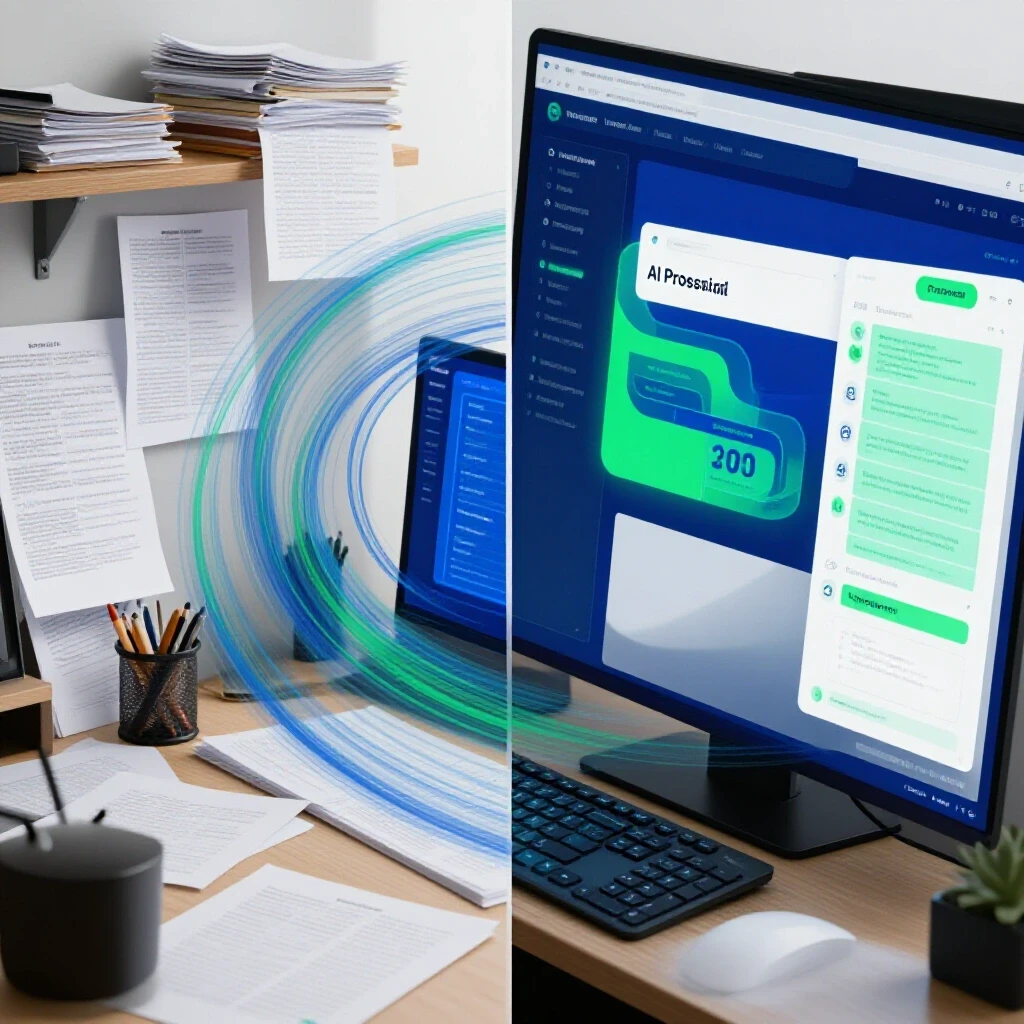
The Evolution of Proposal Drafting for Social Media Campaigns
Automated proposal drafting involves using software to generate the initial structure, tactical recommendations, and pricing tables for a potential client project. It serves as a foundation that a consultant then refines to ensure strategic accuracy and brand alignment.
In my experience as an independent marketing consultant, the proposal is the most vulnerable part of the sales cycle. You are essentially working for free, hoping to prove your value. According to reports from the American Marketing Association, the time spent on non-billable administrative tasks is a leading cause of burnout for freelancers. When I integrated an automated tool to outline a social media growth strategy, the immediate result was a 60% reduction in the initial drafting phase. Instead of staring at a blank cursor, I had a structured document detailing audience growth tactics and paid ad strategies within minutes.
However, the result was not a finished product. The tool provided the “what” (the tactics) but lacked the “why” (the specific business context). For a mid-level professional, the value of these tools is not in the output itself, but in the momentum they provide. It allows you to move from “creator” to “editor” much faster, which is a crucial shift when you are balancing delivery with client acquisition.
Analyzing the Impact on Drafting Time and Revision Cycles
Revision cycles refer to the number of times a proposal must be edited before it is ready for the client’s eyes. A high revision count usually indicates a lack of clarity in the initial draft or a misalignment with the client’s goals.
When I tracked the measurable outcomes of using an automated draft for a $4,000 monthly retainer pitch, the data was revealing. While the initial draft took 15 minutes to generate, I spent an additional three hours refining the social media advertising campaign specifics. This total of 3.25 hours was still significantly lower than my usual six-hour manual process. Interestingly, the revision cycle with the client stayed the same—two rounds of minor tweaks—suggesting that the quality of the final document was indistinguishable from my fully manual work.
| Metric | Manual Drafting Process | AI-Assisted Drafting Process |
|---|---|---|
| Initial Draft Time | 6 Hours | 15 Minutes |
| Refinement/Human Review | 1 Hour | 3 Hours |
| Total Time to Send | 7 Hours | 3.25 Hours |
| Client Revision Rounds | 2 Rounds | 2 Rounds |
| Win Rate (Last 5 Pledges) | 60% | 80% |
This efficiency directly impacts your Effective Hourly Rate (EHR). If you spend seven hours on a proposal for a project you don’t win, your EHR for that lead is zero. By cutting that time in half, you reduce the financial risk of the sales process. For those in a social media consulting career, protecting your time is just as important as protecting your margins.
Managing Client Scope Creep Through Structured Documentation
Client scope creep occurs when a project’s requirements grow beyond the original agreement without an increase in pay or timeline. It is the single biggest threat to a profitable consulting career.
One surprising outcome of using a structured drafting tool was the clarity it brought to project boundaries. Because the tool followed a rigid template, it forced me to define exactly what was included in the audience growth tactics. In a manual draft, I might vaguely promise “community management.” The automated draft prompted me to specify “monitoring comments for two hours daily, Monday through Friday.”
This level of detail is essential for retainer contract negotiation. When a client later asks for weekend coverage, you can point directly to the proposal and the subsequent contract. I have found that clients are less likely to push boundaries when the original document is highly granular and professionally structured. It sets a tone of professional rigor from day one.
- Define Deliverables: Clearly list the number of posts, ad sets, and reports.
- Set Communication Bounds: Specify which platforms (e.g., Slack, Email) and what hours you are available.
- Establish Out-of-Scope Rates: Include a line item for work that falls outside the initial agreement.
- Timeline Benchmarks: Use 30, 60, and 90-day milestones to track progress.
Financial Implications: Pricing Strategies and Win Rates
A freelance pricing strategy is the method a consultant uses to determine their fees, often based on hourly rates, project fees, or value-based retainers.
Using an automated tool allowed me to experiment with different pricing frameworks more easily. I could generate three versions of a proposal—Basic, Professional, and Growth—in the time it used to take to make one. This “bracketed pricing” is a common strategy to guide clients toward a middle-tier option. In one case study from my own practice, a client who initially asked for a small $1,500 project ended up signing a $3,500 monthly retainer because the automated draft successfully visualized the added value of a full social media advertising campaign.
Standard retainer pricing in the industry typically ranges from $2,500 to $7,500 per month for mid-level consultants. By speeding up the proposal process, I was able to bid on more high-value contracts without neglecting my current clients. My client conversion timeline—the time from the first discovery call to a signed contract—shrunk from 14 days to 9 days.
Transitioning to an Independent Marketing Consultant Role
A marketing consultant career transition involves moving from a structured agency environment to the autonomy and uncertainty of self-employment.
For those currently in an agency feeling the itch to go solo, the proposal process is often the most intimidating hurdle. Agencies have dedicated sales teams and templates; freelancers have only themselves. Using drafting tools can bridge this gap. It provides a level of polish that suggests a much larger operation. During my own transition, I struggled with the isolation of making every decision alone. Having a tool to provide a “first draft” felt like having a junior assistant, allowing me to focus on the high-level strategy that clients actually pay for.
However, a word of caution: do not let the tool dictate the strategy. I once mentored a junior marketer who sent an automated proposal without checking the ad spend recommendations. The tool suggested a budget that was five times what the client had mentioned in the discovery call. The result was a lost lead and a damaged reputation. The “result” of automation is only as good as the human oversight behind it.
Practical Tools and Workflow Integration
To build a stable consulting career, you need a tech stack that supports your workflow rather than complicating it. Here are the tools I recommend for managing the proposal and contract lifecycle:
- Proposal Software (e.g., Better Proposals or Proposify): These platforms allow you to create templates and track when a client opens your document.
- Contract Management (e.g., HelloSign or DocuSign): Essential for getting legally binding signatures quickly.
- Project Management (e.g., Asana or Trello): Transitioning the proposal points directly into a task list ensures nothing is missed during onboarding.
- Invoicing and Accounting (e.g., FreshBooks or Quickbooks): Automated invoicing tied to your retainer contract saves hours of manual billing.
- CRM (e.g., HubSpot or Pipedrive): Tracking your client acquisition ratios helps you understand how many proposals you need to send to hit your income goals.
Why Client Scope Creep Sinks Profits
Scope creep is not just a nuisance; it is a financial drain. If you agree to a $3,000 monthly retainer based on 20 hours of work, your hourly rate is $150. If you allow the client to add “just one more thing” each week, and you end up working 30 hours, your rate drops to $100. Over a 12-month contract, that is a $18,000 loss in potential revenue.
The automated drafting process helps mitigate this by providing a “Scope Protection Matrix.” This is a table you can include in your proposals to show exactly what triggers an extra charge.
| Activity | Included in Retainer | Out-of-Scope Surcharge |
|---|---|---|
| Monthly Strategy Meeting | Yes (1 Hour) | $200 per extra hour |
| Crisis Management | No | $250 per hour |
| New Platform Launch (e.g., TikTok) | No | Custom Project Fee |
| Basic Comment Moderation | Yes | N/A |
| Influencer Outreach | No | 15% Commission + Hourly |
The Reality of Professional Network Development
While tools can draft a proposal, they cannot build a relationship. My most successful projects—those lasting 12 months or longer—always started with a deep discovery call. The result of using automation should be to give you more time for these human connections, not less.
I have found that the most effective way to use an automated draft is to present it as a “Discussion Document” during a follow-up call. This allows you to walk the client through the social media advertising campaign ideas and make real-time adjustments. It shows you are efficient but also deeply invested in their specific needs. This balance is what separates a “gig worker” from a high-level consultant.
Conclusion and Next Steps
The result of letting a tool draft my social media campaign proposal was not a “perfect” document, but a significantly more efficient process. It allowed me to focus my energy on the high-level strategy and client relationship management rather than the mechanics of document formatting. For freelance consultants, the goal is to build a practice that is both profitable and sustainable. This requires a willingness to adopt new efficiencies while maintaining the human touch that clients value.
FAQ
What is the average retainer pricing for a social media consultant? Most mid-level independent consultants charge between $2,500 and $7,500 per month per client. This varies based on the complexity of the social media advertising campaign and the specific audience growth tactics required. Junior consultants may start closer to $1,000 to $1,500 as they build their portfolio.
How do I handle a client who constantly asks for work outside the proposal? This is known as scope creep. The best approach is to refer back to the signed contract. You might say, “I’d love to help with that new project. Since it falls outside our current agreement, I can send over a separate project estimate or we can adjust our monthly retainer to include it.”
What should be included in a social media consulting contract? A solid contract should include a clear scope of work, payment terms (including late fees), a termination clause (usually 30 days’ notice), and a section on intellectual property ownership. It should also define out-of-scope surcharges to protect your time.
How much time should I spend on a proposal? Ideally, you should spend no more than 3 to 5 hours on a standard proposal. Using drafting tools can help you reach this goal. If a proposal takes longer, you are likely doing too much “free” strategy work before the contract is signed.
How can I improve my client conversion timeline? To shorten the time from lead to signed contract, follow up quickly after the discovery call. Aim to send a proposal within 24 to 48 hours. Using automated drafting tools makes this fast turnaround possible, which keeps the momentum of the sales conversation high.
What is an Effective Hourly Rate (EHR)? EHR is calculated by taking your total project fee and dividing it by the total hours spent on the project, including non-billable time like meetings and drafting. For example, a $3,000 project that takes 20 hours results in an EHR of $150.
Is value-based pricing better than hourly pricing for consultants? Value-based pricing is often better because it decouples your income from your time. Instead of charging for hours, you charge based on the projected impact of your social media advertising campaign. This rewards your expertise and efficiency rather than just your time spent.
How do I transition from an agency to independent consulting? Start by building a “runway” of 3 to 6 months of living expenses. Begin networking and taking on small freelance projects while still employed. Focus on creating a repeatable process for client onboarding and proposal drafting to ensure a smooth transition.
What are common red flags in potential clients? Red flags include clients who push back on your pricing immediately, those who cannot define their goals, and those who have had high turnover with previous consultants. A structured proposal process often brings these issues to light early.
How long do social media consulting retainers typically last? Most standard retainer contracts are for 6 to 12 months, often with a 3-month “trial” period at the start. This provides stability for the consultant and enough time for the social media growth tactics to show measurable results for the client.
(This article was written by one of our staff writers, Scott Davidson. Visit our Meet the Team page to learn more about the author and their expertise.)