How to Stop Copying Big Creators and Build Your Unique Brand (Guide)
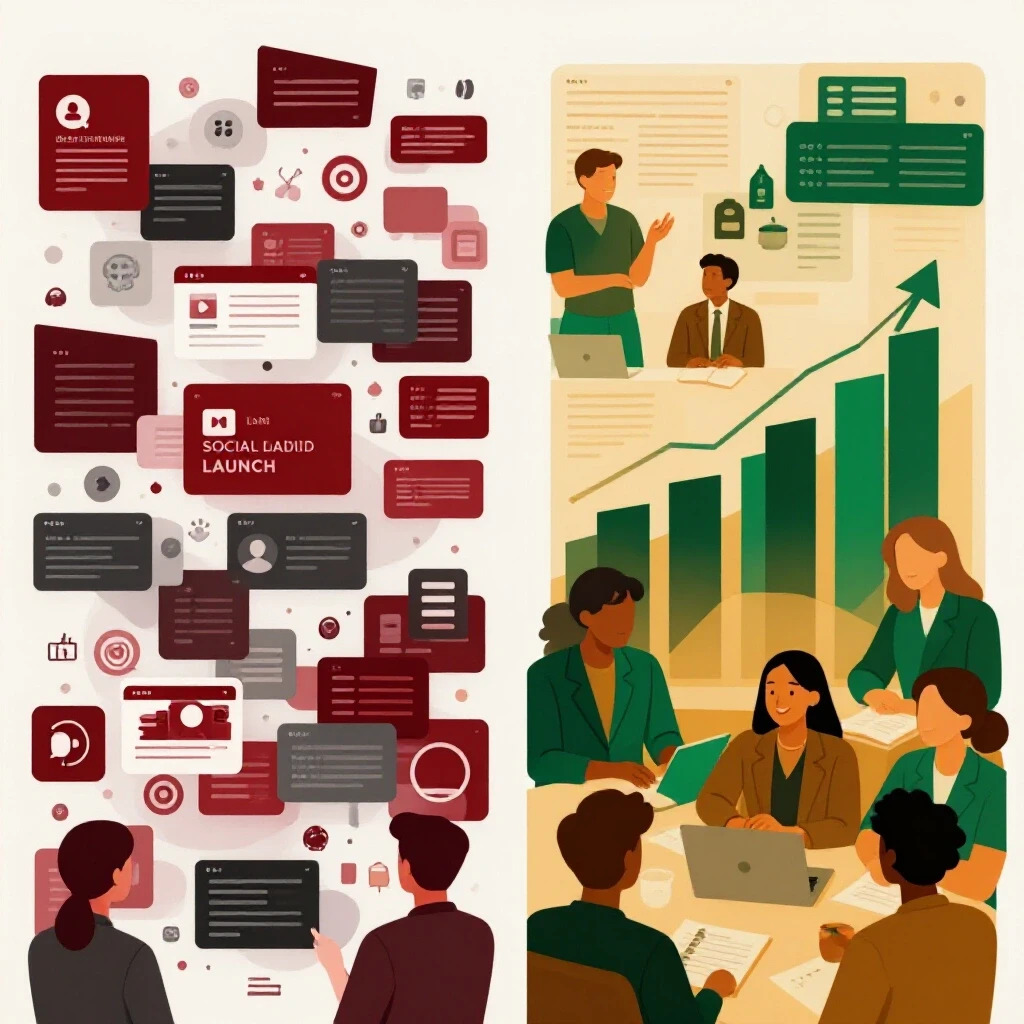
Many professionals believe that the only way to succeed on social media is to follow the “loudest” voices in the room. They see viral creators using high-energy hooks and aggressive growth tactics and assume that is the blueprint for success. However, for an executive or a specialized consultant, chasing these superficial trends often does more harm than good. In my 13 years of marketing, I have found that true authority is not built by shouting, but by speaking with a voice that is unmistakably your own.
Transitioning from Mimicry to Original Executive Positioning
Executive positioning is the strategic alignment of a leader’s unique expertise with the needs of their professional community. It moves away from following generic trends toward establishing a distinct, credible presence that reflects real-world experience and professional values. This foundation ensures that every post builds long-term respect rather than just short-term views.

When I first started helping founders with their digital presence, many felt pressured to use the same “hacks” as popular influencers. They thought they needed to post five times a day or use provocative statements to get noticed. One client, a CFO with two decades of experience, felt so uncomfortable with this style that she stopped posting entirely. We shifted her strategy to focus on deep-dive analyses of market trends. She didn’t get thousands of likes, but she did get three high-value consulting inquiries within a month. This is the power of sustainable authority-building.
Why Generic Templates Fail Professional Solopreneurs
Generic templates are pre-designed content structures intended for mass appeal. While they offer a quick start, they often lack the nuance and depth required to build deep trust with a sophisticated audience. This can make a seasoned professional appear as though they are merely reciting someone else’s script rather than sharing original insights.
In my experience, the problem with templates is that they strip away the “human elements” of your brand. Your professional network wants to hear your specific take on an industry shift, not a watered-down version of a popular post. When you rely on your own voice, you demonstrate that you are a practitioner, not just a spectator. This authenticity is the cornerstone of reputation management in digital spaces.
Establishing a Trust-Based Executive Social Media Strategy
An executive social media strategy is a deliberate plan that prioritizes the quality of interactions over the quantity of followers. It focuses on sharing high-value insights that solve specific problems for a target audience, thereby establishing the professional as a go-to resource. This strategy values depth and long-term relationship-building over viral moments.
For a professional, the goal of social media is rarely “fame.” Instead, it is about being known by the right people for the right reasons. To achieve this, you must map your audience. Who are the decision-makers in your industry? What are their biggest challenges? By answering these questions through your content, you build a bridge of trust. I often tell my clients that one comment from a CEO in your target industry is worth more than five hundred likes from people who will never hire you.
Selecting Strategic Channels for Maximum Impact
Strategic channel selection involves choosing the platforms where your professional network is most active and where your content style fits naturally. For most executives and solopreneurs, this means focusing on LinkedIn for B2B thought leadership or Instagram for a more visual, behind-the-scenes look at professional life.
- LinkedIn is the primary home for professional personal branding. It rewards long-form writing and industry-specific insights.
- Instagram can be effective for consultants who want to showcase their personality and the “why” behind their work.
- The key is to master one platform before expanding to others. Consistency is easier to maintain when you aren’t spreading yourself too thin across multiple apps.
Implementing Sustainable Authority-Building Through Content
Sustainable authority-building is the process of creating long-term professional influence through consistent, high-quality contributions to industry discourse. Unlike quick-follower tactics that prioritize rapid growth, this approach focuses on depth, reliability, and the gradual accumulation of trust within a specific network of peers and potential clients.
I once worked with a legal consultant who struggled to find time for social media. We developed a “content pillar” system. Instead of trying to be “creative” every day, he focused on three core themes: regulatory changes, client case studies, and professional ethics. By sticking to these pillars, he reduced his content creation time to just three hours a week. He wasn’t copying anyone; he was simply documenting his expertise in a structured way.
Developing Your Original Content Pillars
Content pillars are the three to five core topics that define your professional expertise and guide your digital output. They provide a framework that ensures your content remains focused, relevant, and consistent. By defining these pillars, you avoid the trap of posting random updates that don’t contribute to your overall authority.
- Expertise Pillar: Share deep-dive insights into your specific field.
- Experience Pillar: Tell stories from your career that illustrate key lessons.
- Perspective Pillar: Offer your unique take on industry news or trends.
- Personal Pillar: Share professional values or a look at your work process to build human connection.
Managing Your Professional Reputation and Consistency
Reputation management in the digital age involves the proactive monitoring and shaping of how you are perceived by your professional network. It requires a commitment to brand safety—ensuring your content is always professional and aligned with your values—and a consistent schedule that keeps you top-of-mind without being overwhelming.
Consistency is the most common roadblock for busy executives. The fear of “looking unprofessional” often leads to over-thinking, which leads to silence. To combat this, I recommend a “low-barrier” approach. You don’t need a professional film crew. A well-written text post or a simple photo of your workspace can be highly effective if it carries a meaningful message.
| Metric Type | Superficial Growth Metrics | Trust-Based Authority Metrics |
|---|---|---|
| Primary Goal | Total Follower Count | Profile Visits from Target Titles |
| Engagement | Viral Likes/Shares | Meaningful Comments/DMs |
| Reach | Mass Market Exposure | Strategic Network Penetration |
| Outcome | Ego Boost | New Leads/Speaking Invites |
Converting Digital Visibility into Professional Opportunities
Digital lead conversion is the process of turning online visibility into tangible business results, such as new clients, partnerships, or career opportunities. It relies on moving relationships from public platforms into private conversations. This transition is most successful when it is based on the trust established through your consistent, original content.
Building an audience is only half the battle. The other half is networking. I advise my clients to spend as much time engaging with others’ posts as they do creating their own. This is “algorithmic networking.” When you leave thoughtful comments on a peer’s post, you aren’t just helping them; you are demonstrating your expertise to their entire network.
From Direct Messages to Business Results
Trust-based networking involves using direct messages (DMs) to deepen relationships rather than to “sell” immediately. It is about reaching out with a genuine question or a compliment on a peer’s work. Over time, these small interactions build the rapport necessary to move the conversation to a video call or a coffee meeting.
- Identify 10-20 key people in your industry you would like to know.
- Follow them and engage with their content consistently for 2-3 weeks.
- Send a personalized message mentioning a specific point they made in a post.
- Offer value or a brief introduction without an immediate “ask.”
- Track these interactions in a simple CRM or spreadsheet to ensure follow-up.
Actionable Framework for Professional Brand Consistency
To maintain a sustainable presence, you need a workflow that fits into a busy schedule. Most executives find that blocking off a specific time each week for “brand building” is more effective than trying to find time daily. A commitment of 2 to 4 hours per week is usually enough to maintain a high-quality presence.
- Monday (30 mins): Review industry news and jot down 2-3 ideas.
- Wednesday (1 hour): Draft and schedule posts for the following week.
- Friday (30 mins): Engage with your network and respond to comments.
- Monthly (1 hour): Review your metrics and adjust your “content pillars” if needed.
Essential Tools for the Busy Executive
Using the right tools can significantly reduce the friction of content creation. You don’t need a complex suite of software; a few reliable utilities will suffice.
- Drafting: Notion or Apple Notes for capturing ideas on the go.
- Scheduling: Buffer or Taplio (for LinkedIn) to automate your posting times.
- Visuals: Canva for simple, professional-looking graphics or headers.
- Tracking: A basic Google Sheet to monitor profile views and inbound inquiries.
- CRM: Shield (for LinkedIn analytics) or a simple Trello board for relationship tracking.
Evaluating Your Brand Equity and Growth
Qualitative trust metrics are indicators of how much your audience respects and relies on your expertise. Unlike quantitative metrics like “likes,” these indicators—such as being tagged in industry discussions or receiving specific questions via DM—provide a clearer picture of your actual authority and the strength of your professional reputation.
Success in professional personal branding is a slow burn. In my consulting work, I’ve seen that it typically takes 3 to 6 months of consistent, original posting before a professional starts seeing significant inbound opportunities. This timeline can be frustrating for those used to the “instant” nature of digital tools, but the leads generated through this method are usually of much higher quality.
| Action | Frequency | Target Benchmark |
|---|---|---|
| New Posts | 2-3 times per week | 1-2% engagement rate |
| Outbound Comments | 5 per day | 3-5 new profile visits daily |
| Profile Optimization | Once per quarter | 10% increase in connection quality |
| DM Outreach | 2-3 times per week | 20% response rate |
Conclusion: Finding Your Sustainable Path
Building a personal brand as an executive or solopreneur does not require you to become a “content creator” in the traditional sense. It requires you to be a digital version of your professional self. By moving away from the pressure to mimic viral trends and focusing on your own original insights, you build a brand that is both sustainable and highly respected.
The most successful professionals I know are those who treat their digital presence as an extension of their real-world reputation. They are consistent, they are helpful, and they are authentically themselves. Start by identifying your core pillars today, and remember that building trust is a marathon, not a sprint. Your voice is your most valuable asset—use it.
Frequently Asked Questions
Why shouldn’t I use popular viral hooks to get more views?
While viral hooks can increase views, they often attract a broad, non-specific audience. For a professional, “vanity metrics” do not translate to authority. Using overly dramatic or “clickbaity” language can also damage your credibility with peers and high-level clients who value substance over style.
How do I know if my content is too “unprofessional” for my industry?
A good rule of thumb is the “Boardroom Test.” If you would feel comfortable saying it in a meeting with your peers or a client, it is likely safe for social media. Professionalism doesn’t mean being boring; it means being relevant, respectful, and grounded in your expertise.
Is it okay to post about personal topics on LinkedIn?
Yes, but in moderation. Sharing personal values or professional challenges helps humanize your brand and build trust. The key is to connect the personal story back to a professional lesson or insight. This creates a “human element” without losing your executive focus.
How much time should I realistically spend on this each week?
For most executives, 2 to 4 hours per week is the “sweet spot.” This includes time for thinking, writing, and engaging with others. Trying to do more often leads to burnout, while doing less makes it difficult to maintain the consistency needed to build an audience.
What if I don’t have any “original” insights to share?
You likely have more insights than you realize. Originality often comes from your unique perspective on common problems. Share your “lessons learned” from a recent project, your take on a new industry report, or a common mistake you see people making in your field.
Should I hire someone to write my posts for me?
While a ghostwriter can help with formatting and scheduling, the “soul” of the content must come from you. If the voice doesn’t sound like you, people will notice when they eventually speak with you in person. Collaborative drafting is often better than full outsourcing.
How do I track if my personal branding is actually working?
Look for “qualitative” signs: Are people mentioning your posts in meetings? Are you getting more connection requests from your target industry? Are you being invited to speak or consult? These are much better indicators of success than the number of likes on a post.
What is the biggest mistake executives make when starting out?
The biggest mistake is quitting too early. Many professionals post for two weeks, don’t see a “viral” result, and assume it doesn’t work. Trust-based authority takes time to build. Consistency over six months is far more valuable than a single week of high activity.
How do I deal with negative comments or “trolls”?
In the professional sphere, true “trolling” is rare. If someone disagrees with you respectfully, it’s an opportunity for a high-level discussion. If someone is being genuinely toxic, the best approach is to ignore or block them. Your profile is your digital office; you have the right to maintain a professional environment.
Do I need a high-end camera or equipment to look professional?
No. Modern smartphone cameras are more than sufficient. For text-based platforms like LinkedIn, the quality of your writing and the depth of your insight are far more important than any visual equipment. A clean, well-lit headshot is the only “equipment” you truly need to start.
(This article was written by one of our staff writers, Alexander Voss. Visit our Meet the Team page to learn more about the author and their expertise.)