How to Recover Audience Growth After Team Changes (Step-by-Step)
I remember sitting in a glass-walled conference room three years ago, staring at a reach graph that looked like a cliff. A major lifestyle brand had just transitioned its social operations to a new internal group. Within three weeks, their average impressions per post dropped by 72%. The new team was talented, but the data showed a clear disconnect. The platform’s algorithm had essentially “forgotten” who the brand was because the posting cadence and content DNA had shifted too abruptly. This wasn’t a random glitch; it was a textbook case of how internal operational shifts can trigger a severe algorithmic penalty.
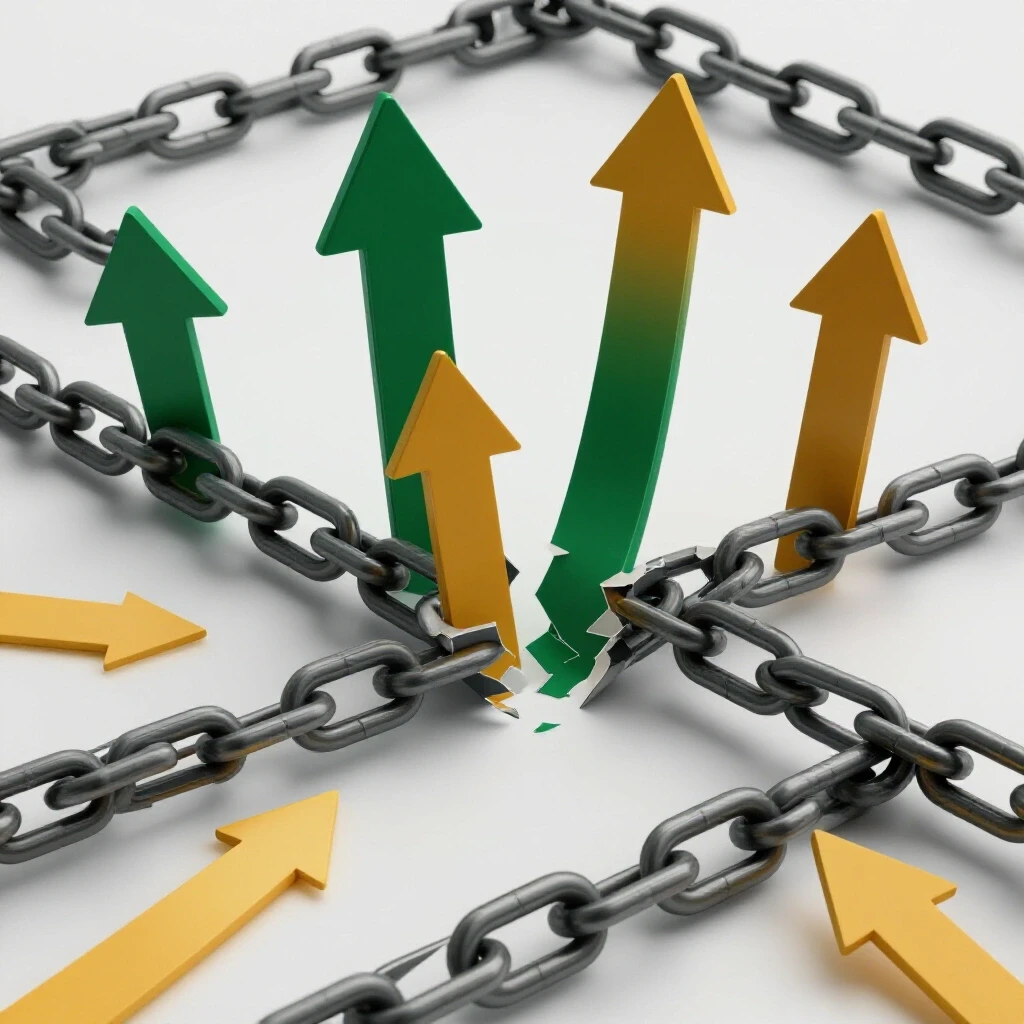
When a brand undergoes a transition in its social media management, the risk to its digital equity is high. I have spent 14 years diagnosing these exact moments. These shifts often lead to a loss of institutional knowledge, where the subtle “rules” of what the audience loves are replaced by a different creative vision that the algorithm doesn’t yet recognize. The result is a sudden, stressful stagnation that leaves managers scrambling for answers while leadership demands immediate results.
Detecting Operational Shifts in Engagement Velocity
Engagement velocity is the speed at which your followers interact with a post in the first hour of its life. When a new team takes over, they often change the timing or format of posts. This can cause a sudden drop in this metric, signaling to the platform that your content is no longer relevant to your core audience.
In my experience, the first sign of trouble isn’t a total blackout. It is a steady decline in “non-follower reach.” When your content stops being served to new people, it means your engagement velocity among current followers is too low to trigger a wider distribution. I once managed a recovery for a tech firm where the new team switched from video-heavy content to static images overnight. The engagement velocity plummeted because the audience was trained to watch, not just look. The platform’s algorithmic penalty diagnosis showed that the account was being deprioritized because its “interest score” had tanked.
Root Cause Diagnostic Checklist
To begin your audience reach recovery, you must first identify where the break occurred. Use this checklist to see if your internal changes have triggered a performance drop.
| Metric to Check | Symptom of Decline | Potential Operational Root Cause |
|---|---|---|
| First-Hour Likes/Comments | 50% drop compared to previous 30-day average | Change in posting schedule or “hook” style |
| Story View Completion Rate | Sharp decline in views from slide 1 to slide 3 | Shift in narrative structure or visual quality |
| Save-to-Reach Ratio | High reach but near-zero saves | Content is too “promotional” and lacks utility |
| Share Velocity | Content is seen but never forwarded | Loss of brand “voice” or relatability |
Identifying the Algorithmic Penalty Trigger
A social media shadowban or search suppression often happens when a platform’s automated systems detect a sudden change in account behavior. This isn’t always about “bad” content. Sometimes, it is simply about “inconsistent” content. If a new team starts using different hashtags, posting at 3:00 AM instead of 10:00 AM, or tagging too many accounts, the system may flag the account for “suspicious activity.”
I have seen accounts lose 90% of their search visibility because a new operator tried to “optimize” the account too quickly. The platform sees this as a potential hack or a bot-driven shift, leading to search suppression. To fix this, you must return to a baseline of “safe” activity before you can start a brand reputation recovery campaign.
Identifying Platform Policy Triggers During Transitions
Platform policies are the invisible boundaries that keep your account healthy. When operations change hands, the new team might unknowingly violate “Quality of Content” guidelines. These are not always clear-cut rules like “don’t post spam,” but more subtle triggers like “engagement baiting” or “low-quality landing page links” that can lead to a long-term reach drop.
When I conduct an algorithmic penalty diagnosis, I look for “Policy Scoring.” Most platforms assign your account a hidden score based on how often your content is reported or hidden by users. A new creative direction that misses the mark can lead to a spike in “Hide this post” actions. This tells the algorithm that your content is annoying your audience. Once your score drops below a certain threshold, your reach is throttled across the board.
Shadowban Verification Matrix
If you suspect your reach is being intentionally suppressed, use this matrix to verify the severity of the situation.
| Verification Step | Expected Healthy Result | Red Flag Result |
|---|---|---|
| Hashtag Search | Post appears in “Recent” for a niche tag | Post is invisible even with a direct tag search |
| Account Search | Account appears in top 3 results by name | Account only appears if the full handle is typed |
| Tagging Capabilities | Other users can tag you easily | Your handle doesn’t pop up in the search bar |
| Reach Sources | At least 10-20% of reach comes from “Explore” | 98% of reach is only from “Home” (Followers) |
Understanding Content Filtration Systems
Platforms use filtration systems to protect users from low-quality content. If your new team is using stock images that have been used by thousands of other accounts, or if they are using “banned” phrases in the captions, your content might be filtered out before it even reaches your followers. This is why audience reach recovery requires a return to original, high-quality assets.
I remember a project where a brand’s reach died because the new agency was using a third-party scheduling tool that hadn’t been verified by the platform. The system saw every post as “automated spam.” We had to disconnect all third-party apps and post manually for 14 days to rebuild the “Trust Score” of the account. It was a slow process, but it was the only way to clear the suppression.
Communicating Performance Gaps to Upper Management
One of the hardest parts of a brand reputation recovery is explaining the “why” to executives who only see the “what.” When numbers go down, the pressure goes up. You need to communicate that the engagement drop resolution is a process, not a quick fix. It requires a data-backed explanation that moves the focus from “who is at fault” to “how we are fixing the system.”
When I present to leadership, I use a “Recovery Timeline.” I explain that we are in a “Rehabilitation Period.” This is a 30-to-60-day window where we focus on quality over quantity. I use clear metrics, like the “Sentiment Index,” to show that while reach is low, the people who do see the content are reacting positively. This builds confidence that we are on the right path.
Trust Recovery Phase Timeline
Restoring an account’s health takes time. You cannot rush the algorithm. Here is the standard timeline I use for most recovery campaigns.
| Phase | Duration | Primary Objective |
|---|---|---|
| Phase 1: Stabilization | Days 1-14 | Stop all “risky” behavior and return to baseline posting |
| Phase 2: Sentiment Rebuild | Days 15-30 | Focus on high-engagement content for core followers only |
| Phase 3: Reach Expansion | Days 31-60 | Re-introduce “Explore” worthy content and niche hashtags |
| Phase 4: Full Restoration | Day 61+ | Resume normal operations and scale growth |
- Stabilization: This is where you stop the bleeding. No experiments. No risky trends. Just safe, high-quality content.
- Sentiment Rebuild: You are talking only to your “Super Fans.” You want every person who sees the post to like it or comment on it.
- Reach Expansion: Once the algorithm sees your engagement rate is back to normal, it will start testing your content with non-followers again.
Executing a Systematic Audience Reach Recovery Plan
Recovery is a science, not an art. You need to implement a data-backed strategy that focuses on engagement drop resolution. This involves auditing every piece of content against historical benchmarks. If your top-performing posts from six months ago were educational carousels, but your new team is only posting “lifestyle” reels, you have a misalignment that needs to be corrected.
In my work, I use a “Content Audit Template.” We look at the top 50 posts of all time and compare them to the last 50 posts. We look at color palettes, caption lengths, and call-to-action styles. Usually, the “death” of the content is caused by a departure from the “Visual Identity” or “Value Proposition” that built the following in the first place.
Audience Sentiment Tracking Index
Tracking how your audience feels is just as important as tracking how many people see your posts. Use this index to measure the health of your recovery.
| Sentiment Score | Audience Reaction | Required Action |
|---|---|---|
| 80-100 (Excellent) | High shares, positive comments, saved posts | Scale this content type immediately |
| 60-79 (Good) | Passive likes, few comments | Improve the “Call to Action” to spark talk |
| 40-59 (Neutral) | Low interaction, “seen” but ignored | Pivot the creative angle; the audience is bored |
| Below 40 (Poor) | Negative comments, high “unfollows” | Stop this content stream and conduct a root cause analysis |
Submitting Platform Appeals
If you are certain that your account is facing an unfair algorithmic penalty, you may need to use the platform’s appeal channels. This is a high-stress process. Most appeals take 5 to 15 business days to be reviewed. When you submit an appeal, do not be emotional. Provide data. Show that your engagement dropped on a specific date and that you have audited your content for policy violations.
I once helped a brand recover from a “false positive” shadowban. The system thought their logo was a restricted symbol. We had to submit three different appeals, each with a clear explanation of our brand guidelines and a request for a manual review. On the 12th day, the reach suddenly snapped back to normal. It requires patience and a clear understanding of the platform’s support interface.
Long-Term Account Auditing and Brand Safety Protocols
To prevent a future engagement drop, you must implement ongoing account audits. This means creating a “Brand Safety Protocol” that every new team member must follow. This protocol should include a list of approved hashtags, a guide on “community-first” engagement, and a checklist for policy compliance.
I recommend a monthly “Health Check.” This isn’t just about looking at follower counts. It’s about looking at the “Reach-to-Follower” ratio. If you have 100,000 followers but only reach 2,000 of them, your account is in a “stagnation loop.” You need to catch this early before it becomes a full-blown crisis.
5 Essential Diagnostic Tools for Specialists
- Native Platform Insights: The most accurate source for reach velocity and follower vs. non-follower data.
- Third-Party Sentiment Analyzers: These tools help you see if the “tone” of your comments is shifting from positive to neutral.
- Hashtag Tracking Software: Use this to see if your posts are actually ranking for the keywords you are targeting.
- Competitor Benchmarking Templates: If your whole niche is down, it’s an algorithm update. If only you are down, it’s an internal operational error.
- Content Quality Checklists: A simple 10-point list to ensure every post meets the “Value, Quality, and Safety” standards of the platform.
Key Takeaways for Recovery
- Diagnosis First: Do not change your strategy until you know exactly why the reach dropped. Use the Shadowban Verification Matrix.
- Slow and Steady: Recovery takes 30 to 90 days. Avoid the temptation to “boost” posts or buy ads to fix an organic problem.
- Communicate with Data: Use the Trust Recovery Phase Timeline to set realistic expectations with your leadership team.
- Focus on Core Fans: The algorithm will only show your content to new people once your current followers prove they love it.
Practical Next Steps
If you are currently facing a sudden loss in traffic, start by pausing all “experimental” content for 48 hours. Review your last 10 posts against your historical top performers. Look for shifts in voice, visual style, or posting frequency. Once you identify the drift, begin Phase 1 of the recovery timeline. Be transparent with your team about the need for consistency. Remember, the algorithm is a mirror of your audience’s behavior. If you give the audience what they originally signed up for, the reach will eventually return.
FAQ: Navigating Content Performance Recovery
How long does it take to recover from an algorithmic penalty? Typically, a full recovery takes between 30 and 90 days. The first 14 days are spent stabilizing the account and stopping any policy-triggering behavior. Once the platform sees a consistent return to high-quality, safe content, reach usually begins to climb incrementally.
Can a change in the team really cause a shadowban? Yes, but indirectly. A new team might use different posting tools, change the account’s location settings, or use repetitive hashtags that trigger “spam” filters. While the team isn’t the cause, their new operational habits can trigger the platform’s automated defense systems.
What is engagement velocity, and why does it matter? Engagement velocity is the speed at which your audience interacts with a post immediately after it is published. High velocity tells the algorithm the content is “hot,” leading to more reach. If a team change disrupts the timing or quality, velocity drops, and the algorithm stops showing the post to others.
How do I know if my reach drop is an algorithm update or an internal error? Check your competitors or industry benchmarks. If other brands in your space are seeing steady reach, but yours has plummeted, the issue is likely internal. Use a Root Cause Diagnostic Checklist to find the specific operational shift that caused the decline.
What should I tell my boss when reach drops by 50%? Focus on the “Rehabilitation Period.” Explain that the account is undergoing a data-backed recovery to realign with audience preferences. Use a Sentiment Index to show that while reach is lower, the engagement quality remains high, which is the first step to full restoration.
Is it better to stop posting or keep posting during a reach crisis? Never stop posting entirely, as this can further damage your account’s “freshness” score. Instead, reduce your frequency and focus exclusively on “safe,” high-value content that your core audience is guaranteed to like and share.
How do I fix a drop in “non-follower” reach? Non-follower reach is earned through high engagement from your current followers. To fix it, you must “train” your current audience to interact again. Use polls, questions, and high-utility content to boost your internal engagement rates first.
Does using third-party scheduling tools hurt reach? Only if the tool is not an “Official Platform Partner.” Unverified tools can sometimes be flagged as “automation” or “bot activity,” which can lead to search suppression. Always use the platform’s native scheduler or a verified partner during a recovery phase.
What is a “Sentiment Index,” and how do I calculate it? A Sentiment Index measures the ratio of positive to negative interactions. You can calculate it manually by reviewing the last 100 comments and categorizing them as Positive, Neutral, or Negative. A healthy account should have a Positive score of 70% or higher.
Can I use paid ads to “reset” my organic reach? No. Paid reach and organic reach are treated differently by most algorithms. While ads can bring in new eyes, they do not “fix” the organic “Interest Score” of your account. In fact, over-reliance on ads during a crisis can sometimes mask the underlying organic issues.
What are the most common “policy triggers” for brands? The most common triggers include “Engagement Baiting” (asking for likes/comments in a spammy way), using banned or “shadowbanned” hashtags, and posting low-resolution images or videos that fail the platform’s quality filtration systems.
How do I submit an appeal for a reach drop? Most platforms have an “Account Status” or “Support Inbox” section. When appealing, provide specific dates of the drop, evidence that you have checked for policy violations, and a brief explanation of your brand’s commitment to high-quality content. Avoid emotional language and stick to the facts.
(This article was written by one of our staff writers, Andrew Collins. Visit our Meet the Team page to learn more about the author and their expertise.)