How to Avoid Common Social Media Mistakes (Case Study Insights)
Do you spend your Sunday evenings reviewing attribution windows and conversion paths instead of scrolling through your feed for leisure? If your idea of a successful weekend involves checking if your latest split test reached a 95% confidence level, you are likely part of a small group of marketers who value evidence over intuition. We live in an era where “viral hacks” are sold as strategy, but for those of us in the trenches of data analysis, we know that sustainable growth is built on the back of rigorous, controlled experimentation.
The High Cost of Uncontrolled Variables in Social Media Testing
Uncontrolled variables are external factors that influence test results, making it impossible to determine which specific change caused a performance shift. When these factors are not isolated, marketers often attribute success to the wrong element, leading to wasted budgets and strategic errors that can persist for months.

Early in my career, I managed a large-scale campaign for a retail brand where I made a significant methodological error. I decided to test a new video format against an old static image. At the same time, I updated the target audience to include a broader demographic and increased the daily budget by 40%. When the video format showed a 20% lower cost-per-acquisition (CPA), I reported it as a clear victory for video content.
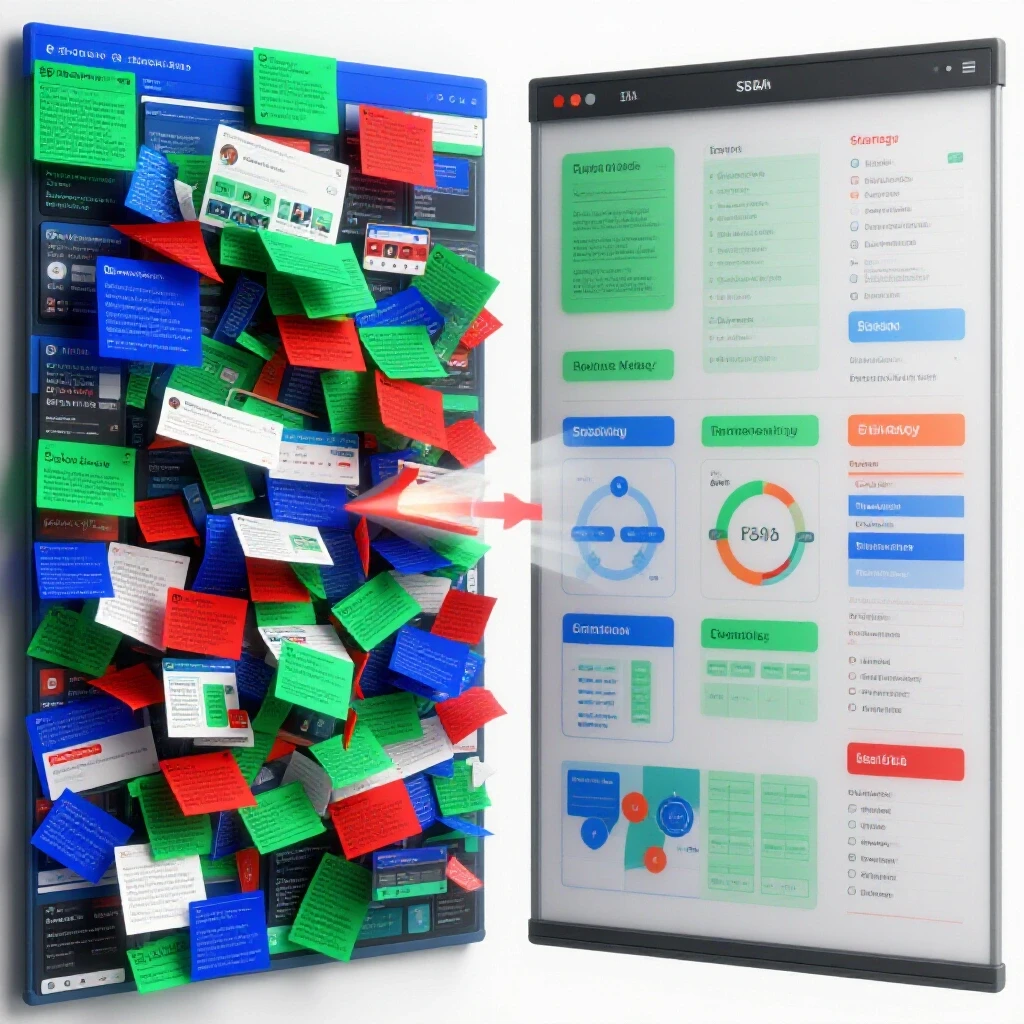
However, I had failed to isolate the variables. Was the success due to the video format, the broader audience reach, or the platform’s algorithm favoring the increased spend? Because I changed three things at once, my data was contaminated. I had fallen into the trap of “multi-variable contamination,” where the signal is lost in the noise of simultaneous changes. This lack of variable isolation is a common pitfall that prevents growth hackers from identifying what actually moves the needle.
Building a Robust Hypothesis to Avoid False Positives
A hypothesis is a testable statement predicting how a specific change in one variable will affect a measurable outcome, providing a clear roadmap for the experiment. It moves the strategy away from “let’s see what happens” toward a structured “if-then” framework that can be validated or refuted through empirical data.
To avoid the errors I made in the past, I now use a strict hypothesis-first approach. Instead of testing “video vs. image,” a data-driven hypothesis looks like this: “Changing the first three seconds of the video from a product shot to a customer testimonial will increase the three-second view-through rate by 15% among our core demographic.” This level of specificity allows you to measure exactly what you set out to test.
According to research on digital consumer behavior, the first few seconds of content are critical for retention. By focusing on a single element, you reduce the risk of a “false positive”—a result that looks significant but is actually due to random chance or external factors. In my experience, most “best practices” found online fail because they aren’t built on a foundation of a clean null hypothesis, which assumes there is no relationship between the variables until proven otherwise.
Establishing Control Groups and Ensuring Statistical Significance
A control group is a segment of your audience that remains unaffected by the test variable, serving as a baseline to measure the true impact of changes. Statistical significance is a mathematical measure that helps determine if your test results are likely due to the changes you made or just a result of random variation.
One of the most frequent mistakes I see analytical marketers make is ending a test too early. They see a “winning” variant after 48 hours and shift their entire budget. However, without a sufficient sample size, these results are often just statistical noise. To achieve a 95% confidence level, you need a high enough volume of events (clicks, views, or conversions) to ensure the result is repeatable.
| Test Variable | Minimum Sample Size (Events) | Recommended Duration | Target Confidence Level |
|---|---|---|---|
| Click-Through Rate (CTR) | 1,000 clicks | 7 Days | 95% |
| Conversion Rate (CVR) | 100 conversions | 14 Days | 90-95% |
| Cost Per Mille (CPM) | 10,000 impressions | 7 Days | 95% |
| Engagement Rate | 5,000 interactions | 7 Days | 90% |
As shown in the table above, different metrics require different thresholds. If you are testing a high-intent conversion, you need more time because conversions happen less frequently than clicks. I once ran a test for 10 days that showed a clear winner, only for the results to completely flip by day 14. This “regression to the mean” is a common phenomenon where early outliers eventually balance out.
Navigating Attribution Shifts and Platform Data Discrepancies
Attribution involves identifying which touchpoint led to a conversion, a process often complicated by platform privacy updates and differing tracking methodologies. Modern social media environments have moved toward “modeled reporting,” which uses machine learning to fill in gaps left by users who opt out of tracking.
The shift from 28-day click attribution to 7-day click attribution on major platforms fundamentally changed how we analyze data. I remember a specific instance where my test results seemed to plummet overnight. It wasn’t that the content stopped working; it was that the attribution window had shortened, and I hadn’t adjusted my success metrics.
To combat this, I now cross-reference native platform analytics with third-party tracking tools and server-side API data. This “triangulation” helps identify discrepancies. If the platform claims 50 conversions but your internal CRM only shows 30, you know your attribution settings are likely over-counting or capturing “view-through” conversions that didn’t actually drive the sale.
- Native Analytics: Good for top-of-funnel metrics like impressions and reach.
- Third-Party Tracking: Better for measuring the actual path to purchase across different sites.
- Server-Side API: The most reliable way to track conversions in a cookie-less environment.
A Case Study in Experimental Failure: The Multi-Variable Trap
This case study examines a campaign where I attempted to test a new discount offer and a new ad creative simultaneously. By failing to isolate these two powerful variables, the resulting data was unusable for future strategic planning, leading to a significant loss in potential insights and budget efficiency.
I was working with a client who wanted to test a 20% discount versus a “Buy One, Get One” (BOGO) offer. At the same time, I thought it would be efficient to test a new “lifestyle” photography style against their standard “product-on-white” shots. I ran four variants, but because the budget was spread thin across all four, none of them reached statistical significance within the 14-day window.
The “lifestyle” BOGO ad performed the best, but I couldn’t tell if it was the offer or the photo that did the heavy lifting. When we tried to use that same lifestyle photography for a different offer later, it failed miserably. The lesson was clear: by trying to be “efficient” and test everything at once, I had actually wasted the entire testing budget. I had created a “confounded” experiment where variables were tied together in a way that couldn’t be unpicked.
Why Flawed Test Setups Waste Budgets and How to Isolate Variables
Campaign variable isolation is the process of ensuring only one element changes between your control group and your test group. When multiple elements change, the resulting data becomes a “black box,” offering no actionable insights for future content format testing or budget allocation.
To prevent this, I developed a “Variable Isolation Checklist.” Before any test goes live, I ask myself if a change in the results could be explained by anything other than the test variable. If the answer is yes, the test is not ready. For example, if you are testing a posting schedule, you must use the exact same content for both time slots. If the content is different, you are testing content, not timing.
- Define the Single Variable: Choose one element (e.g., headline, thumbnail, CTA).
- Ensure Audience Parity: Use “split testing” tools that ensure the same person doesn’t see both variants.
- Keep Budgets Equal: Ensure each variant has the same opportunity to be shown by the algorithm.
- Monitor External Factors: Check for holidays, major news events, or platform outages that might skew data.
- Set a “Stop-Loss”: Decide in advance at what point a failing variant will be turned off to protect the budget.
Tools and Frameworks for Verifiable Campaign Analysis
Using the right tools is essential for maintaining the integrity of your social media testing. While native tools are a starting point, professional-grade analysis often requires external verification to ensure that the data you are seeing is statistically sound and free from platform bias.
I rely on a specific stack of tools to ensure my experiments are rigorous. These tools help with everything from calculating the necessary sample size to verifying that the conversions reported by the platform actually happened in the real world.
- Statistical Significance Calculators: Tools like ABTestguide or specialized Excel formulas to check if a result is valid.
- Platform Conversion APIs: Setting up direct server-to-platform communication to bypass browser-based tracking issues.
- Google Analytics 4 (GA4): Using “Exploration” reports to track the user journey beyond the initial click.
- Creative Testing Logs: A simple spreadsheet where every test, hypothesis, and result is documented to prevent testing the same thing twice.
- Ad Customizers: Using platform features that allow for dynamic testing of headlines or descriptions within a single ad unit.
Actionable Benchmarks for Data-Driven Strategists
Benchmarks provide a point of reference for evaluating the success of your experiments. Without clear, data-backed benchmarks, it is difficult to know if a 2% CTR is a breakthrough success or a sign that your campaign variable isolation has failed.
In my nine years of testing, I have found that a “performance variance threshold” of 10% is usually the minimum required to take a test result seriously. If Variant A is only 2% better than Variant B, it is often just a result of daily fluctuations in the platform’s auction. You want to see a clear, sustained gap between the control and the test variant.
- Minimal Acceptable Engagement Volume: 500-1,000 interactions per variant.
- Maximum Variable Variance: No more than one variable changed per test cycle.
- Test Validation Checklist: Must meet 95% confidence and run for at least one full business cycle (7 days).
- Cost-Per-Acquisition Deviation: A change of at least 15% to justify a permanent strategy shift.
Building a culture of testing means accepting that most of your tests will fail. According to many growth frameworks, only about 20-30% of experiments yield a “winning” result. The goal isn’t to be right every time; it’s to ensure that when you are right, you have the data to prove why.
Moving Toward Evidence-Based Content Strategy
The most important step you can take today is to audit your recent “wins.” Look back at the last time you changed your content strategy and ask yourself: “Do I have documented proof that this change caused the improvement, or am I just following a trend?” If you can’t point to a controlled test with isolated variables, it’s time to reset your methodology.
Start small. Choose one campaign next week and run a true A/B test on a single variable, like a headline or a call-to-action. Don’t change the budget, don’t change the audience, and don’t stop the test until you hit a 95% confidence level. This disciplined approach is what separates the professional data analyst from the casual social media manager. It is the only way to build a strategy that withstands platform shifts and temporary fads.
Frequently Asked Questions
What is the most common error in social media A/B testing? The most frequent mistake is changing multiple variables at once, such as the ad creative and the audience targeting simultaneously. This makes it impossible to determine which change actually caused the shift in performance, leading to “contaminated” data that cannot be used for future strategy.
How do I know if my test results are statistically significant? Statistical significance is usually reached when there is a 95% probability that the results are not due to chance. You can calculate this using the number of impressions and conversions for each variant. If your sample size is too small, your results may look like a “win” but are actually just random variation.
How long should I run a social media experiment? Most experiments should run for at least 7 to 14 days. This ensures that you capture a full “business cycle,” accounting for different user behaviors on weekends versus weekdays. Ending a test after only 48 hours often leads to false positives.
What is a “null hypothesis” in marketing? A null hypothesis is the assumption that the change you are testing will have no effect on the outcome. The goal of your experiment is to “reject” the null hypothesis with enough data to prove that your change (the variable) actually caused a measurable difference.
Why do native platform analytics sometimes differ from my CRM data? Platforms often use “attribution modeling” and “view-through” tracking, which counts a conversion if someone saw an ad but didn’t click it. Your CRM only tracks direct actions. This discrepancy is why it’s vital to use server-side APIs and third-party tracking to verify results.
Can I test organic content as rigorously as paid ads? It is harder to isolate variables in organic content because you cannot control who sees the post as easily. However, you can still apply data-driven principles by testing one format (like Reels vs. Carousels) over a long period while keeping the topics and posting times consistent to minimize external noise.
What is a “control group” in a social media context? A control group is the “baseline” version of your campaign—the content or strategy you are already using. You compare your “test variant” against this control to see if the new change performs better or worse than your current standard.
What should I do if my test results are “inconclusive”? Inconclusive results are actually very common. They mean that the variable you tested didn’t have a strong enough impact to overcome random noise. In this case, you should either increase your sample size by running the test longer or move on to testing a more “high-impact” variable.
How many variables can I test in a multivariate test? While you can test multiple variables, it requires a massive amount of traffic and budget to reach statistical significance for every combination. For most medium-sized accounts, it is much more effective to stick to “A/B testing,” where only one variable is changed at a time.
What is “regression to the mean” in data analysis? This is a technical term for when an early, extreme result (like an unusually high CTR on day one) eventually moves back toward the average as more data is collected. This is why you should never make major budget decisions based on the first few days of a new campaign.
(This article was written by one of our staff writers, David Thompson. Visit our Meet the Team page to learn more about the author and their expertise.)