How to Fix SEO-Social Misalignment and Restore Social Reach (Guide)
In the 1999 film The Matrix, the protagonist discovers that the world he knows is a digital overlay, governed by rules that don’t apply to the real world. Many brand managers face a similar “glitch” when they realize the strategies that win on search engines often fail miserably on social feeds. I have spent 14 years in the trenches of social media operations, often called in when a brand’s digital presence begins to flicker and fade. I have seen high-visibility accounts lose 80% of their reach overnight, not because of a PR scandal, but because they tried to force the “physics” of search intent into the “gravity” of social discovery.
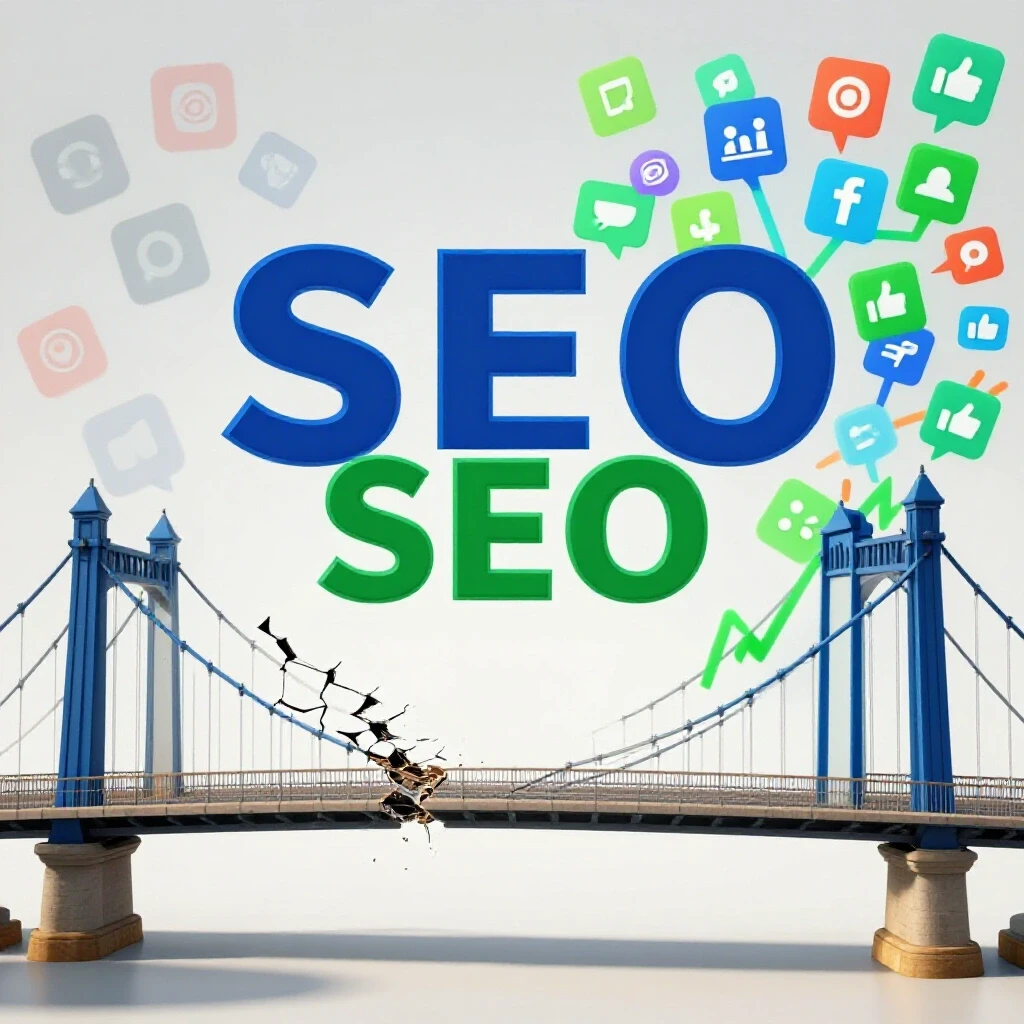
Why Disconnected Content Strategies Trigger Distribution Penalties
This section explores the fundamental conflict between content designed for search intent and content designed for social discovery. When a brand prioritizes keyword density over social engagement hooks, platform algorithms often interpret the resulting low interaction as a signal of poor quality or spam.
In my experience, the most common cause of a sudden engagement drop resolution is a failure to recognize that social platforms are not libraries; they are conversation hubs. A few years ago, I managed a legacy retail brand that decided to automate their social feeds using their top-performing SEO blog titles. Within three weeks, their organic reach velocity dropped by 65%. The algorithm wasn’t broken; it was responding to the fact that users were scrolling past “The Top 10 Benefits of Organic Cotton” without a single click or like.
Search engines reward depth and specific keywords. Social platforms, however, reward “dwell time” and immediate reaction. When you post search-optimized headers as social captions, you are essentially speaking a foreign language to the algorithm. This leads to what many call a social media shadowban, though it is more accurately described as algorithmic suppression due to a lack of native relevance.
| Metric | Search Optimization Focus | Social Distribution Focus |
|---|---|---|
| Primary Goal | Information Retrieval | Community Interaction |
| Success Signal | Click-Through Rate (CTR) | Engagement Rate / Shareability |
| Content Structure | Keyword-Rich Headings | Emotional or Visual Hooks |
| Audience Intent | Active Seeking | Passive Discovery |
Identifying the Signs of Algorithmic Suppression
Algorithmic suppression occurs when a platform’s safety and distribution systems limit your content’s visibility to non-followers. This usually happens when your content consistently fails to meet engagement thresholds or is flagged by automated systems as repetitive or “link-heavy” behavior.
Detecting an algorithmic penalty diagnosis requires looking beyond simple like counts. You must monitor your “Reach vs. Non-Follower” ratio. In a healthy account, a portion of your reach should always come from the “Explore” or “For You” pages. When that number hits near zero while your follower count remains steady, you are likely facing search suppression.
I remember a specific case with a B2B tech firm. They were convinced they were being “censored.” After a deep-dive root cause analysis, I found that their habit of posting long, keyword-stuffed captions with multiple outbound links had triggered a “low-quality content” filter. The platform wasn’t mad at their message; it was protecting the user experience from content that looked like a search result rather than a social post.
Understanding Content Moderation Thresholds
Platforms use content moderation thresholds to maintain brand safety. If your content is repeatedly skipped or reported because it feels like “clickbait” or “spammy” SEO filler, your account’s internal “trust score” drops. Once this score falls below a certain level, the algorithm stops testing your content with new audiences.
- Reach Velocity: The speed at which a post gains impressions in the first 60 minutes.
- Engagement Variance: The difference between your highest and lowest performing posts over 30 days.
- Sentiment Index: A measure of how the audience reacts (positive, neutral, or negative) in the comments.
Communicating Reach Stagnation to Stakeholders
One of the hardest meetings I ever had involved explaining to a CEO why his favorite “SEO-first” strategy was the reason his LinkedIn posts were getting zero traction. He saw it as a policy violation by the platform. I had to show him the data: his posts had a “bounce rate” on social that was astronomical. To rebuild trust, we had to stop treating the feed like a billboard and start treating it like a roundtable.
When communicating these setbacks, avoid using technical jargon. Instead, use a “Health Check” framework. Show them the baseline reach from three months ago versus today. Explain that the “medicine” isn’t more posts, but better-calibrated ones. Recovery is a marathon, not a sprint; typically, it takes 30 to 90 days of consistent, high-quality interaction to see a “reset” in distribution.
The Stakeholder Communication Framework
- Acknowledge the Drop: Use hard numbers (e.g., “Organic reach is down 45% since October”).
- Identify the Mismatch: Explain the conflict between keyword-heavy content and social hooks.
- Propose the Pivot: Suggest a 4-week pilot of native-first content.
- Set Recovery Timelines: Be honest that 5–15 business days is just for the initial appeal or adjustment period.
Implementing the Engagement Recovery Sequence
The recovery sequence is a systematic approach to restoring an account’s standing by stripping away “search-style” formatting and replacing it with high-engagement, native content. This process signals to the algorithm that the account is once again providing value to the community.
To begin an audience reach recovery, you must first “clear the pipes.” This means pausing all automated posting and keyword-heavy links for at least 72 hours. During this period, I recommend engaging manually with other accounts in your niche. This signals that there is a human behind the handle, which can help mitigate some automated spam flags.
In a recovery campaign I led for a travel brand, we replaced their “Best Hotels in Paris 2024” SEO titles with raw, behind-the-scenes video clips of the hotels. We didn’t include a link in the caption. Within two weeks, their engagement rate tripled. By removing the “search” friction, we allowed the social algorithm to do its job: find people who liked the visuals.
| Recovery Phase | Action Item | Expected Outcome |
|---|---|---|
| Phase 1: Reset (Days 1-7) | Stop all outbound links and SEO-heavy captions. | Stabilization of reach drops. |
| Phase 2: Re-Engagement (Days 8-21) | Post native video or high-quality images with “hook” captions. | Increase in “Non-Follower” reach. |
| Phase 3: Scaling (Days 22-45) | Gradually re-introduce brand messaging in a social-first format. | Restoration of baseline engagement. |
Executing a Community Recovery Sequence
A community recovery sequence focuses on rebuilding the relationship with your existing audience. When reach drops, the followers who do see your content are your most important asset; their interaction is the key to unlocking wider distribution.
Audience crisis management isn’t just about fixing a PR blunder; it’s about fixing a “boredom” crisis. If your audience has stopped clicking because your content feels like a search engine result, you need to surprise them. Use polls, ask direct questions, and respond to every single comment. This “manual” engagement is the most effective way to signal to the platform that your content is worth showing to others.
I once worked with a brand that had been shadowbanned for “repetitive content.” We spent two weeks doing nothing but responding to old comments and posting interactive “This or That” stories. We didn’t sell anything. We didn’t link to the blog. By the end of the second week, their “trust score” had clearly recovered, as their next product post reached 40% of their total followers—a massive jump from the 5% they had been seeing.
- Step 1: Audit the last 30 days of comments.
- Step 2: Identify the “Top Fans” and engage with their content.
- Step 3: Create a “Feedback Loop” post (e.g., “What do you want to see more of?”).
- Step 4: Monitor the sentiment index to ensure the shift is perceived positively.
Why Sudden Reach Drops Strike Brands—And How to Formulate a Recovery Plan
Sudden drops often occur when a platform’s AI updates its “quality” definitions. If your strategy relies on “gaming” the system with keywords, you are at high risk. A recovery plan must be data-backed and focused on long-term brand reputation recovery.
When diagnosing the root cause, I use a “Shadowban Verification Matrix.” This helps determine if the issue is a technical policy violation or simply a content-market mismatch. If your posts are still searchable via hashtags but aren’t appearing in the main feed, it’s a distribution issue, not a hard ban. This distinction is vital for your appeal strategy.
- Check Account Status: Use the platform’s internal “Account Status” or “Professional Dashboard” to check for flagged content.
- Review Recent Changes: Did you start using a new scheduling tool? Did you change your caption style?
- Analyze Reach Sources: Is the drop coming from “Home,” “Explore,” or “Hashtags”?
- Test a “Clean” Post: Post a simple, high-quality photo with a one-sentence caption and no links. If it performs better, your SEO-heavy style is the culprit.
Submitting Platform Appeals and Adjusting Creative Strategies
If you find a specific policy violation or “shadowban,” the appeal process is your next step. However, appeals are often handled by bots first, so your creative strategy must change in parallel to prove the account has “reformed.”
The appeal timeline ranges from 5 to 15 business days, but you shouldn’t wait for a response to start fixing your content. While the appeal is pending, I advise brands to shift their creative strategy entirely. Move away from “Search-Social Hybrid” posts. Instead, embrace the platform’s newest features (like Reels or Carousels). Platforms often give a slight distribution boost to users who adopt their latest tools, which can help “pull” an account out of a reach slump.
In one instance, a brand’s account was flagged for “misleading metadata” because their SEO-optimized captions didn’t match the lighthearted nature of their videos. We appealed the flag, but more importantly, we spent the next 10 days posting content that was 100% aligned with the video’s visual cues. The appeal was eventually granted, but the reach had already started to recover because of the creative pivot.
Implementing Ongoing Account Audits
Recovery isn’t a one-time event; it’s a shift in operations. Ongoing audits ensure that SEO goals and social goals stay in their respective lanes, preventing future engagement drop resolutions.
I recommend a monthly “Social-Search Audit.” During this meeting, the SEO team and the Social team should look at the top-performing content for both channels. If the social team is just “borrowing” from the SEO team, it’s a red flag. Every piece of content should be “translated” for the platform it lives on.
A successful brand protection strategy involves setting “Engagement Variance Thresholds.” If your engagement drops more than 20% below your 90-day rolling average, it triggers an immediate audit. This allows you to catch misalignment before it turns into a full-scale reach crisis.
- Monthly Reach Audit: Track the percentage of reach from non-followers.
- Creative Review: Ensure no “keyword stuffing” is creeping back into captions.
- Link Health: Check that outbound links are used sparingly (less than 20% of posts).
- Sentiment Tracking: Ensure the audience feels the brand is “present” and not just “broadcasting.”
Conclusion: The Path Forward
Recovering from a major reach setback is a test of patience and data-driven discipline. It requires the humility to admit that what works for Google doesn’t always work for a human scrolling through their feed at midnight. By systematically diagnosing the misalignment, stripping away the search-heavy friction, and rebuilding a native-first engagement strategy, you can restore your account’s health.
The goal isn’t just to “fix the algorithm”—it’s to fix the relationship with your audience. When you prioritize the user’s experience over keyword density, the algorithm naturally follows. Start by auditing your last five posts. If they look more like a search result than a conversation starter, you have found your starting point for recovery.
FAQ
How do I know if my reach drop is a shadowban or just bad content? A true social media shadowban (or search suppression) usually results in your content not appearing in hashtag searches or the “Explore” page for non-followers. If your followers are still seeing and liking your posts, but you have zero “new” reach, it is likely a distribution penalty. If even your followers aren’t engaging, it is likely a content-market fit issue.
Can I recover my reach without deleting old posts? Generally, yes. You don’t need to delete old posts unless they have active policy violations. Instead, focus on a “content pivot.” By posting high-quality, native-first content consistently for 14–30 days, you can retrain the algorithm to see your account as high-value.
Why does the platform care if I use SEO keywords in my captions? The platform doesn’t hate keywords; it hates “friction.” SEO-heavy captions often lead to lower “dwell time” because they are harder to read and feel like advertisements. When users scroll past your content quickly, the algorithm assumes the content is irrelevant and stops showing it to others.
How long does it take to see results from a recovery campaign? In most cases, you will see minor improvements within 10–14 days of changing your strategy. However, a full audience reach recovery back to baseline levels typically takes 60 to 90 days of consistent, high-engagement posting.
Should I stop using links in my social posts entirely? No, but you should be strategic. Platforms want to keep users on their app. If every post tries to send users to an external website, the algorithm will limit your reach. Try a 80/20 rule: 80% native content (no links) and 20% promotional content (with links).
What is “reach velocity,” and why does it matter for recovery? Reach velocity is the speed at which your post gains views. If a post gets 100 likes in 10 minutes, the algorithm sees high velocity and pushes it to more people. SEO-heavy posts often have low velocity because they don’t capture immediate attention, which “kills” the post’s potential early on.
Does using a third-party scheduling tool cause reach drops? Usually, no, as long as the tool is an official platform partner. However, “automated” behavior—like posting 10 times a day or using the exact same caption and hashtags every time—can trigger spam filters. It’s the behavior, not the tool, that usually causes the issue.
How do I explain a 50% reach drop to my boss without sounding incompetent? Frame it as an “algorithmic shift” and a “content-market misalignment.” Show the data: “Our SEO-focused strategy is no longer being rewarded by the social algorithm. We need to pivot to a social-first format to restore our distribution.” This shows you are diagnosing the problem, not just reporting a failure.
Is it better to start a new account if my reach is permanently low? Rarely. Starting over means losing your existing follower base and “social proof.” Most accounts can be rehabilitated with 90 days of disciplined, native-first content. Only consider a new account if you have multiple, unresolvable policy strikes that have permanently disabled certain features.
What is a “sentiment index,” and how do I track it? A sentiment index measures the emotional tone of your comments. You can track this manually by categorizing comments as Positive, Neutral, or Negative. A recovery is working when your “Positive” sentiment increases, signaling that the audience is connecting with your new content direction.
(This article was written by one of our staff writers, Andrew Collins. Visit our Meet the Team page to learn more about the author and their expertise.)